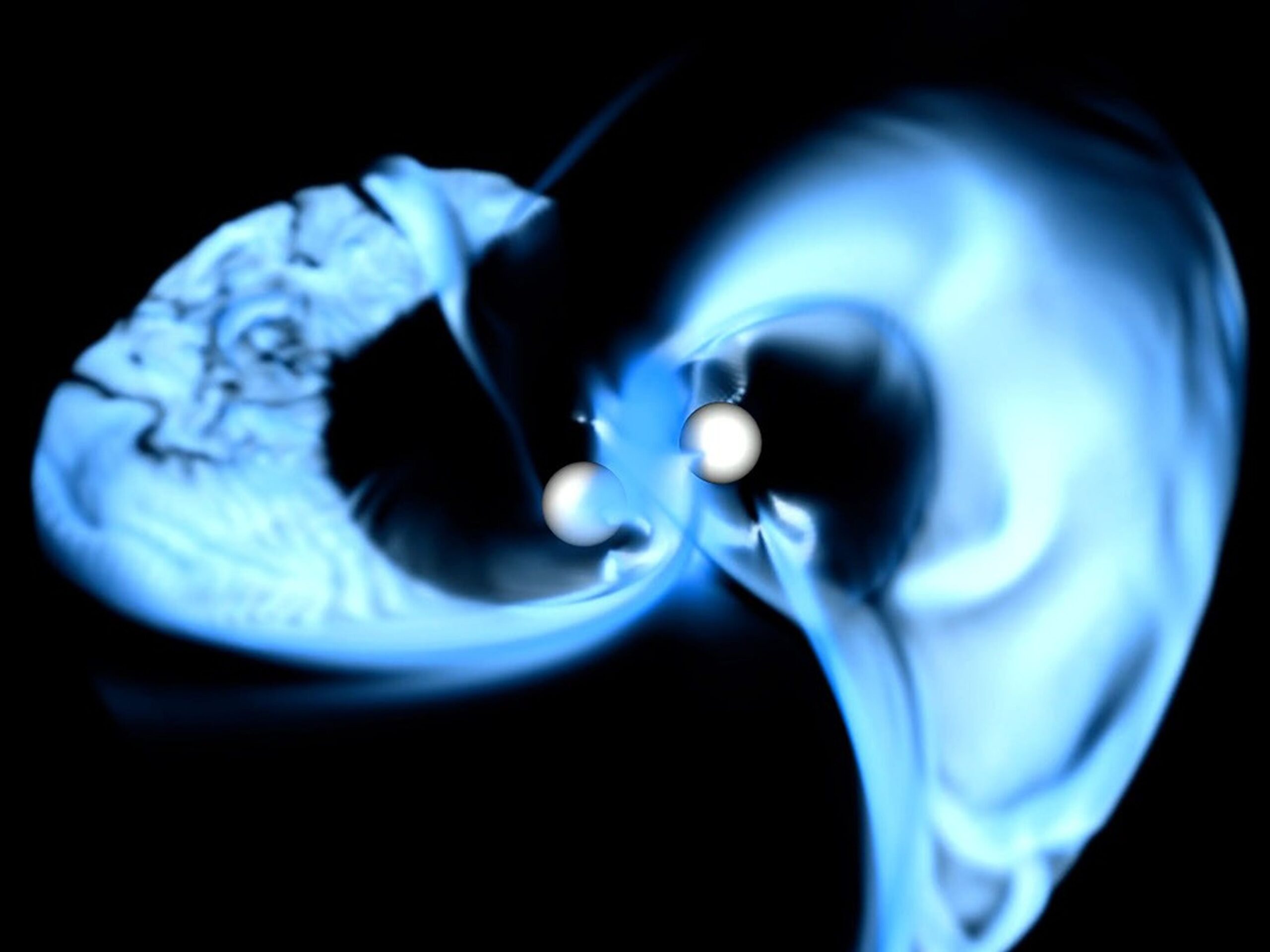
NASA has made a significant breakthrough in understanding the dramatic events occurring just milliseconds before neutron stars collide. According to a study published in The Astrophysical Journal, researchers from NASA and the University of California, Berkeley have identified key phenomena that precede these catastrophic cosmic events.
Neutron stars, which are the remnants of massive stars that have undergone supernova explosions, are incredibly dense and powerful. When two neutron stars collide, they can create gravitational waves—ripples in space-time that can be detected across vast distances. The study provides insights into the conditions leading up to these collisions, enhancing our understanding of the universe’s most violent occurrences.
The research team utilized data from the Laser Interferometer Gravitational-Wave Observatory (LIGO) and the Virgo detector, which have both been pivotal in capturing gravitational waves since their first detection in 2015. By analyzing gravitational wave signals from previous neutron star mergers, the researchers have been able to pinpoint the critical moments leading up to the collisions, occurring just milliseconds before impact.
These findings not only contribute to the understanding of neutron star dynamics but also have broader implications for astrophysics. The data reveals how the stars interact in their final moments, providing a clearer picture of the processes that govern such extreme events.
Dr. David Shoemaker, a spokesperson for LIGO, emphasized the importance of this research: “Understanding the final moments before neutron star collisions allows us to learn about the fundamental laws of physics under extreme conditions. This could lead to new insights into the evolution of stars and the formation of black holes.”
Gravitational Waves and Cosmic Significance
Gravitational waves are not just a fascinating subject; they represent a new way of observing the universe. The ability to detect and analyze these waves opens up a vast array of possibilities in astrophysical research. As more signals are captured, scientists expect to gather data that could answer fundamental questions about the origins of the universe and the behavior of matter in extreme environments.
The study also highlights the role of international collaboration in modern science. Researchers from various institutions worldwide have contributed their expertise and resources, demonstrating the power of global teamwork in uncovering the mysteries of the universe.
As interest in astrophysics continues to grow, NASA’s latest findings promise to inspire future generations of scientists and enthusiasts. By delving into the chaotic moments before neutron stars collide, researchers are not only expanding our understanding of the cosmos but also igniting curiosity about the universe’s most enigmatic phenomena.
In conclusion, the revelations from this study mark an important milestone in astrophysics, providing deeper insights into neutron star collisions. The findings underscore the significance of gravitational wave research and its potential to reshape our understanding of cosmic events. As technology advances and more data becomes available, the quest to comprehend the universe will undoubtedly continue to evolve, revealing new dimensions of knowledge.