Iran has conditionally agreed to resume nuclear negotiations with the United States, marking the first such discussions since military strikes were carried out against its nuclear sites last summer. The talks, set to take place in Istanbul, will involve Iranian Deputy Foreign Minister Abbas Araghchi, US Special Representative Steve Witkoff, and Jared Kushner. This diplomatic effort comes as tensions escalate in the region, with both countries seeking to avoid further military confrontations.
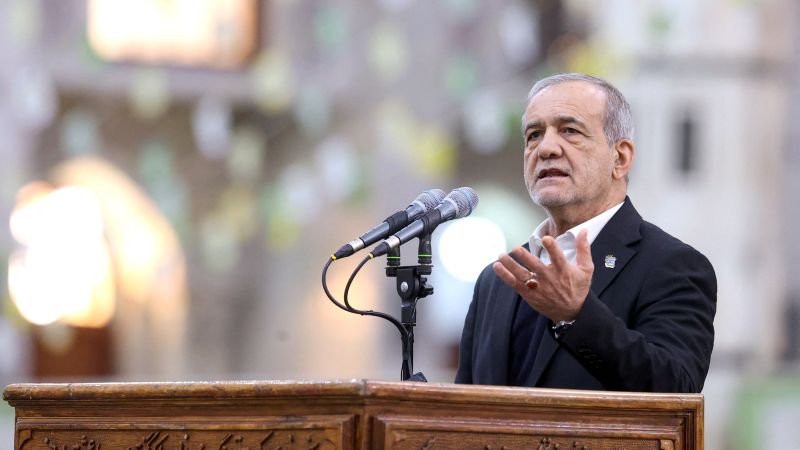
The Iranian President Masoud Pezeshkian confirmed the country’s intent to pursue negotiations, emphasizing that these would occur only under specific conditions. He stated, “I have instructed my Minister of Foreign Affairs, provided that a suitable environment exists — one free from threats and unreasonable expectations — to pursue fair and equitable negotiations.” This statement was shared on social media platform X and indicated the Iranian leadership’s cautious approach to resuming talks. Pezeshkian added that the negotiations would align with Iran’s national interests and were initiated following requests from “friendly governments in the region.”
While Pezeshkian holds the presidency, ultimate authority lies with Ayatollah Ali Khamenei, Iran’s Supreme Leader. Khamenei has issued stern warnings regarding US military actions, stating that any strike on Iran would lead to a significant regional conflict. Tensions have heightened recently, particularly after President Donald Trump deployed a US naval strike group to the area and reiterated threats of military action if Iran does not agree to a new nuclear deal.
Recent reports suggest that the diplomatic efforts in Istanbul are part of a broader initiative involving key regional players. Countries such as Qatar, Turkey, and Egypt have been active in facilitating dialogue to prevent escalation. Foreign ministers from several nations, including Egypt, Oman, and Saudi Arabia, are expected to attend the Istanbul discussions, reflecting a widespread interest in de-escalating the situation.
Trump has expressed some optimism regarding the upcoming negotiations, stating on Sunday that Iran has been “seriously talking to us.” Araghchi echoed this sentiment, expressing confidence in reaching a deal. Nevertheless, Iranian officials have maintained a firm stance on critical issues, particularly concerning their enriched uranium stockpiles. Ali Bagheri, head of foreign policy at Iran’s Supreme National Security Council, declared that Iran “has no intention” of negotiating over these stockpiles.
The backdrop to these talks is complex. In January 2025, the International Atomic Energy Agency (IAEA) raised concerns about Iran enriching uranium up to 60%, a level that raises alarm for the international community. Ali Shamkhani, a senior adviser to Khamenei, indicated that the US “must offer something in return” if it seeks to curtail Iran’s enrichment activities.
Additionally, intelligence reports suggest that Iran is reinforcing its nuclear facilities, making them more fortified against potential strikes. The regime has also restricted access for UN inspectors to its nuclear sites, complicating transparency efforts.
In summary, these upcoming negotiations in Istanbul represent a critical juncture in US-Iran relations, with both sides navigating a landscape filled with historical grievances and current geopolitical pressures. The focus will be on whether a compromise can be reached that satisfies both parties, while preventing further military engagement.