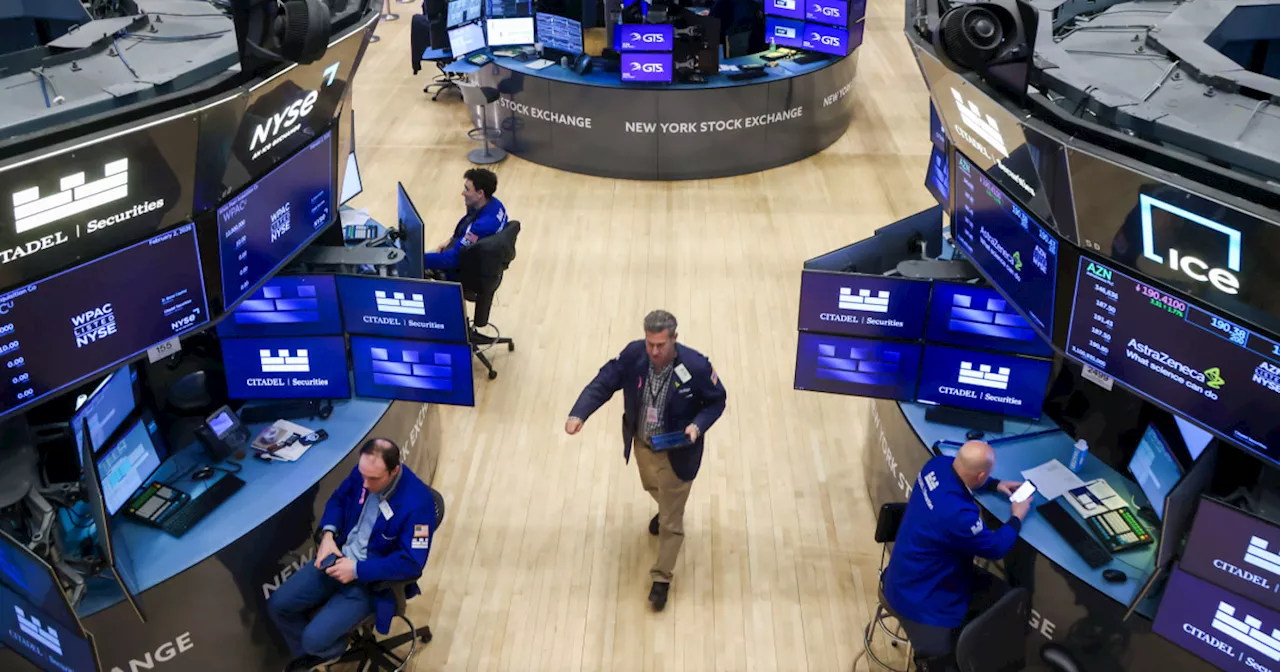
The stock market experienced a significant rebound on Friday, with the S&P 500 rising by 1.97%, marking its best performance since May. This surge followed a week characterized by intense selling activity, primarily driven by the implications of the AI boom for the economy, companies, and the labor market. The Nasdaq Composite also saw a notable increase, climbing 2.18% on the same day.
Despite this positive shift, the rebound concealed deeper issues within the technology sector. Shares of Amazon, the fifth-largest public company globally, plummeted by 5.58% after the company announced plans to invest $200 billion in the upcoming year, with a significant portion allocated to its Amazon Web Services division, the world’s leading cloud provider. Since the start of the week, Amazon’s stock has dropped 12%, erasing over $310 billion in market value. Similar downturns have affected other tech powerhouses like Microsoft and Meta, both of which disclosed extensive spending plans on AI initiatives.
Collectively, Amazon, Microsoft, Meta, and Alphabet are expected to invest approximately $650 billion this year to enhance their data center and AI capabilities. Over the past five days, these four companies have collectively seen their market value diminish by nearly $1 trillion. The S&P 500 and Nasdaq Composite ended the week with losses, although some sectors exhibited strong performance.
Industrial stocks, particularly Caterpillar, and several energy firms surged due to expectations of increased demand for their services in support of data centers. Both the industrial and energy sectors of the S&P 500 emerged as top performers on Friday. The technology sector also received a boost from chipmakers, with shares of Nvidia skyrocketing by nearly 8%. Nvidia’s market capitalization has now surpassed $4.5 trillion. Earlier in the week, CEO Jensen Huang characterized the sell-off as “the most illogical thing in the world” and reaffirmed his confidence in the sector during an appearance on CNBC, citing “incredibly high” demand for AI applications.
In contrast, Apple also saw an increase of 7% this week, as the company has been largely insulated from the recent AI-related sell-offs. Unlike its peers, Apple typically sources its cloud computing capacity from other providers rather than developing its own data centers.
The market turmoil began on Tuesday when AI developer Anthropic announced advancements in AI agents capable of performing complex tasks, including data analytics. This announcement triggered panic among investors in software companies and firms supplying data analysis across various sectors, including real estate, human resources, and banking. The fear that AI agents could disrupt their business models led to significant sell-offs throughout the week. Private credit firms, which hold stakes in many major software and data companies, also experienced substantial declines.
In a noteworthy achievement, the Dow Jones Industrial Average reached 50,000 for the first time, capturing considerable attention. While such milestones often generate headlines, the Dow consists of only 30 stocks, making it a less effective indicator of broader market strength compared to indices like the S&P 500. Following the milestone, former President Donald Trump celebrated on social media, posting: “CONGRATULATIONS AMERICA!”
Despite the Dow’s success, the more representative S&P 500 has seen a modest increase of less than 1% year-to-date. In the cryptocurrency market, the value of one bitcoin fluctuated dramatically, swinging nearly $10,000 within 24 hours. After dipping close to $60,000 late Thursday, it rebounded to over $70,000 by late Friday. However, analysts caution that cryptocurrencies often behave independently from traditional assets like stocks and bonds. Paul Donovan, chief economist at UBS Global Wealth Management, stated on Friday that “crypto is not an asset” and is predominantly held by a small segment of the population, suggesting that recent market movements are unlikely to influence consumer behavior.
Finally, small and medium-sized stocks significantly outperformed their larger counterparts on Friday, with the Russell 2000 index surging nearly 4%. Analysts from Bank of America noted, “We are long Main St., short Wall St.,” indicating that smaller stocks may continue to thrive until there is an improvement in Trump’s approval ratings.
This week’s events underscore the volatility and complexity of the current stock market landscape, with significant implications for both investors and companies alike. As major firms navigate the challenges and opportunities presented by AI advancements, the market will likely remain dynamic in the weeks to come.