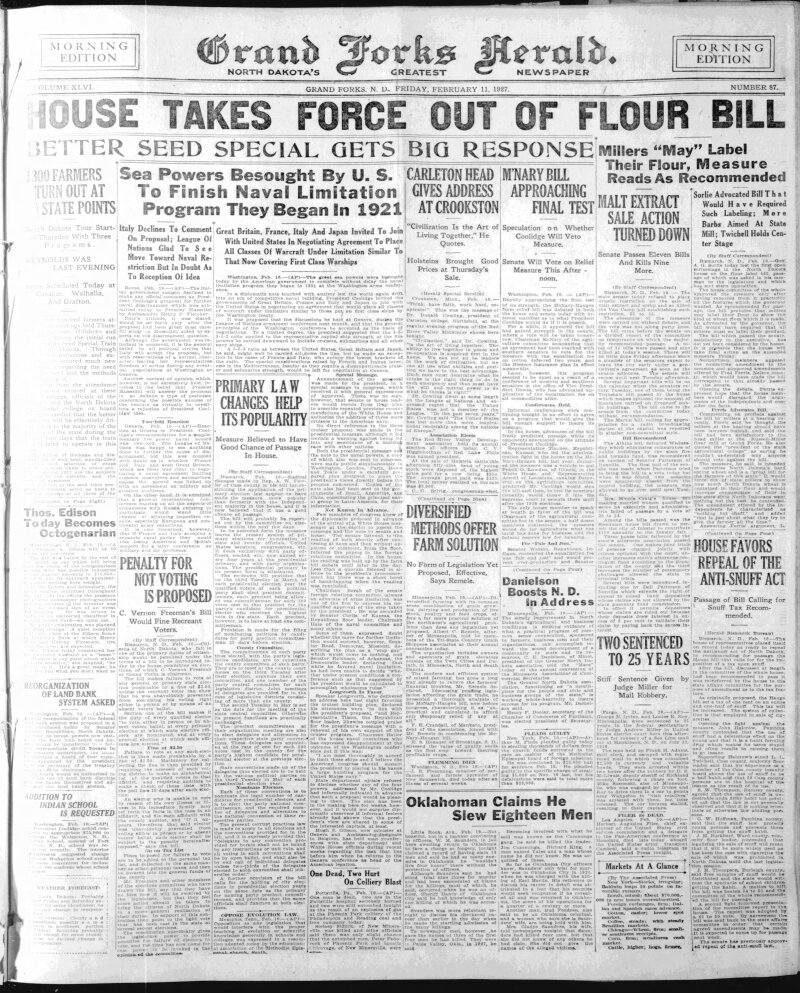
On February 11, 1927, a significant proposal emerged from North Dakota that would impose a fine on citizens who fail to vote. Spearheaded by C. Vernon Freeman, chair of the North Dakota House Committee on Elections, the proposed bill seeks to address the perceived apathy towards civic duties in the state.
Freeman introduced the bill following observations of low voter turnout in recent elections. The legislation stipulates that any qualified elector who does not participate in general or primary state elections would be subject to a fine of $2.50. This penalty could be waived if the individual can demonstrate that they were unavoidably prevented from voting, either in person or through an absentee ballot.
The bill outlines clear responsibilities for qualified voters, mandating participation at every primary election where state officers are nominated, as well as at general elections for such officers. Should an elector fail to comply, the bill allows for the collection of fines through local tax lists, treating them as personal taxes that contribute to the general funds of the county.
To facilitate the enforcement of this legislation, the bill requires assessors in each voting district to compile an alphabetical list of qualified voters. Auditors must then cross-reference these lists with poll records 15 days following each election. Individuals unable to vote due to personal illness or family emergencies may submit an affidavit to the county auditor, detailing their circumstances. If the affidavit is accepted, they would not incur the penalty.
Freeman, along with fellow committee members, expressed uncertainty about how the legislature will react to their proposal. They hope that taking action will encourage North Dakotans to better understand their voting responsibilities and increase participation in future elections. The bill aligns with the state constitution, which grants the legislature authority to enforce penalties for non-voting.
As the matter progresses through the legislative process, it remains to be seen whether penalties will indeed be enacted and how this might influence voter engagement across North Dakota.