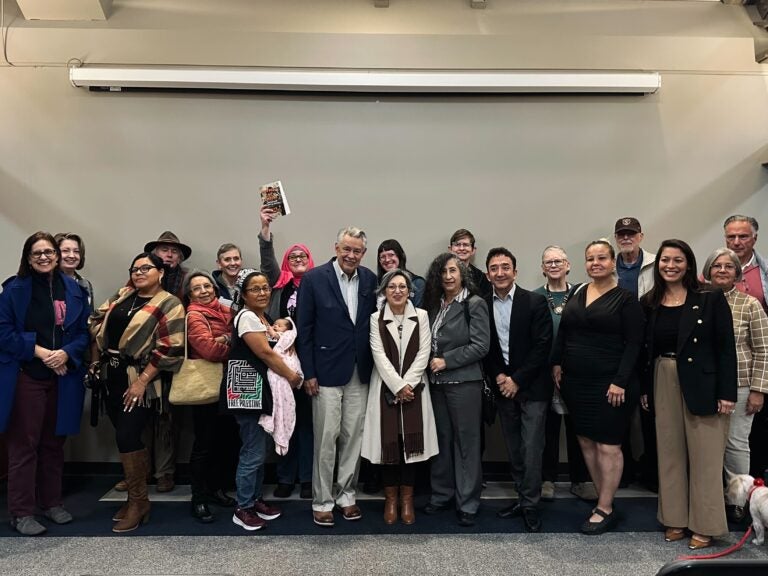
UPDATE: Nearly 50 attendees gathered at the Delaware History Museum this week for a powerful presentation by award-winning journalist Juan González, emphasizing the crucial role of Latino migration in shaping the United States. The event, titled “Latinos and Migration to the United States: The Untold Story,” was held as part of Delaware250’s efforts to commemorate the 250th anniversary of the Declaration of Independence.
González, a prominent figure at the Great Cities Institute and co-host of “Democracy Now!”, urged attendees to recognize that the narrative of America is incomplete without understanding the contributions of its Latino population, which exceeds 68 million today. “Most Americans have little knowledge of how and why the Latino community developed,” González stated. His insights are particularly vital as communities reflect on America’s complex history and evolution.
The event took place simultaneously in Georgetown and Wilmington, inviting a diverse audience to engage in discussions about the historical and ongoing influence of Latinos in America. González detailed how U.S. political and economic actions in Latin America have led to significant migration waves, asserting, “You cannot really understand the presence of so many Latinos in the United States unless you first understand the role of the U.S. empire in Latin America.”
He stressed that Latino labor has been a cornerstone of American prosperity, highlighting that profits from investments in Latin America primarily benefited U.S. companies rather than local economies. “Latinos have a big part of the role in the prosperity that most Americans take for granted,” González explained.
Attendees were captivated by González’s exploration of Latino historical presence, which dates back over 200 years. He pointed out that many Americans mistakenly view Latinos as recent arrivals, ignoring their longstanding contributions to the nation. “Most Americans just think that Latinos are newcomers,” he remarked.
Among the attendees was Carmen Guerrero, an Indigenous activist from Mexico living in Pennsylvania. Guerrero expressed pride in her heritage and emphasized the importance of such events for education and empowerment. “We have been colonized, and part of that is being denied the right to education. Coming to these events is a way to educate ourselves,” she stated in both English and Spanish.
González’s message resonated deeply as he connected the discussion to current educational demographics: Latino youth accounted for 28.7% of U.S. public school enrollments in fall 2022, with Delaware reflecting similar trends. In districts like Indian River, Latino students made up 37.5% of the population, underscoring the importance of representation in education.
As Delaware prepares to celebrate its 250th anniversary, the revelations from González and the voices of attendees like Guerrero highlight a shared understanding: America’s narrative is enriched by its Latino and Indigenous histories. “We must organize ourselves to advocate for our communities,” Guerrero concluded, showcasing the event’s impact on personal empowerment and community advocacy.
This event marks a significant moment for Delaware and its residents, demonstrating a commitment to uncovering the complexities of the nation’s history. Stay tuned for more updates as the story of Latino resilience continues to unfold.