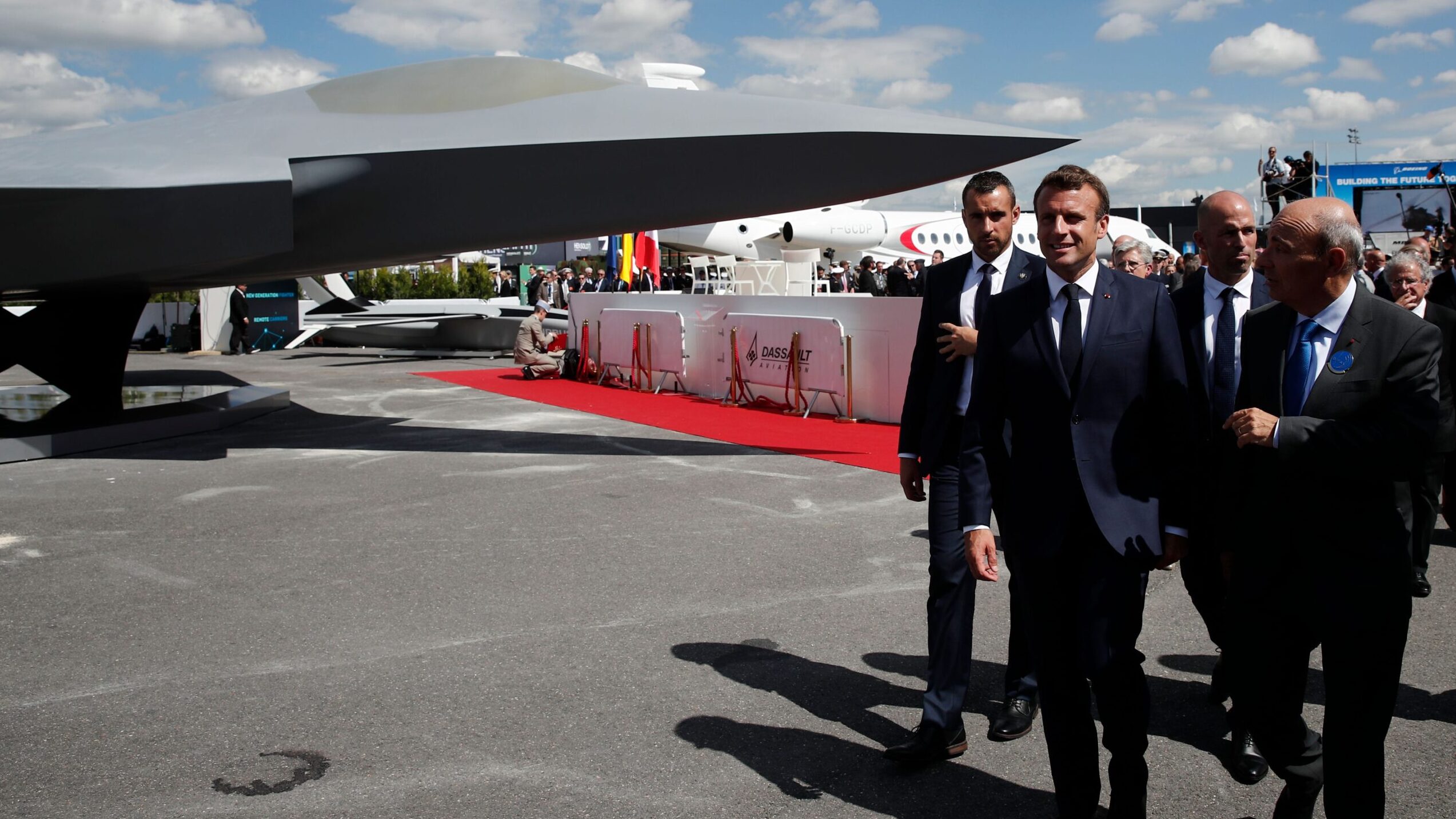
The Future Combat Air System (FCAS) project faces potential collapse if ongoing disputes between Dassault Aviation and Airbus are not resolved, according to Eric Trappier, CEO of Dassault. Speaking to reporters in Paris, Trappier emphasized that while France remains committed to the initiative alongside Germany, the company is prepared to pursue alternative partnerships if disagreements persist.
“If Airbus maintains its position of not wanting to work with Dassault, then the project is dead,” Trappier stated. He made it clear that the decision on potential new partners lies with the French authorities, who would need to explore collaborations with other nations to develop the system.
The tensions between the two aerospace giants are palpable. Trappier responded to remarks made by German Chancellor Friedrich Merz last month, who indicated that Germany required different capabilities than France for a sixth-generation fighter. Trappier firmly rejected this notion, asserting, “France does not support the idea of two aircraft.” He noted that French officials have reiterated that the operational requirements for the fighter system are aligned between the two nations.
During a recent visit to India, French President Emmanuel Macron echoed Trappier’s sentiments, advocating for a unified European model in defense systems. Macron remarked that the friction between industrial partners should not dictate national strategies, emphasizing the necessity for a common approach in military capabilities. “Is it the best use of our money to develop several planes? We must have a European standard,” he stated.
Trappier highlighted that the core issue lies in the relationship between Dassault and Airbus. He acknowledged Dassault’s positive partnerships with Germany but criticized Airbus for allegedly not adhering to the initial FCAS contract. This contract, he noted, encompasses the development of the Next Generation Fighter (NGF), drone wingmen, and a combat cloud communications network. Under the agreement, Dassault was designated as the leader for the fighter jet development, while Airbus was responsible for the supporting elements.
He stated, “Dassault believes that in order to be efficient there must be a real leader who decides that this sub-contractor is proficient, or not.” Trappier indicated that while he understands Airbus’s discomfort with this leadership structure, he cannot accept a shared leadership model. He confirmed that Dassault will act as a subcontractor for the drone wingmen, a role he expressed confidence in fulfilling.
Airbus has not provided comments on the current situation, but previous statements from the company indicate a recognition of existing tensions. In June, Jean-Brice Dumont, head of air power at Airbus Defence and Space, acknowledged the challenges but reaffirmed Airbus’s commitment to the FCAS project. He noted that it was already too late for Airbus to shift focus to the competing Global Combat Air Program (GCAP), which involves collaboration among the UK, Italy, and Japan.
If the FCAS collaboration fails, industry analysts speculate that it could lead to the development of two distinct fighter airframes: one from France and another from Germany, alongside Spain, which is also a partner in the FCAS initiative. Paul Taylor, a senior visiting fellow at the European Policy Centre, remarked, “It’s been clear for a year or two that FCAS is dead, it just won’t lie down, because it’s a political project.”
Despite the challenges surrounding the FCAS program, Dassault’s financial health appears robust. The company reported a nearly 27 percent increase in its value since the beginning of the year, indicating that it remains a strong player in the aerospace sector, regardless of the outcome of the FCAS discussions.