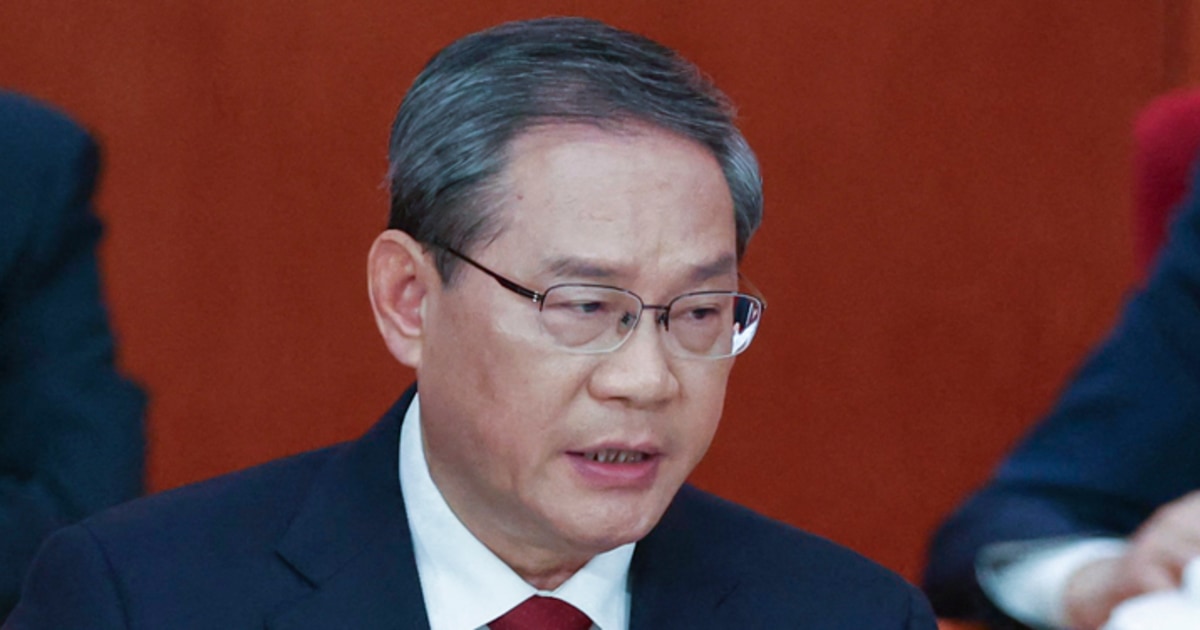
China has officially set its lowest economic growth target in 35 years, aiming for a gross domestic product (GDP) growth rate of between 4.5% and 5% for the year. This announcement was made by Premier Li Qiang during a “work report” presented at the opening session of the National People’s Congress in Beijing on March 7, 2024. This target, the lowest since 1991, marks a notable decline from the 5% target achieved last year and reflects increasing challenges within China’s economic framework.
The Premier’s address highlighted the ongoing struggles faced by the world’s second-largest economy, acknowledging that the growth model that has powered its expansion for decades is showing signs of fatigue. “While recognizing our achievements, we are also clear-eyed about the difficulties and challenges we face,” Li stated during his extensive speech, which lasted over an hour.
The National People’s Congress is China’s most significant political event of the year, where the ruling Communist Party establishes economic goals and policy directions. The event is closely monitored by global observers, especially with Chinese leader Xi Jinping presiding over it. The timing of this year’s Congress is particularly notable, with U.S. President Donald Trump expected to visit China on March 31 for a meeting focused on extending a fragile trade truce.
As China grapples with a slowing economy, it is striving to balance its export-dependent model with a push for increased domestic demand. This transition is complicated by structural issues such as a prolonged slump in the property market, industrial overcapacity, and soaring local government debt. The government is also investing heavily in cutting-edge technologies such as artificial intelligence and robotics to maintain its competitive edge against the United States.
In response to U.S. tariffs imposed during the trade war initiated by Trump upon his return to office last year, Li announced that economic policies would be rolled out to counteract their effects. Despite a significant decline in exports to the U.S., China reported a record trade surplus of almost $1.2 trillion last year, thanks to increased sales to other global markets.
Alongside economic strategies, China is also increasing its defense spending by 7%, bringing the total to over $275 billion. This figure is slightly down from 7.2% last year but remains consistent with recent trends. In the context of rising regional tensions, particularly regarding Taiwan, Li emphasized the need for solid military training and the development of advanced combat capabilities.
The geopolitical landscape is further complicated by ongoing tensions surrounding Iran, a longstanding ally of China. Beijing has been a critical partner for Iran, purchasing approximately 80% of its crude oil imports at discounted rates, although these imports only account for about 13% of China’s total oil imports. The situation has intensified with recent U.S.-Israeli military actions against Iran, which have raised concerns for China, particularly regarding the Strait of Hormuz, a vital shipping route for its energy needs.
China’s demographic challenges are also a pressing concern as the country faces a rapidly aging population. With over 20% of its population aged 60 and older, there is an urgent need to enhance services for older citizens. Li proposed initiatives aimed at creating a “childbirth-friendly society” to address declining birth rates, prioritizing marriage and family formation among younger generations who cite high living costs and job insecurity as significant deterrents.
As the Congress progresses, China’s leadership continues to project confidence in its ability to navigate these multifaceted challenges, maintaining a focus on stability amidst global uncertainties. The outcome of the upcoming meeting between Trump and Xi will likely play a crucial role in shaping the future of U.S.-China relations as both nations seek to stabilize their economic interactions.