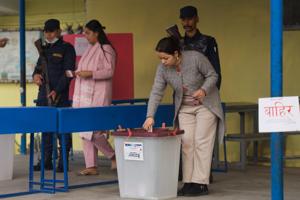
Voting proceeded without incident in Nepal on March 7, 2024, during the country’s first nationwide election since a youth-led uprising in September 2025 forced the government from power. Turnout was approximately 60%, according to acting Chief Election Commissioner Ram Prasad Bhandari, who noted only minor incidents were reported throughout the day.
Counting of the votes began shortly after ballot boxes were collected and transported to counting centers, with some results expected by the weekend. Helicopters were employed to transport boxes from remote mountain polling stations, ensuring timely delivery by Friday morning. The next government faces significant challenges, including demands for reform stemming from the recent protests, entrenched corruption, and the need to navigate relations with influential neighbors, India and China.
First-time voter Luniva expressed her hopes for change, stating, “I came to vote mainly because of the protest and so many people gave their lives in the hope of a change, in hope of seeing a better Nepal.” Her sentiments reflect the aspirations of many voters who are looking for positive transformations following months of political unrest.
The election allows voters to directly elect 165 members to the House of Representatives, the lower chamber of Parliament, while the remaining 110 seats will be filled through a proportional representation system. This system enables political parties to nominate lawmakers based on their share of the vote, facilitating a more inclusive political landscape.
The election is characterized as a three-way contest, largely influenced by voter dissatisfaction with corruption and a desire for increased government accountability. The newly established National Independent Party, founded in 2022, has emerged as a strong contender, challenging the long-standing dominance of the Nepali Congress and the Communist Party of Nepal (Unified Marxist–Leninist).
Leading the National Independent Party is rapper-turned-politician Balendra Shah, who gained prominence after winning the 2022 mayoral race in Kathmandu. Shah, a significant figure in the 2025 protests that ousted former Prime Minister Khadga Prasad Oli, has focused his campaign on critical issues like health and education for underprivileged Nepalis. His rise reflects a growing discontent with traditional political parties, as evidenced by the substantial crowds he has attracted during his campaign.
The protests that led to the recent political upheaval began when a social media ban incited public outrage. This unrest escalated into widespread demonstrations against the government, resulting in dozens of fatalities and hundreds of injuries as protesters clashed with authorities.
While the Nepali Congress and the Communist Party maintain loyal voter bases, the National Independent Party’s appeal among younger voters seeking alternatives has been notable. The Election Commission of Nepal reports approximately 19 million registered voters in a country of nearly 30 million people. However, millions of Nepalis living abroad, estimated at 3 million, remain unable to participate in the election due to the absence of a voting system for citizens residing overseas.
As Nepal embarks on this pivotal electoral journey, the hope for a new political landscape remains at the forefront of voters’ minds. The outcome of this election has the potential to reshape the country’s governance and address the pressing issues that have fueled public dissatisfaction.