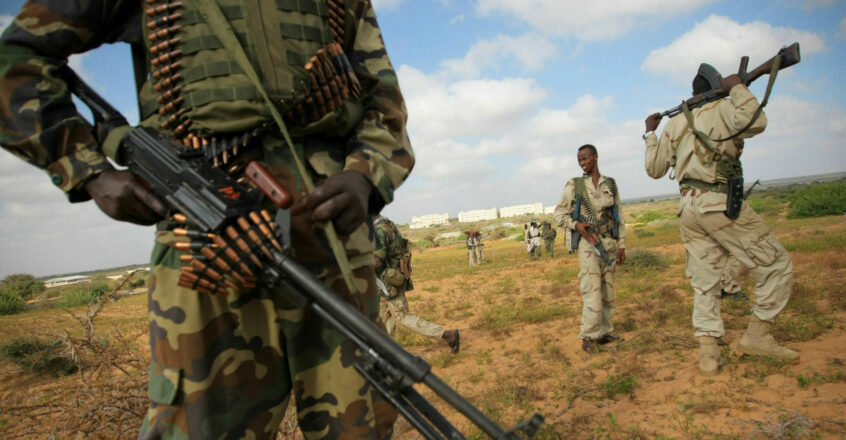
UPDATE: New reports reveal a critical contradiction in U.S. policy regarding Sudan as the country’s military increasingly aligns with Islamist militias amid a brutal civil war. This urgent situation highlights the role of the Sudanese Armed Forces (SAF), led by General Abdel Fattah al-Burhan, whose relationship with the Muslim Brotherhood poses significant challenges for international diplomacy.
As violence escalates, the SAF has been observed subordinating its operations to non-Sudanese interests linked to the Muslim Brotherhood. This alarming development undermines ongoing efforts for democratic reform and peace negotiations. The U.S. has previously labeled the Brotherhood as a terrorist organization in other regions, creating a troubling policy inconsistency if the SAF continues to be regarded as a legitimate national army.
The Muslim Brotherhood’s influence in Sudan can be traced back to the 1989 coup that brought Omar al-Bashir to power. Their networks have infiltrated state institutions, transforming them into vehicles for ideological and criminal agendas. Following the military overthrow of Bashir in 2019, these networks persisted within the SAF, ensuring the continuation of Islamist power despite the regime’s fall.
Key figures like Ali Karti, the secretary-general of the Sudanese Islamic Movement, and Ahmed Haroun, a war criminal linked to the ICC, have solidified their control within the SAF. Karti commands the El Baraa Ibn Malik Brigade, a hardline militia with connections to Iran, while Haroun has mobilized Islamist forces following his escape from prison in 2023. Their operations have led to egregious human rights violations, including the obstruction of humanitarian aid and systematic violence against non-Arab ethnic groups.
The international community is now facing heightened scrutiny over its engagement with the SAF. Reports indicate that thousands of Islamists from the former regime have joined forces with the SAF, complicating efforts to restore peace. The U.S. Treasury has already sanctioned Karti’s brigade for its role in arbitrary arrests and torture, emphasizing the urgent need for reassessment of diplomatic strategies.
Humanitarian crises are worsening as the SAF uses starvation as a weapon of war. The Civil Democratic Alliance for Revolutionary Forces (Somoud) has called on the international community to support democratic transitions and criminalize Brotherhood-aligned militias. Meanwhile, the Sudan Founding Alliance (Tasis) advocates for a new democratic and secular Sudan, highlighting the necessity for international partners to rethink their engagement with Islamist networks entrenched within the SAF.
The implications of this evolving situation are profound. As tensions rise, policymakers are confronted with a critical question: will continued support for the SAF and its leadership further entrench the very forces obstructing peace and democracy in Sudan?
With the situation rapidly developing, it is essential for global leaders to address the contradictions in their policies toward Sudan and prioritize the establishment of a stable and democratic governance structure. The fate of millions hangs in the balance as Sudan’s civil war continues to unfold, making it imperative for international actors to act decisively and thoughtfully.
Stay tuned for further updates on this developing story as the international community grapples with the complexities of Sudan’s political landscape.