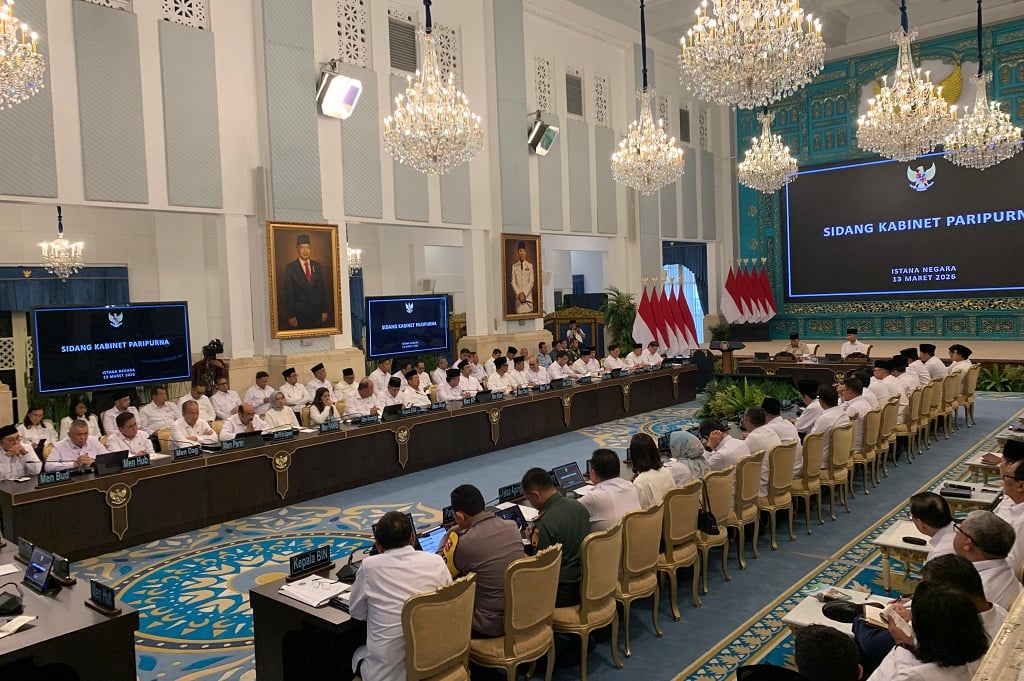
President Prabowo Subianto is exploring potential salary reductions for government ministers and members of the Indonesian House of Representatives (DPR) as part of a broader strategy to implement austerity measures in response to the ongoing conflict in the Middle East. This proposal has garnered a response from M Sarmuji, the Secretary-General of the Golkar Party, who indicated that party members are prepared to accept pay cuts if necessary.
In a statement made on March 14, 2026, Sarmuji emphasized that the decision to reduce salaries is not merely an issue of financial savings but reflects a greater awareness of the current national situation. “If the country needs us, we are ready to accept salary cuts,” he remarked during a phone interview. He underscored the importance of demonstrating sensitivity to the prevailing conditions impacting the nation.
Sarmuji’s comments come amid ongoing discussions about the economic implications of international conflicts, particularly those affecting global oil prices and trade. The Golkar Party, which plays a significant role in Indonesia’s political landscape, has positioned itself as willing to make sacrifices for the benefit of the state. This sentiment highlights a broader push among political leaders to prioritize national interests over personal financial considerations.
The proposed salary cuts are part of a larger economic strategy that the government is considering to mitigate the financial impact of external crises. By addressing compensation for high-ranking officials, President Subianto aims to set a precedent for fiscal responsibility within the government, potentially influencing other sectors to follow suit.
As the situation evolves, the response from other political parties and constituents will be crucial. The public’s perception of government leaders taking pay cuts may affect political dynamics in the lead-up to future elections. The willingness of party members to accept these changes may also signal a shift in political priorities, focusing on collective responsibility during challenging times.
Overall, the discourse surrounding salary adjustments reflects ongoing efforts by Indonesian leaders to navigate complex economic challenges while maintaining public trust. As more details emerge, the implications of these discussions will become clearer, shaping the future of governance in Indonesia.