
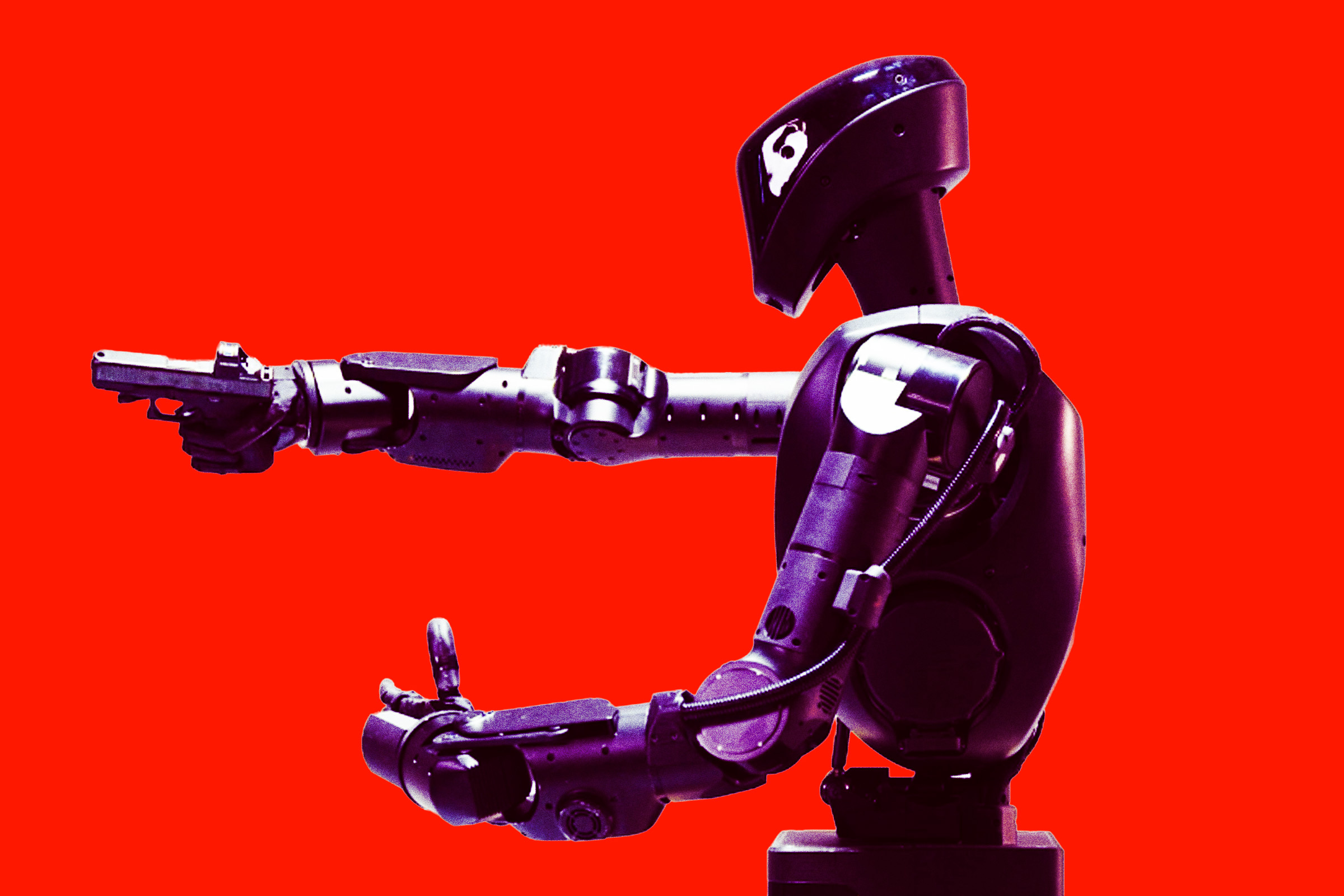
Humanoid robots have officially made their debut on the frontlines of the ongoing conflict in Ukraine. Foundation Robotics, a robotics firm co-founded by combat veteran Mike LeBlanc, has sent two units of its humanoid robot, the Phantom Mk-I, for reconnaissance missions. This deployment marks a significant milestone, as it appears to be the first instance of humanoid robots being utilized in a combat zone.
In a recent interview with Time, LeBlanc disclosed that the Phantom Mk-I units were dispatched to Ukraine in February 2024. While these robots have already been tested in various factory settings worldwide, their introduction to the battlefield represents a new frontier in military technology. The Phantom Mk-I is not merely a reconnaissance tool; it is designed with capabilities that could enable it to wield various firearms, including revolvers and shotguns.
Transforming Military Operations
LeBlanc emphasized a moral imperative behind the deployment of these robots, asserting that their use in warfare could reduce the risks faced by human soldiers. He envisions the Phantom evolving into a fully functional combat robot capable of using “any kind of weapon that a human can,” reminiscent of the fictional robots seen in the “Terminator” movies.
The battlefield in eastern Ukraine is already witnessing extensive use of unmanned systems. According to United24, a Ukrainian state news agency, the country has conducted 7,495 robotics operations in January 2024 alone. While many of these operations focus on logistical tasks, such as delivering weapons and supplies, some robots are equipped with weaponry, including Kalashnikov machine guns. Footage from earlier this year showed a Ukrainian robot forcing Russian soldiers to surrender, highlighting the evolving dynamics of modern warfare.
Russia has also been integrating robotics into its military strategy but has yet to deploy humanoid units similar to the Phantom Mk-I. The race to leverage robotic technology in combat continues on both sides, with implications that could reshape future military engagements.
Future Prospects and Broader Applications
Beyond the conflict in Ukraine, Foundation Robotics is exploring potential applications for their technology in other areas. The company is currently in close discussions with the Department of Homeland Security regarding the use of patrol robots along the US-Mexico border. Whether these robots will see deployment in homeland security remains uncertain, but the conversations indicate a growing interest in robotics for a variety of operational roles.
As the landscape of warfare and security continues to evolve, the introduction of humanoid robots like the Phantom Mk-I presents both opportunities and challenges. With technology advancing rapidly, the potential for such robots to become integral components of military and security operations is increasingly plausible. The implications for international conflict and security protocols are profound, raising questions about the future of human involvement in warfare.
The deployment of humanoid robots in Ukraine signifies not just a technological advancement but a potential shift in how military operations are conducted in the 21st century. The ongoing developments will be closely monitored as both combatants adapt to the changing nature of warfare.


