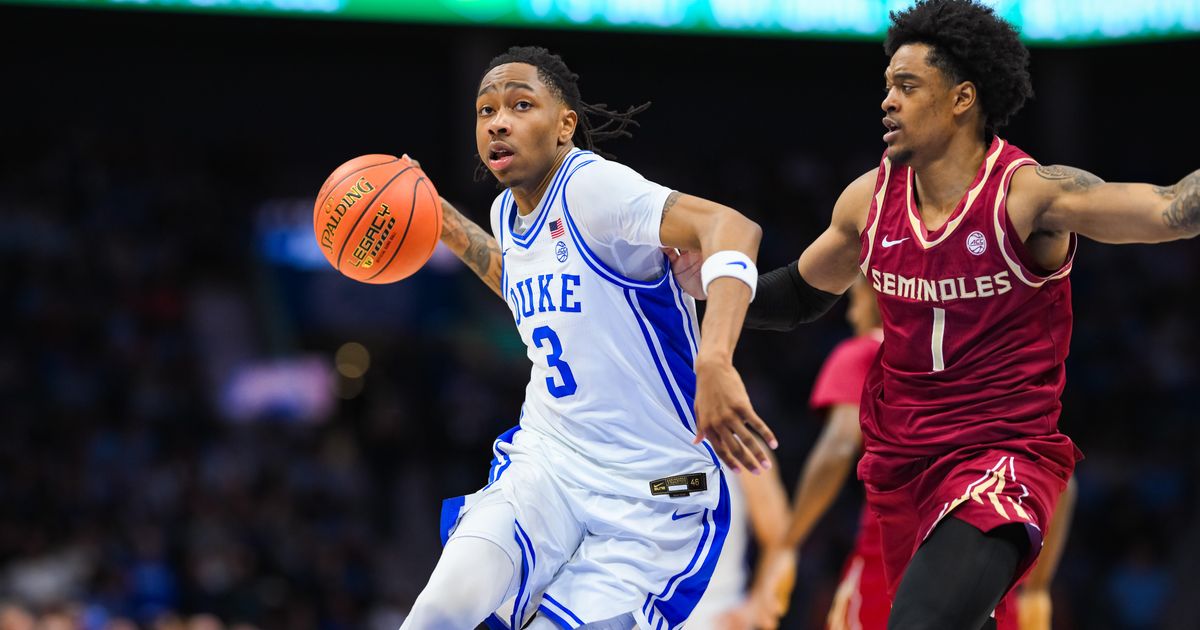
URGENT UPDATE: In a shocking revelation, Duke’s guard Isaiah Evans disclosed he received a threatening message from a disgruntled bettor just minutes after the Blue Devils’ victory on Friday night, which secured their place in the ACC Tournament championship game. Evans, who scored just six points and missed all seven of his 3-point attempts, was targeted with a message wishing him physical harm, highlighting the toxic atmosphere surrounding college sports betting.
Evans stated, “I just got a text right now. Some dude told me: ‘I hope you blow your knee out,’” bringing urgent attention to the pressures athletes face from aggressive bettors. This incident follows a significant increase in legal sports betting in North Carolina, where over $13 billion has been wagered since its launch in March 2024. Prop bets on individual player performance have become increasingly popular, intensifying the scrutiny on young athletes.
The situation is exacerbated by the fact that prop bets, like the over/under on Evans’ points set at 15 for the game against Clemson, put undue pressure on players. “Prop bets just aren’t healthy for the sport, especially with the threats that a lot of our players get,” Evans commented. “It’s definitely getting out of hand.”
Evans is not the only player feeling this pressure. Former North Carolina player Armando Bacot reported receiving hundreds of messages from angry fans after a game. Current Duke senior Maliq Brown noted he frequently hears about betting while navigating arenas, stating, “You can hear stuff” from fans.
Concerns over athlete harassment have reached the highest levels of the NCAA. NCAA President Charlie Baker has urged states to ban prop bets on college games, emphasizing their potential to lead to harassment and game manipulation. Some states, including Ohio and Louisiana, have already enacted bans, while others remain unregulated.
ACC Commissioner Jim Phillips echoed these sentiments, calling prop bets “dangerous” and advocating for their elimination, citing the pressures they place on student athletes. He stated, “We should have zero tolerance for that.” The implications are severe, as players face harassment not only from bettors but also from the public, complicating their lives as they attempt to balance academics and sports.
The popularity of prop bets has surged, with bettors frequently wagering on individual player statistics, ranging from points to rebounds. Joe Maloney, president of the Sports Betting Alliance, acknowledged this trend, stating, “Ultimately props have become popular because we are fans of players.”
Despite the growing concerns, legislative efforts to ban prop betting in North Carolina have stalled. State Representative Marcia Morey has introduced multiple bills to curb these practices, but they have made little progress. Morey, a former U.S. Olympic swimmer, remarked, “We’re seeing a huge increase in social media threats to college players.”
Former Representative Jason Saine, who championed the legalization of sports betting in North Carolina, defended the exposure of athletes to public criticism, stating, “Athletes are in the public sphere. They’re going to get criticized, period.”
As the debate continues, a new investigative documentary titled The Gamble: Sports Betting in North Carolina will premiere on March 18, exploring the rapid rise of the sports betting industry and its impact on college athletes.
As concerns mount, many are left questioning the integrity of college sports and the mental well-being of its players. The situation is evolving, and all eyes will be on how authorities respond to this growing crisis in the intersection of college athletics and gambling.