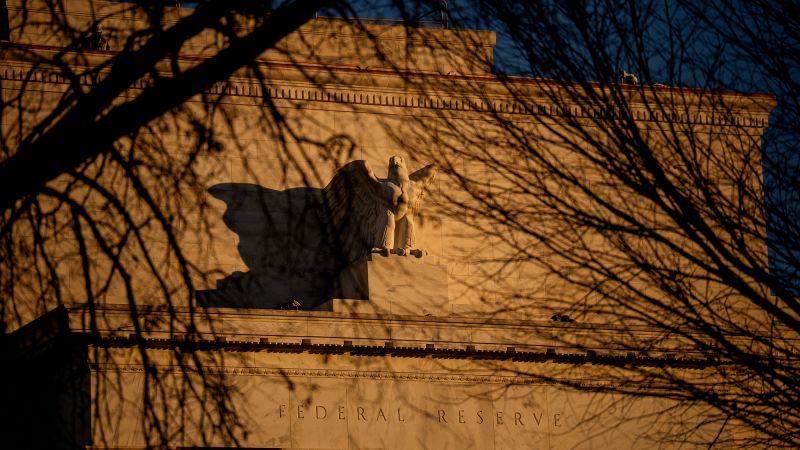
The Federal Reserve is confronting a significant challenge as the global oil crisis escalates, driven by geopolitical tensions. This week, the central bank’s policymakers are set to meet to discuss the implications of soaring oil prices, which recently saw West Texas Intermediate (WTI) crude briefly reach $120 per barrel. President Donald Trump’s escalating conflict with Iran is largely responsible for this surge, raising concerns about inflation and economic growth in the United States.
The impact of rising oil prices extends beyond the gas pump. Higher energy costs threaten to inflate the prices of a wide range of consumer goods, potentially squeezing both businesses and households. This situation places the Federal Reserve in a precarious position, balancing the risk of inflation against a weakening job market. The appointment of Kevin Warsh, Trump’s nominee to lead the Fed, awaits Senate confirmation at a particularly challenging time for advocating lower interest rates.
Historical Context and Economic Challenges
The current oil crisis shares similarities with past events, notably the 1973 Arab-Israeli War, which triggered a severe economic downturn characterized by stagflation. However, experts suggest that the current situation may be more complex. The United States, now the world’s largest oil producer, has significantly reduced its reliance on imported crude since the 1970s. Yet, the disruption in global oil markets today is unprecedented, with experts estimating that approximately 20 million barrels of Gulf oil production are currently affected by the conflict, compared to just 4.5 million barrels during the 1973 crisis.
According to Nicholas Mulder, a history professor at Cornell University, the scale of the current oil production disruption is several times larger than that experienced in the past. The Arab members of the Organization of Petroleum Exporting Countries (OPEC) had responded to the 1973 conflict by cutting off oil supplies to Western nations, inflicting severe damage on the US economy, which was heavily reliant on foreign oil.
In response to the economic turmoil of the 1970s, then-Fed Chair Arthur Burns hesitated to raise interest rates, believing that inflationary pressures were largely beyond the control of monetary policy. Though the Fed eventually implemented rate increases, the inconsistent approach allowed inflation to become entrenched, resulting in prolonged economic challenges.
Current Economic Indicators
Today, the economic landscape is markedly different. The US economy is predominantly services-based, offering some insulation against global oil supply disruptions. Fed officials generally acknowledge that monetary policy is crucial for addressing economic shocks. Yet, current geopolitical tensions, including attacks on oil facilities by Iranian drones and missiles, introduce a level of uncertainty that complicates the Fed’s decision-making process.
American consumers are already feeling the effects of rising oil prices. The University of Michigan’s latest consumer sentiment survey revealed a 2% decline in consumer confidence this month, with many respondents citing the ongoing conflict as a significant concern. Additionally, the Bureau of Labor Statistics reported a loss of 92,000 jobs in February, raising the unemployment rate to 4.4% from 4.3%. While job openings increased by 400,000 in January, there remain more unemployed individuals than available positions.
Economic experts are closely monitoring the situation. Tani Fukui, senior director of economic and market strategy at MetLife Investment Management, stated, “There’s very little question that there is going to be an inflation effect from the war with Iran. But how big it will be is still very much an open question.”
As the Federal Reserve navigates these complexities, the central question remains: Can historical lessons guide policymakers in preventing the economy from spiraling into turmoil during this oil crisis?