US Restricts Intelligence Sharing Amid North Korea Uranium Site Leak
The United States has sharply limited the intelligence it shares with South Korea following a South Korean lawmaker’s public disclosure of North Korea’s uranium enrichment site, heightening tensions between key allies amid ongoing nuclear threats.
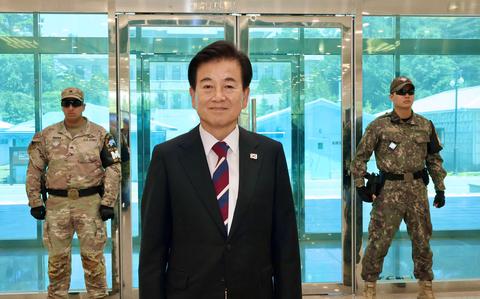
South Korea’s Unification Minister Chung Dongyoung publicly named North Korea’s Kusong region as a site for uranium enrichment during a National Assembly committee meeting on March 6, according to video footage. This disclosure prompted the US to curb sensitive intelligence sharing related to North Korea’s nuclear facilities, Yonhap News reported on April 21, citing unnamed sources.
The incident has sparked a diplomatic strain between Washington and Seoul, though both nations insist they continue real-time military coordination, particularly evident in recent North Korean missile launches in March and April. South Korean military officials confirmed that government intelligence gathering remains operational despite the limits.
Official Responses and Alliance Strain
South Korea’s Defense Intelligence Agency described details about the uranium enrichment site as a classified “joint secret” between the US and South Korea. A spokesman for National Assembly member Lim Jong-deuk, who serves on the National Defense Committee, stated the information disclosed was protected under joint secrecy protocols.
Minister Chung denied leaking any classified intelligence, asserting his remarks were based only on public information. He emphasized that framing the issue as a leak misrepresents the nature of his disclosure, as shown in a recent news briefing.
The South Korean Ministry of National Defense declined to confirm or deny the US-imposed sharing limits. Spokeswoman Chung Binna underscored that communications between Seoul and Washington remain close and frequent on major issues, with information regarding military readiness functioning properly.
“Specific, real-time disclosure of the status of information sharing… is entirely detrimental to our national security and the South Korea–U.S. alliance,” she warned.
U.S. Forces Korea spokeswoman Choi Min-jung also declined comment when reached by Stars and Stripes.
High-Level Talks Ongoing to Resolve Dispute
South Korea’s national security adviser, Wi Sung-lac, confirmed ongoing “active communication” with the US to resolve the sensitive issue during a press encounter in Hanoi. He did not confirm or deny the intelligence-sharing restrictions, citing the sensitive nature of the matter.
The controversy has spilled into South Korea’s political arena. Rep. Sung Il-jong, chair of the National Defense Committee, asserted that the remarks by Chung have strained the US-ROK alliance. He also claimed that US Army Gen. Xavier Brunson, commander of US Forces Korea, personally protested the disclosure to South Korean Defense Minister Ahn Gyu-back. The Defense Ministry, however, denied this account as “not true at all.”
South Korean President Lee Jae Myung publicly defended Minister Chung on social media, stating that the uranium site information was already widely available to the public before the disclosure.
Why This Matters Now
As North Korea continues advancing its nuclear weapons program, coordinated intelligence sharing between the United States and South Korea remains a cornerstone of the alliance’s regional security. Restrictions on this flow of information could impair joint efforts to monitor and respond to Pyongyang’s activities—putting pressure on efforts to maintain peace and stability on the Korean Peninsula.
The US and South Korea must quickly resolve these differences to preserve trust and bolster their defense posture amid ongoing threats from North Korea’s missile tests and nuclear ambitions, which pose a direct challenge to US interests in Asia and beyond.
Next Steps
Watch for updates from Seoul and Washington as officials work behind closed doors to restore full intelligence cooperation. The situation remains fluid, with high geopolitical stakes for the US military presence in South Korea and overall regional security in East Asia.
For Delaware and US readers, this development signals a critical juncture in American alliances, with potential impacts on global security frameworks connected to nuclear proliferation risks and US defense commitments in the Indo-Pacific.