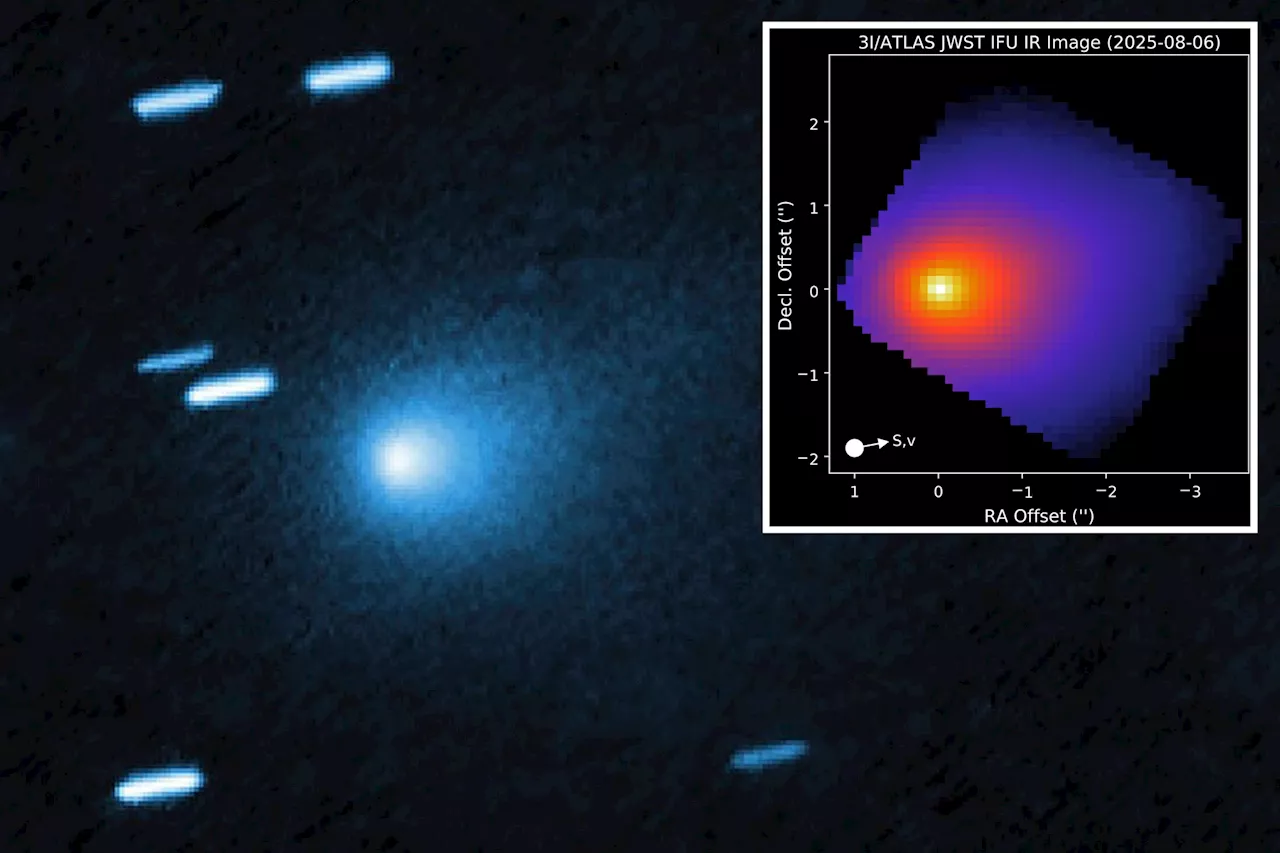
An interstellar object known as 3I/ATLAS is emitting a unique metal alloy never before observed in nature, according to Dr. Avi Loeb, a prominent astrophysicist at Harvard University. This revelation comes after new images captured by the Keck II Telescope in Hawaii were released on October 17, 2025. The findings indicate that the object is producing a plume containing approximately four grams of nickel per second, with no detectable iron—a phenomenon unprecedented among comets.
Dr. Loeb emphasized the rarity of this discovery, stating, “There is only one place where that is known to exist, and that is in industrially produced nickel alloys.” The alloy identified in 3I/ATLAS is termed nickel tetracarbonyl, a compound typically associated with human manufacturing processes and used in aerospace metal coatings to enhance material strength.
Notably, 3I/ATLAS exhibits an unusual characteristic for a comet: it lacks a cometary tail. Dr. Loeb remarked, “We usually see beautiful tails extending from the object away from the Sun, and in this case, there was no evidence for such a tail.” Instead, data from the Hubble Space Telescope revealed a stream of materials flowing toward the Sun, weighing around 150 kilograms per second, primarily composed of carbon dioxide and water, alongside trace amounts of cyanide and nickel.
The absence of a typical cometary tail has raised questions among astronomers. Dr. Loeb posed a critical question regarding the object’s behavior: “Why are we seeing a jet pointed at the Sun? A stream of material in the direction of the Sun?” His observations suggest a need for further investigation into the processes occurring within this extraordinary interstellar visitor.
Skywatchers globally are eagerly anticipating additional images from the Mars Reconnaissance Orbiter, specifically from its HiRISE camera, which captured data between October 4 and October 7. However, these images have not yet been made public due to a government shutdown that has affected NASA’s communications department. Dr. Loeb expressed frustration over the delay, stating, “Who cares about the communication departments? We want to see the data from the scientists.”
As 3I/ATLAS traverses our inner solar system, the upcoming images from the HiRISE camera are expected to provide the closest views humanity will obtain of this enigmatic object. The scientific community remains keenly interested in unraveling the mysteries surrounding 3I/ATLAS, as it could offer invaluable insights into materials and processes beyond our solar system, potentially shifting our understanding of interstellar objects and their compositions.