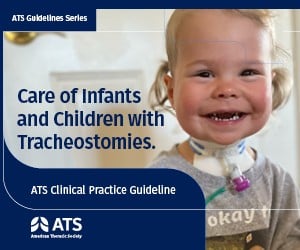
UPDATE: New guidelines released today by the American Thoracic Society aim to assist parents and caregivers in making crucial decisions about tracheostomy for children. Published online in the American Journal of Respiratory and Critical Care Medicine, these guidelines provide a much-needed framework for clinicians and families facing the emotional turmoil of such choices.
The guidelines address the complexities of deciding whether a tracheostomy—a surgically placed tube in the windpipe—is the best treatment option for a child. This guidance comes at a critical time, as it seeks to improve patient outcomes and support family-centered care.
Dr. Christopher Baker, co-chair of the guideline panel and director of the Ventilator Care Program at Children’s Hospital Colorado, emphasized the importance of these recommendations. “A tracheostomy can save a life, lengthen a life, and improve quality of life. However, this is not always the case,” he said. The decision to proceed with this procedure can profoundly impact families and their children, making clear guidance essential.
One panel member, Crystal Costante, a parent of a ventilator-dependent child, expressed relief with the new guidelines. “The guidance gives me hope as it shows that healthcare providers recognize the importance of including families as true partners in care,” she stated. This collaborative approach aims to foster better communication and trust between families and healthcare teams.
The expert panel, led by Dr. Baker and Dr. Reshma Amin from The Hospital for Sick Children, utilized the Grading of Recommendations, Assessment, Development and Evaluation (GRADE) framework to develop evidence-based recommendations. Among the key takeaways are:
1. Ethical principles should guide shared decision-making regarding tracheostomy placement.
2. An awake and alert trained caregiver must always be present with children at risk of complications.
3. A complete airway evaluation is recommended before attempting decannulation in children with tracheostomies.
This marks the first clinical practice guideline published by the American Thoracic Society since a statement on chronic tracheostomy care in 1999. Dr. Baker acknowledged the challenges some families might face in implementing these recommendations, especially in resource-limited settings. A follow-up study is already in the works to evaluate the guidelines’ applicability in such areas.
The new guidelines are set to reshape the approach to pediatric tracheostomy care, emphasizing a holistic view that includes family experiences and needs. As these recommendations roll out, families and healthcare providers alike are encouraged to engage in informed discussions to make the best decisions for young patients.
For detailed information, the full guidelines are available on the American Thoracic Society’s website. This significant update is expected to lead to improved care standards for countless families navigating the complexities of tracheostomy decisions.