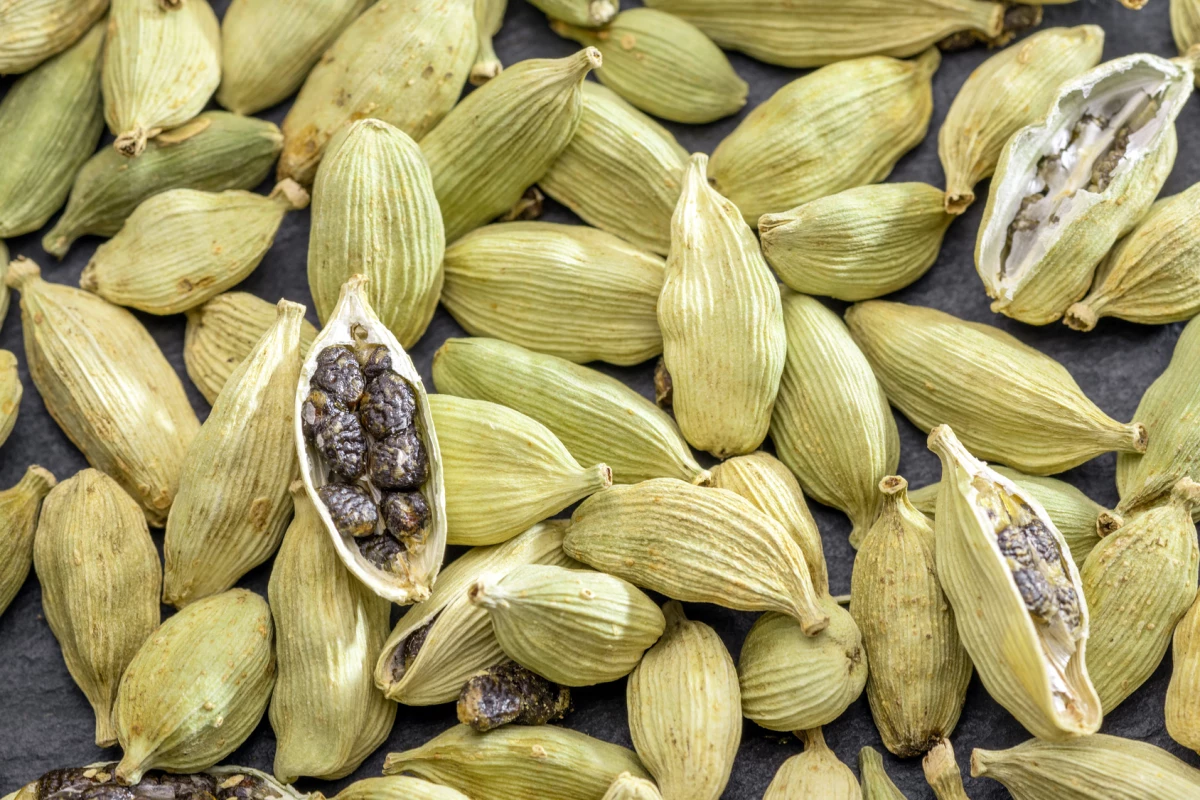
A new study from Shinshu University in Japan has revealed that cardamom extract may serve as a potent natural antiviral treatment. Researchers have found that compounds in cardamom seeds can stimulate the body’s virus-detecting mechanisms, offering potential solutions for cold and flu prevention.
The research focuses on type I interferons (IFNs), proteins that act as the body’s first line of defense against viral infections, such as influenza. When viruses attack, these proteins bind to receptors on both infected and uninfected cells. This binding prompts the production of hundreds of interferon-stimulated genes (ISGs), which create an antiviral environment that restricts viral replication.
Takeshi Kawahara, an Associate Professor at the university’s School of Science and Technology and co-corresponding author of the study, emphasized the significance of food ingredients in combating viral infections. He stated, “The pandemic has increased society’s focus on the antiviral properties of food, which has led to more opportunities for us to engage in this research.”
Research Methodology and Findings
The research team investigated the antiviral properties of a hot-water extract derived from cardamom seeds (CSWE) using human lung epithelial cells. These cells, which line the respiratory tract, are essential in defending against inhaled pathogens. The scientists identified the chemical components of CSWE through gas and liquid chromatography, highlighting that 1,8-cineole, also known as eucalyptol, was a significant compound. This compound is recognized for its anti-inflammatory, antioxidant, and antimicrobial effects, commonly utilized in traditional medicine.
When the lung cells were treated with CSWE and 1,8-cineole, and subsequently exposed to molecules that mimic viral DNA and RNA, the results were promising. The study demonstrated that CSWE significantly boosted the levels of IFN-α and IFN-β, both critical antiviral molecules. Additionally, the extract enhanced the expression of ISGs, allowing cells to effectively block viral replication. Notably, this activation was effective against both DNA and RNA mimics, indicating that CSWE could potentially fortify the immune system against various viral types.
The research showed that the major compound, 1,8-cineole, increased IFN and ISG levels in a dose-dependent manner. Interestingly, it also exhibited effects even in the absence of viral mimics, suggesting a capability to maintain a state of readiness in cells.
The study detailed two distinct mechanisms of action. The extract’s effects were linked to the STING pathway, a natural “virus sensor” system within cells that detects foreign viral DNA and triggers the production of IFNs. In contrast, 1,8-cineole acted by inhibiting a gene (TIPARP) that typically suppresses the immune response, effectively removing a natural brake on immune activation. Importantly, the extract did not activate pathways that could lead to tissue damage or inflammation, meaning it could enhance antiviral defenses without adverse effects.
Limitations and Future Implications
Despite the promising findings, the researchers noted several limitations. All experiments were conducted in laboratory-grown cells rather than in living organisms, and the concentrations of cardamom used may exceed those typically achieved through dietary consumption. Additionally, the study was funded by S&B Foods Inc., which supplied the cardamom used in the research.
Should further studies confirm these findings in human subjects, cardamom extract or 1,8-cineole may be developed as a natural immune booster. It could potentially serve as a preventative measure against viral infections or as a complementary therapy alongside vaccines and antiviral medications.
Kawahara concluded, “Cardamom has historically been widely used as a spice with medicinal properties, but based on these findings, it is expected that it can be utilized as an antiviral material to prevent a wide range of viral infections.” He hopes this research will inspire further exploration into the antiviral properties of various food ingredients, paving the way for innovative approaches to health and wellness.
These findings were published in the journal Foods, marking a significant step in the exploration of natural antiviral treatments. While the research shows promise, it remains early, and cardamom tea alone should not be viewed as a substitute for vaccines or antiviral medications.