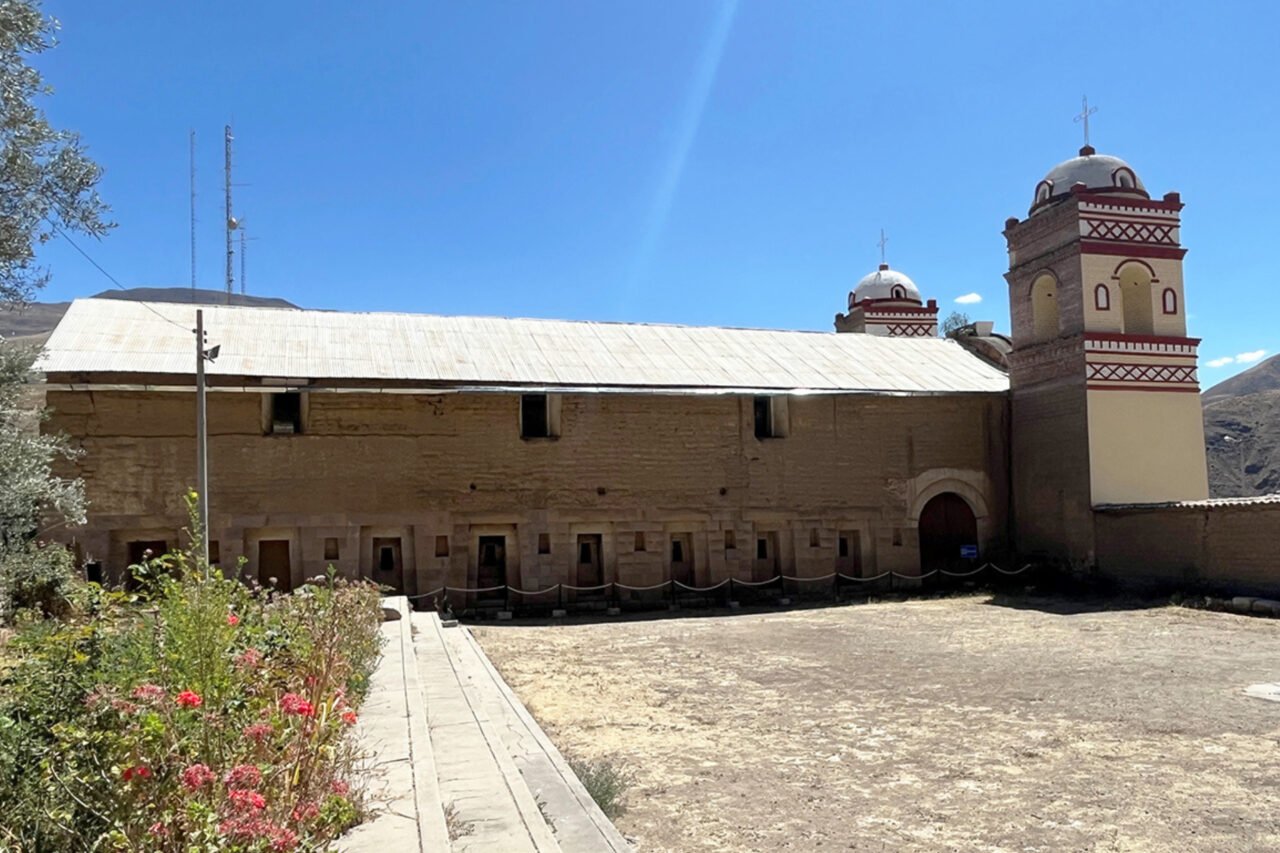
In the remote town of Huaytará, Peru, a team of researchers has uncovered significant acoustic properties of a three-walled structure known as a carpa uasi located beneath the Church of San Juan Bautista. This ancient Incan construction, which likely dates back to the 15th century, reveals that the Incas may have designed it to amplify sound, particularly low-frequency noises like drumming.
The study, led by Stella Nair, an associate professor of Indigenous arts of the Americas at the University of California, Los Angeles, emphasizes the need to explore more than just the visual aspects of historical architecture. Nair observed, “We’re exploring the possibility that the carpa uasi may have amplified low-frequency sounds, such as drumming, with minimal reverberation.” This research aims to shed light on the auditory experiences valued by the Incas, suggesting a deeper connection to sound in their architectural practices.
Unveiling the Acoustic Potential
The Inca Empire, which flourished in western South America from modern-day Ecuador to Chile, is primarily recognized for its impressive stone structures, including the famed citadel of Machu Picchu. Yet, the carpa uasi stands out as a unique example of Incan ingenuity. Its three-wall design facilitates the direction of sound toward an opening, allowing it to travel beyond the structure.
Nair explained the significance of this design choice: “Many people look at Inca architecture and are impressed with the stonework, but that’s just the tip of the iceberg. They were also concerned with the ephemeral, temporary and impermanent, and sound was one of those things.” This perspective challenges the conventional understanding of Incan architecture, highlighting the importance of sound as a vital component in their cultural expression.
The carpa uasi is the only known surviving example of its kind, enduring for the past 600 years due to the stability provided by the church constructed above it. As the research team develops a model to illustrate how sound would have spread through the structure, they hope to enhance our understanding of the past.
Sound Studies and Historical Understanding
While researchers have acknowledged the existence of the carpa uasi for years, Nair and her colleagues are among the first to explore its acoustic potential. Their work is part of a broader initiative to incorporate sound studies into historical analysis, which has traditionally focused on visual elements. Nair concluded, “Sound studies are really critical because we tend to emphasize the visual in how we understand the world around us, including our past. But that’s not how we experience life—all of our senses are critical.”
By integrating sound into the narrative of history, this research not only enriches the understanding of Incan architecture but also invites a reevaluation of how modern societies perceive their own histories. As the team continues its investigations, they aim to provide a more holistic view of the Incas, revealing how deeply they valued auditory experiences and the role sound played in their cultural landscape.