UPDATE: A revolutionary AI-driven strategy has just been announced, accelerating the design of ultra-tough polyimide films critical for aerospace and electronics. Researchers from the East China University of Science and Technology have developed a groundbreaking materials-genome approach that dramatically enhances the mechanical performance of these essential materials.
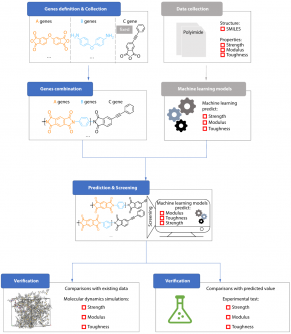
This urgent breakthrough, published online on September 2, 2025, in the Chinese Journal of Polymer Science, addresses longstanding challenges in balancing toughness and strength in polyimide films. Traditional methods of synthesis are slow and costly, often limiting innovation. The new AI-assisted approach integrates machine learning with experimental data to explore a vast chemical space, offering a solution that could redefine polymer development.
The research team successfully created a machine-learning model capable of predicting three critical mechanical properties—Young’s modulus, tensile strength, and elongation at break—across thousands of candidate structures. They identified a new formulation, PPI-TB, which surpassed the performance of established benchmark polyimides. The model was trained on over 120 experimental datasets, achieving impressive predictive accuracy with R² values between 0.70 and 0.74.
In a statement, Prof. Li-Quan Wang, one of the study’s lead authors, emphasized the significance of their findings:
“By translating polymer fragments into genetic-like descriptors, we can treat molecular design like decoding a genome. This synergy between data science and chemistry allows us to explore material possibilities that would take decades by conventional means.”
The implications of this research are profound. The AI-driven materials-genome strategy provides a scalable framework for designing polymers with targeted attributes—traits vital to industries like microelectronics and aerospace. By replacing years of experimental iteration with predictive modeling and virtual screening, the method significantly reduces both costs and development time.
Successful molecular dynamics simulations revealed that PPI-TB exhibited a modulus of 3.48 GPa, showcasing superior toughness and strength compared to traditional systems like PETI-1 and O-O-3. Subsequent experiments confirmed the strong correlation between predicted and actual performance, reinforcing the reliability of the AI-driven approach.
This innovative method not only opens avenues for the development of lightweight, durable, and thermally stable materials but also has the potential to be adapted for other high-performance polymer classes. As industries seek to enhance material properties for future technologies, this breakthrough represents a significant leap forward.
Researchers are now poised to explore additional formulations and applications, potentially leading to the creation of next-generation materials that could power future electronic and aerospace technologies. The fusion of AI and polymer science is set to accelerate advancements in material innovation, making this a critical development to watch in the coming months.
As the world increasingly relies on advanced materials for various applications, the urgency of this breakthrough cannot be understated. Keep an eye on ongoing research from the East China University of Science and Technology as they continue to push the boundaries of what is possible in polymer design.