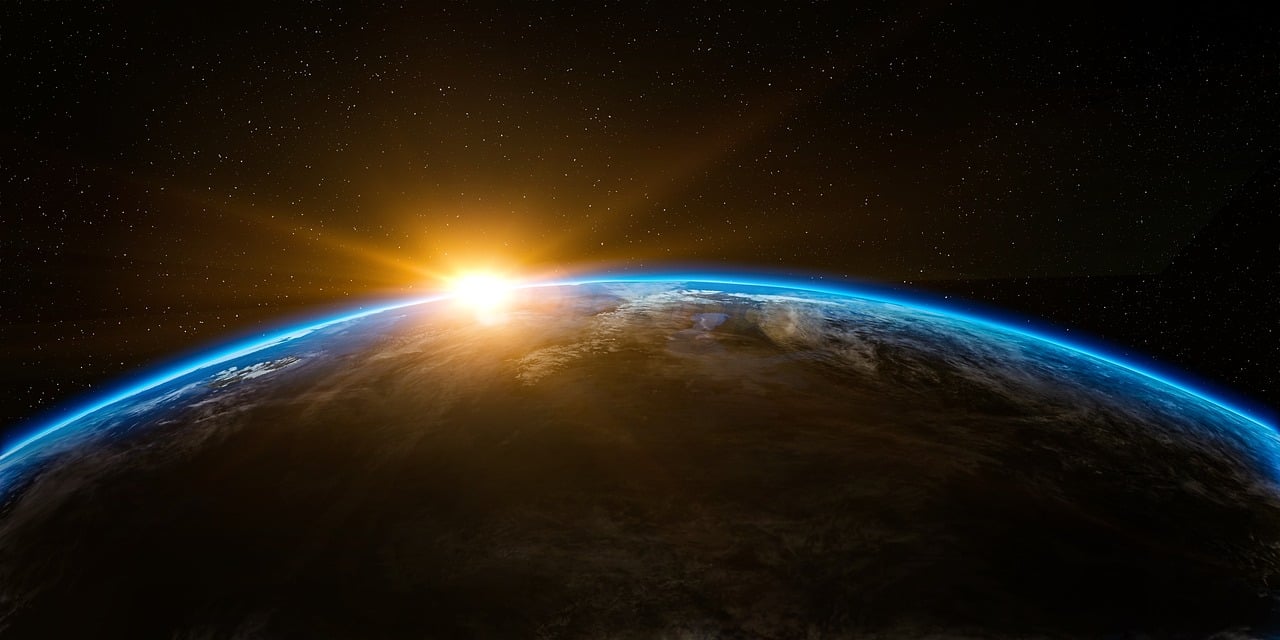
Earth and Mars have captivated scientists for years, presenting a fascinating study of habitability within our solar system. While both planets share some geological traits, Earth remains the only planet known to support complex life. This article explores the differences between Earth and Mars, highlighting what makes Earth uniquely suited for sustaining life.
Atmospheric Composition and Conditions
The atmosphere plays a crucial role in supporting life. Earth’s atmosphere is dense, composed primarily of nitrogen at 78% and oxygen at 21%, providing essential conditions for cellular respiration. In contrast, Mars has a thin atmosphere, approximately 100 times less dense than Earth’s, which consists mostly of carbon dioxide, around 95%, along with trace amounts of oxygen and water vapor. This composition offers minimal respiratory support for Earth-like life forms.
The presence of liquid water is another critical factor. Earth has about 70% of its surface covered by liquid water, essential for life. Mars, however, possesses mostly frozen water ice, with liquid water being extremely rare due to its low atmospheric pressure and temperatures. Currently, Mars averages about -60°C, compared to Earth’s more hospitable average of 14°C, influenced by its thicker atmosphere and oceans.
Protection and Geological Activity
Earth’s strong global magnetic field serves as a shield against solar winds and cosmic radiation, preserving its atmosphere and enabling life to thrive. Mars lacks a global magnetosphere, possessing only localized crustal magnetic fields, making it vulnerable to radiation and atmospheric erosion.
Geological activity is another area of stark contrast. Earth benefits from active plate tectonics that renew its surface, regulate carbon cycles, and contribute to climate stability. In contrast, Mars exhibits no current plate tectonics and has a largely inactive geological surface, limiting its ability to recycle atmospheric gases and maintain a stable environment.
As a dynamic planet, Earth provides a rich tapestry of ecosystems powered by stable solar energy cycles. The 24-hour day and relatively stable seasonal changes optimize biological rhythms, further supporting diverse life forms. While Mars shows evidence of ancient riverbeds and polar ice caps indicating it once had liquid water, today it remains cold and dry, posing significant challenges for life.
Exploration missions to Mars continue, aiming to uncover signs of past or present life despite obstacles like extreme cold and radiation exposure. Understanding Mars not only sheds light on its history but also helps scientists grasp why planets lose atmospheres and water. This knowledge is crucial for models of planetary evolution and the ongoing search for life on exoplanets.
The comparison of Earth and Mars emphasizes Earth’s unique capacity to support life, defined by its dense atmosphere, availability of liquid water, temperature stability, magnetic protection, and geological activity. Mars, while offering compelling lessons on habitability, illustrates the delicate balance required to sustain life.
As the Sun ages, questions arise about Mars’ future habitability. The potential for increased warmth could make conditions more favorable for liquid water, but Mars’ thin atmosphere and weak magnetic field remain significant barriers. Current scientific understanding of greenhouse gases further underscores the differences between the two planets. Earth’s balanced atmosphere maintains a stable temperature, enabling liquid water, whereas Mars’ limited greenhouse effect results in frigid conditions.
In summary, Earth stands out as the perfect habitable planet due to its favorable conditions. Mars serves as a reminder of the challenges planets face in maintaining an environment conducive to life. The ongoing study of these neighboring worlds continues to fuel scientific inquiry and exploration, as researchers seek to understand not only our own planet but also the potential for life elsewhere in the universe.