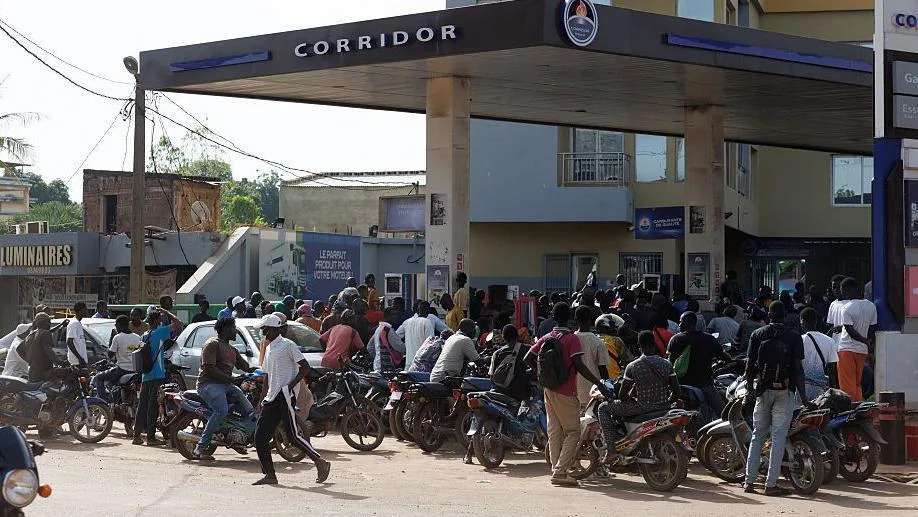
France has issued an urgent advisory for its citizens in Mali to leave the country as Islamist militants continue a blockade severely affecting fuel supplies. The French foreign ministry has recommended that nationals utilize available commercial flights to exit and avoid overland travel. This warning follows a two-month blockade imposed by the jihadist group Jama’at Nusrat al-Islam wal-Muslimin (JNIM), which has disrupted daily life in the capital, Bamako, and other regions throughout the landlocked West African nation.
The situation has escalated to the point where MSC, the world’s largest shipping company, announced it would suspend operations in Mali due to the blockade and worsening security conditions. “Business is at a standstill,” said a company spokesperson, highlighting the significant economic impact of the militants’ actions.
The blockade has been enforced by attacks on fuel tankers traveling along crucial highways, leading to a critical shortage of supplies. As Mali is landlocked, all fuel must be transported overland from neighboring countries, including Senegal and Ivory Coast. The disruption has had cascading effects, impacting electricity supply and raising concerns over the overall security situation in the region.
In a related move, the United States embassy in Bamako recently declared that non-essential diplomatic personnel and their families would depart Mali, underscoring the severity of the crisis. The embassy noted that the fuel disruptions could lead to unpredictable security challenges.
Mali is currently governed by a military junta led by Gen Assimi Goïta, who first took power in a coup in August 2020. The junta initially garnered popular support by promising to address the long-standing security crisis, which began with a separatist rebellion in the north led by ethnic Tuaregs. This conflict was subsequently exacerbated by the involvement of Islamist militants.
International forces, including a United Nations peacekeeping mission and French troops, were deployed in 2013 to address the escalating violence. However, both have since withdrawn following the junta’s rise to power. In a controversial move, the military government has engaged Russian mercenaries to combat ongoing insecurity. Despite these efforts, jihadist violence persists, and large areas in the north and east of Mali remain beyond government control.
The current state of affairs highlights the complex security situation in Mali, a country with a history of instability and conflict. As international advisories and operational suspensions continue, the impact on the daily lives of citizens and the broader socio-economic landscape remains profound.