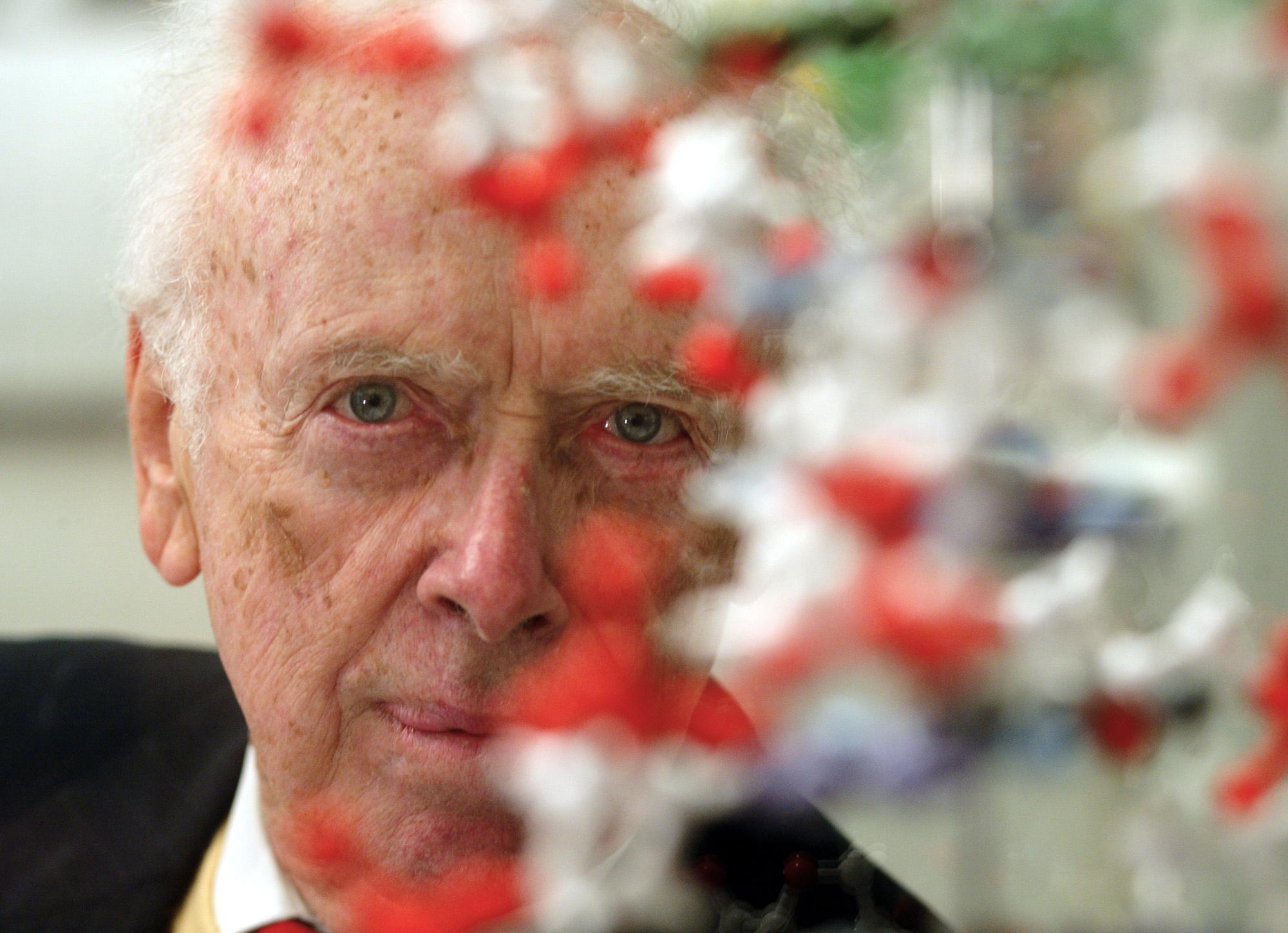
James D. Watson, the co-discoverer of the double helix structure of DNA, has died at the age of 97. His groundbreaking work in 1953 fundamentally transformed fields ranging from medicine to genetics and ethics. Watson’s discovery, made when he was just 24 years old, positioned him as a significant figure in the scientific community for decades.
Watson, together with colleagues Francis Crick and Maurice Wilkins, received the 1962 Nobel Prize for elucidating the structure of deoxyribonucleic acid (DNA). Their work revealed that DNA is composed of two strands coiled around each other, resembling a twisted ladder. This finding was pivotal in understanding how genetic information is stored and replicated within cells.
The implications of the double helix discovery have been vast, enabling advancements in genetic engineering, disease treatment through gene therapy, and forensic science. It also prompted deep ethical discussions regarding genetic manipulation and its consequences. “Francis Crick and I made the discovery of the century, that was pretty clear,” Watson once stated. He acknowledged the unforeseen impact of their work on science and society.
Watson passed away in hospice care following a brief illness, as confirmed by his son. His legacy, however, is marred by controversy. In recent years, he faced significant backlash for making derogatory comments regarding race and intelligence. In 2007, he claimed that social policies were based on an assumption of equality that he believed was “not true,” leading to his suspension from his position as chancellor of the Cold Spring Harbor Laboratory.
Despite the controversies, Watson’s contributions to science are undeniable. He authored influential textbooks and a best-selling memoir while playing a key role in the Human Genome Project, which aimed to map the entire human genetic makeup. His personal connection to the project was driven by a desire to better understand potential genetic factors related to his son’s mental health struggles.
Watson’s scientific journey began in Chicago on April 6, 1928. He entered the University of Chicago at the age of 15, earning his Ph.D. at Indiana University by 22. His passion for genetics was ignited when he recognized that genes were the essence of life. This led him to Europe, where he attended a conference that would change the course of his career.
At Cambridge University, Watson met Crick, and their partnership flourished. They built models to analyze the structure of DNA, aided by groundbreaking X-ray diffraction images from Rosalind Franklin. While Watson’s portrayal of Franklin in his memoir has been criticized, her contributions are now recognized as vital to the discovery of the double helix.
Watson’s revelation about DNA’s structure is often regarded as one of the three most significant discoveries in biology, alongside Charles Darwin‘s theory of evolution and Gregor Mendel‘s laws of inheritance. Following this achievement, Watson spent time at the California Institute of Technology before joining Harvard University, where he developed the molecular biology program.
He served as director of the Cold Spring Harbor Laboratory from 1968 and later became its president and chancellor. Under his leadership, the laboratory evolved into a prominent research institution focused on cancer and genetics. Watson’s efforts to secure funding and promote educational initiatives left a lasting mark on the scientific community.
Despite his considerable achievements, Watson’s later years were shadowed by his controversial statements. In a documentary aired in early 2019, he reaffirmed his controversial views, leading the Cold Spring Harbor Laboratory to revoke several honorary titles previously awarded to him. The combination of his scientific accolades and inflammatory remarks has created a complex legacy.
Throughout his life, Watson maintained a strong belief in the necessity of challenging conventional thinking. He once remarked, “To make a huge success, a scientist has to be prepared to get into deep trouble.” His willingness to confront difficult topics, including the implications of genetic research, highlights the duality of his character: a brilliant scientist whose legacy is intertwined with both groundbreaking achievements and contentious public statements.
Watson’s influence on science and society will endure, as will the discussions his work continues to inspire. His death marks the end of an era for a figure who not only contributed to our understanding of life at the molecular level but also stimulated ongoing debates about the moral implications of scientific advancement.