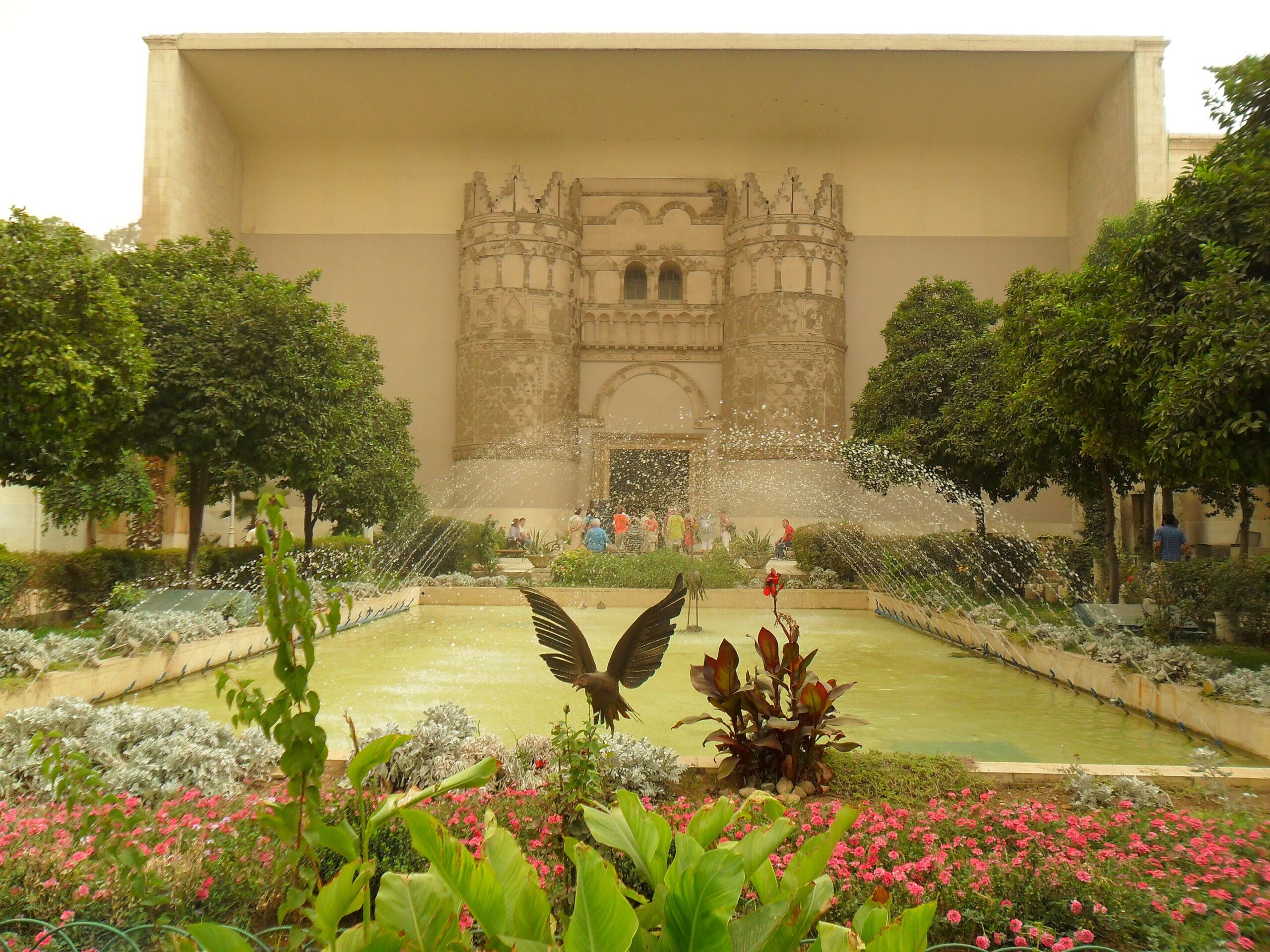
URGENT UPDATE: Thieves have stolen six valuable Roman-era statues from the National Museum of Damascus, one of Syria’s most significant cultural institutions. The theft occurred in the early hours of November 10, 2023, when museum staff discovered the breaking and entering into the classical department, according to reports from the Associated Press.
The museum, which houses a vast collection of antiquities spanning over 11,000 years of Syrian history, was in the midst of efforts to recover from the devastation of the civil war and the oppressive regime of former dictator Bashar al-Assad. Officials confirmed that an investigation is currently underway, but details about the perpetrators remain scarce.
This audacious heist follows a troubling trend of cultural heritage looting that has surged in Syria since the fall of al-Assad’s regime last December. After being closed for six years due to the civil war, the museum had only recently reopened, raising concerns about its security measures. In addition to the statues, reports indicate that gold ingots of unknown origin were also taken, further complicating the situation.
Adnan Almohamad, an honorary research fellow at Birkbeck College, University of London, suggested in correspondence with Hyperallergic that the operation may have been an inside job. “It appears that the operation was carried out by individuals with good knowledge of the Damascus Museum and the vulnerabilities that Syrian museums have faced for many years,” he noted. His comments highlight the potential risks and weaknesses in the museum’s security protocol, especially after the years of turmoil the country has faced.
Almohamad also pointed out the similarity of this heist to a previous incident in Deir ez-Zor, where a museum staff member was implicated in the theft of 13 items in 2010. That museum had been evacuated by regime forces amidst the rise of the Islamic State, illustrating the ongoing challenges facing cultural preservation in the region.
Despite the grim circumstances, Almohamad mentioned a silver lining: the stolen items were taken from the exhibition hall, where records are well maintained. “This reduces the risk of illicit sale,” he stated. “If they had been taken from storage areas, the situation would have been far worse, making identification and recovery extremely difficult.”
As authorities continue their investigation, the global community will be watching closely for updates. The impact of this theft extends beyond Syria; it underscores the ongoing struggle to protect cultural heritage in conflict zones around the world.
Stay tuned for further developments as this story unfolds.