URGENT UPDATE: Researchers at the University of New Mexico have made a groundbreaking discovery about a prehistoric plant that produces water with astonishingly unique properties, resembling extraterrestrial materials. This finding, published on November 13, 2025, in the Proceedings of the National Academy of Sciences, could revolutionize our understanding of ancient climate conditions.
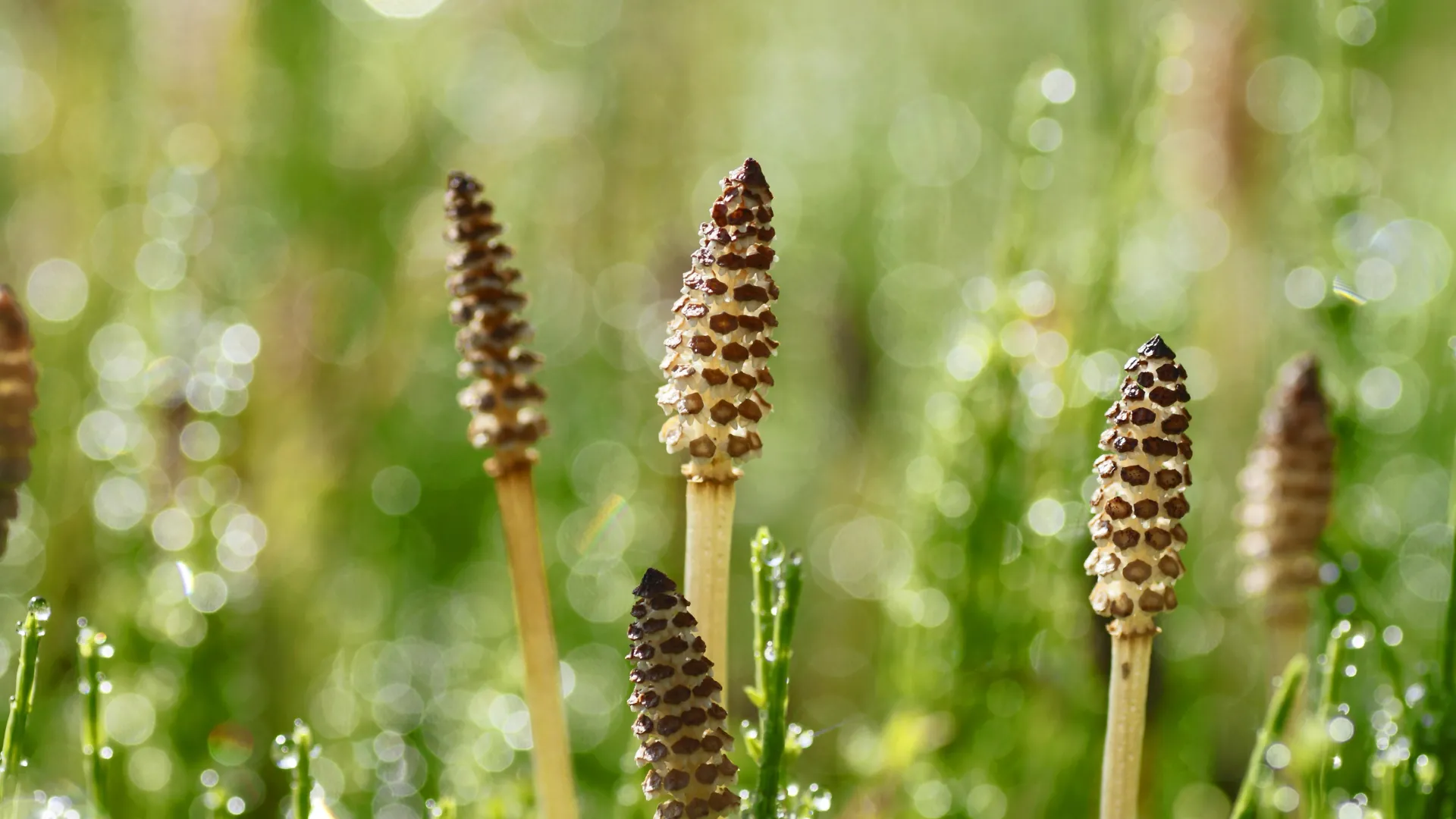
The research team, led by Professor Zachary Sharp, reveals that living horsetails, dating back over 400 million years, act as natural distillation towers. As water travels through these plants, it undergoes a filtration process that alters its oxygen isotope signatures, making them comparable to those found in meteorites.
“This plant is an engineering marvel,” said Sharp. “You couldn’t create anything like this in a laboratory.” The implications of this discovery extend far beyond plant biology; they provide a new approach to decoding climate history by examining oxygen isotopes.
The study focuses on the smooth horsetail, Equisetum laevigatum, found along the Rio Grande in New Mexico. The researchers tracked how oxygen isotope values shifted from the base to the tip of the plants, uncovering extreme readings previously thought to be impossible on Earth. These findings could help clarify historical climate patterns, especially in arid regions where water sources are limited.
Sharp’s presentation at the Goldschmidt Geochemistry Conference in Prague this past July drew international attention. “If I found this sample, I would say this is from a meteorite,” Sharp stated. The data collected has prompted researchers to refine existing climate models, aiding in the interpretation of unusual isotope results in other desert plants.
The team also highlighted the potential of fossil horsetails, which once towered up to 30 meters tall, as they contain silica particles known as phytoliths. These tiny structures preserve isotope signatures for millions of years and serve as “paleo-hygrometers,” enabling scientists to reconstruct ancient humidity levels and climate conditions from the age of dinosaurs.
“We can now begin to understand the humidity and climate conditions of environments going back to when dinosaurs roamed the Earth,” Sharp emphasized. This significant research not only expands the contributions of UNM to geosciences but also underscores the importance of horsetails as unexpected record keepers of Earth’s climate history.
As climate change continues to challenge our understanding of environmental systems, these findings offer a fresh perspective on how ancient ecological processes can inform modern climate science. Researchers and climate scientists worldwide will be watching closely as this research unfolds, potentially reshaping how we interpret our planet’s climatic past.
Stay tuned for further developments on this fascinating intersection of botany and climate science.