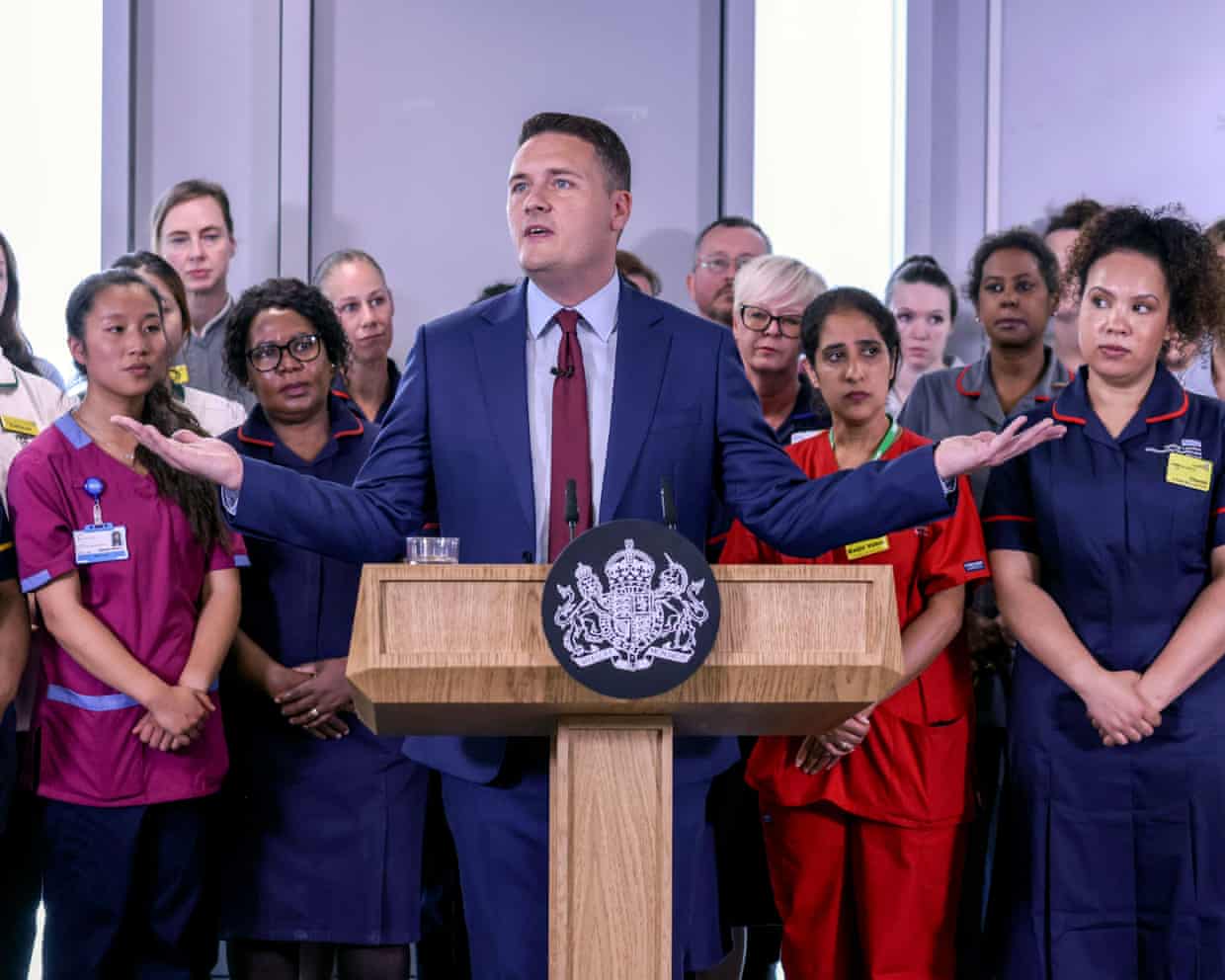
The future of the National Health Service (NHS) hinges on the reforms proposed by Wes Streeting, the UK’s Health Secretary. As waiting lists for treatment remain a pressing concern for many British citizens, Streeting’s plans aim to cut approximately 18,000 back-office jobs in a bid to save £1 billion annually for frontline care. While this move is intended to alleviate financial pressure on the NHS, it raises significant concerns about job security and the potential impact on patient care.
Public perception of NHS performance is crucial, and recent polling by the Health Foundation reveals that only a quarter of Britons are aware that waiting lists have decreased during the first year of Labour’s government. Many still believe the situation is worsening, reflecting a deep-seated anxiety regarding access to healthcare. This week, Streeting’s announcement came at a politically sensitive time, as tensions within the Labour Party escalated with accusations against the health secretary regarding a leadership coup, overshadowing his message on NHS reform.
Streeting’s strategy is to redirect funds from administrative costs to essential health services. The plan to cut bureaucratic roles, including merging NHS England back into the Department of Health and Social Care, aims to streamline operations. While this approach targets unpopular positions, the actual implementation of such reforms will be challenging, particularly with a doctors’ strike looming and ongoing frustrations regarding delayed social care reforms.
The challenge for Streeting is not just fiscal; it is also about improving health outcomes. The NHS has faced significant hurdles, including a backlog exacerbated by strikes and the summer heatwave. Recent data indicates that 61.8% of patients currently receive treatment within 18 weeks of referral, with hopes to reach 65% by March 2024. Achieving the ambitious target of 92% by 2029 remains a key objective, reminiscent of the standards set by the previous Labour government under Tony Blair.
Despite these promising figures, Streeting’s relationship with healthcare professionals is under strain. The British Medical Association (BMA) has expressed dissatisfaction with the government’s approach to funding and compensation. Streeting’s criticism of doctors for opposing tax increases while demanding higher wages has ignited further tensions.
The political implications of Streeting’s reforms are considerable. If successful, this model could serve as a blueprint for addressing broader public sector challenges without imposing excessive taxes. However, if it falters, it could undermine both Streeting’s position and the Labour Party’s credibility. The stakes are high, as public trust in government solutions is waning, and the perception that politics is unable to address urgent issues is growing.
As Streeting navigates these complex challenges, he faces a dual task: reforming the NHS while maintaining the support of healthcare professionals and the public. The political landscape is precarious, and the outcome of these reforms will significantly impact not only the NHS but also the future of the Labour Party.
In summary, the coming months will be critical for Wes Streeting and his NHS reform agenda. The effectiveness of these changes could redefine the public’s relationship with healthcare and potentially reshape the political landscape ahead of future elections. The success or failure of these policies will resonate far beyond the corridors of power, influencing the lives of millions who rely on the NHS for their healthcare needs.