Research on Saturn’s moon Titan provides new insights into the potential for prebiotic chemistry beyond Earth. Specifically, scientists have examined the thermodynamics of amino acid synthesis in Selk Crater, a location characterized by impact-generated melt pools. These pools create temporary aqueous environments within Titan’s predominantly icy landscape.
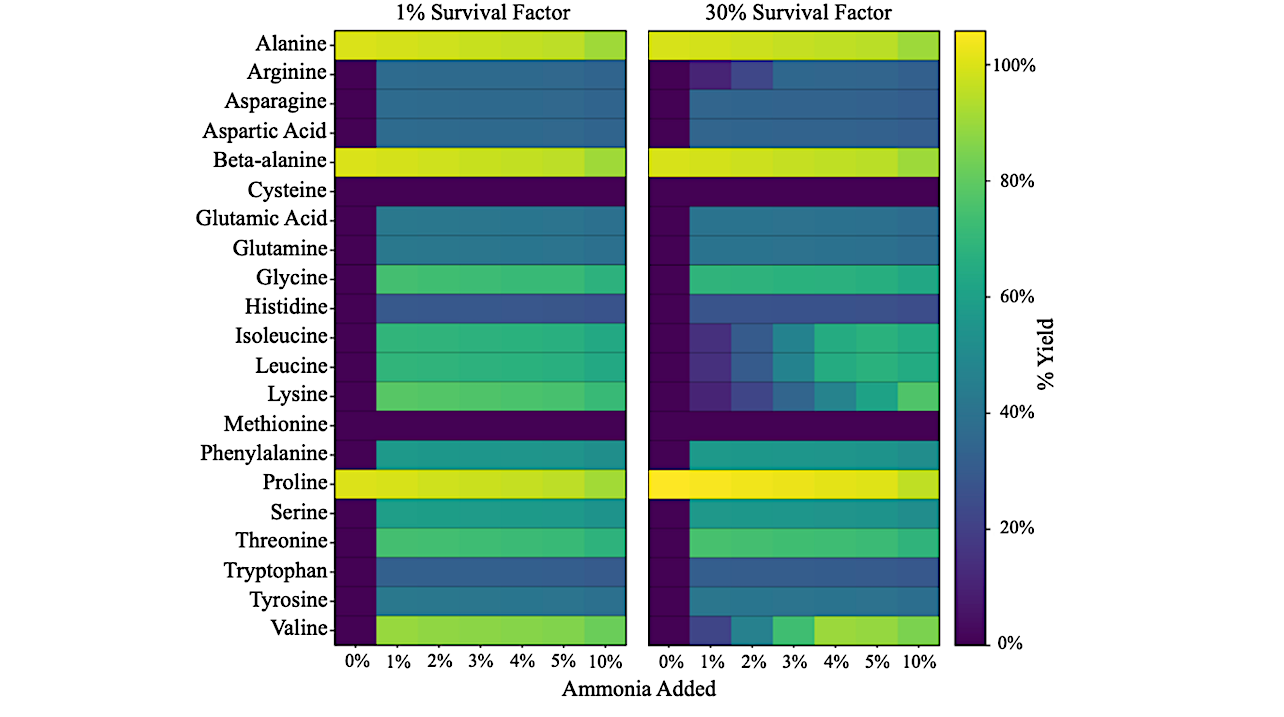
Using Cantera equilibrium models, researchers assessed the interactions between mixtures of hydrogen cyanide (HCN), acetylene (C2H2), and ammonia (NH3). The study aims to understand whether these compounds can facilitate the formation of amino acids, which are essential building blocks for life. The findings present a significant avenue for exploring the chemical processes that could lead to life in extraterrestrial settings.
Understanding the conditions necessary for amino acid synthesis is crucial, as it may offer parallels to early Earth environments. Titan’s unique atmospheric composition and surface conditions make it an intriguing site for astrobiological studies. The research highlights the importance of impact craters in generating transient habitable conditions, allowing scientists to consider how life might arise in extreme environments.
The implications of this research extend beyond the confines of Titan. By providing a framework for understanding amino acid synthesis in non-Earth environments, it may inform future missions aimed at discovering signs of life elsewhere in the universe. As exploration efforts continue, Titan stands out as a focal point for astrobiology, with Selk Crater offering a natural laboratory for investigating the origins of life.
This study underscores the value of interdisciplinary approaches in astrobiology, combining elements of chemistry, geology, and planetary science. The potential to create amino acids from simple compounds suggests that the building blocks of life might be more widespread in the universe than previously thought. As researchers build on these findings, Titan promises to reveal further secrets about the conditions that may support life beyond our planet.