An advisory council primarily composed of Native Hawaiians has been established to assist Gov. Josh Green in addressing military land leases on Oahu and Hawaii Island, which are set to expire in 2029. The council’s formation was announced on Thursday and includes representatives from various sectors, including government, nonprofit organizations, and private entities.
The council members include notable figures such as William Aila Jr., a member of Hui Malama ‘O Makua; Scott Glenn, senior adviser to Green; and Mahina Paishon-Duarte, co-founder of the Waiwai Collective. Others include Ed Sniffen, director of the state Department of Transportation; and Noe Noe Wong-Wilson, executive director of the Lalakea Foundation. Their collective expertise aims to facilitate discussions surrounding the future use of military lands.
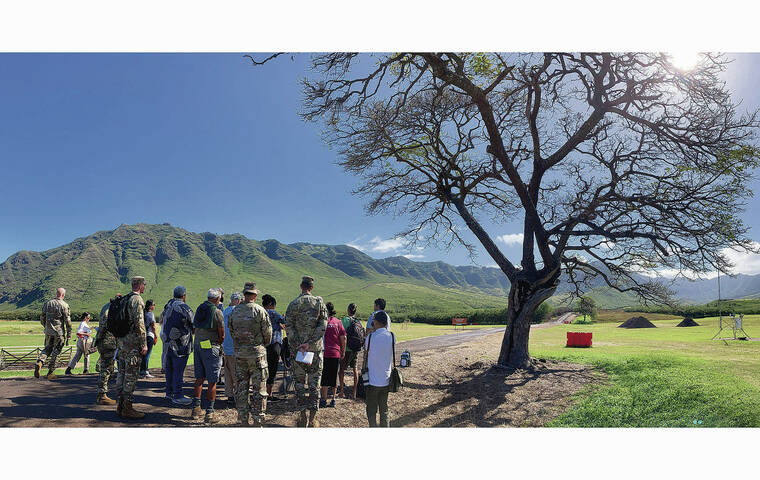
In 1964, the U.S. Army acquired leases on state-owned lands in areas such as Kahuku, Kawailoa-Poamoho, and Makua Valley for a nominal fee of $1. As these leases approach expiration, Gov. Green has proposed a significant deal worth $10 billion should the federal government pursue condemnation to extend military usage of state lands. This approach would bypass the need for new leases, which would require extensive environmental reviews and public consultations.
The Board of Land and Natural Resources (BLNR) recently rejected the Army’s final environmental impact statements, leading Dan Driscoll, Secretary of the Army, to indicate a potential shift towards condemnation. According to Green’s office, consultations are already underway between the offices of the Army Secretary and the U.S. Department of Justice regarding the Army’s legal rights to the training lands in Hawaii.
Aila, a former chair of the BLNR, has expressed concerns regarding the federal government’s intentions for the Makua Valley and is advocating for its return and proper management. He also fears potential executive orders from the federal government that could reclaim state lands for military purposes.
In a formal proposal transmitted to Driscoll on October 29, Green outlined several initiatives, including the transfer of an underused federal detention center in Honolulu to the state, and efforts to expand housing availability by 6,500 units. The proposal also emphasizes the need for increased Medicare reimbursements, accelerated cesspool conversions, and investments in renewable energy projects to lower electricity costs.
Green voiced his commitment to balancing national security with cultural stewardship: “Hawai‘i stands at an important crossroads — between national security and cultural stewardship; between federal authority and our responsibility to care for cultural and natural resources,” he stated. He underscored the necessity for the U.S. military’s role to coexist with the values and commitment to the people of Hawaii.
On November 7, Kaiali‘i Kahele, chair of the Office of Hawaiian Affairs (OHA) board of trustees, urged Green to engage in genuine consultations with the Native Hawaiian community. He asserted that such dialogue would enhance the state’s negotiating position and promote fair compensation for the use of public lands.
Kahele highlighted the unique opportunity presented by the expiration of the military leases, calling for a restoration of balance that honors Native Hawaiian claims and redefines Hawaii’s relationship with the federal government. He cautioned that proceeding without meaningful consultation could perpetuate historical inequities.
OHA is considering a constitutional amendment to prohibit the use of public trust lands for live-fire military training while allowing for other compatible training activities. The OHA board voted on Thursday to request the state legislature to include this amendment on the ballot in 2026. Community meetings will also be held to gauge public opinion on military lease negotiations, with the first meeting scheduled for November 26 at the University of Hawaii at Hilo.
Kahele emphasized the importance of consulting and compensating Native Hawaiians regarding the use of public trust lands. “Our beneficiaries are insisting that OHA be a leader with the state in talks with the military about the future use of our lands,” he stated, reinforcing the call for collaborative engagement.
To facilitate public input, OHA has launched a website detailing the history of military land leases in Hawaii, allowing residents to provide anonymous feedback at: oha.org/aloha-aina. This initiative aims to foster a transparent dialogue regarding the future management and use of these significant lands.