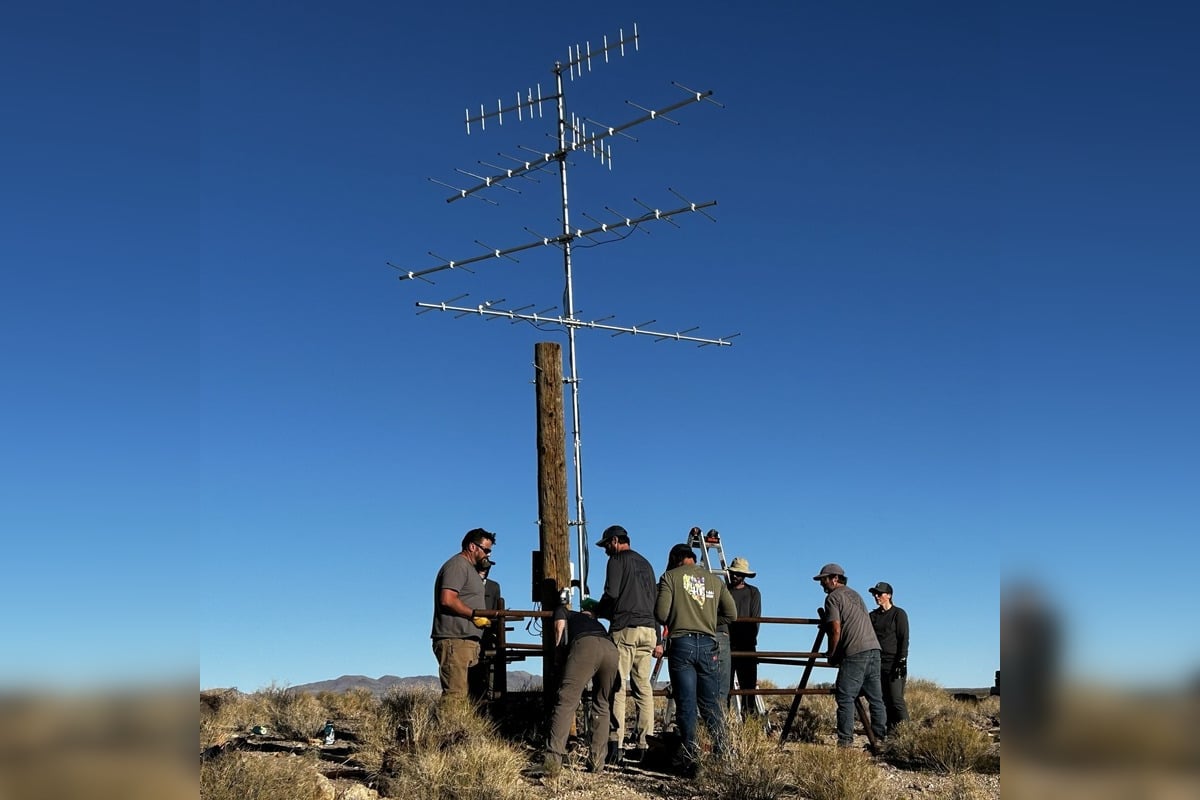
UPDATE: In a groundbreaking move for wildlife research, the Nevada Department of Wildlife has just installed a new Motus tower at the Gary and Lajetta Atwood Preserve. This state-of-the-art technology is set to enhance conservation efforts by tracking the movements of birds, bats, and insects in real-time.
This installation marks a significant advancement in understanding wildlife migration patterns, as the Motus system connects to an international network that detects signals from tiny radio transmitters affixed to various species. According to officials, this system will allow researchers to uncover vital information about animal behaviors and habitats, offering insights that were previously unattainable.
The tower, installed earlier today, symbolizes a collaborative effort between the Nevada Department of Wildlife and The Nature Conservancy. This partnership is not only about technology; it represents a commitment to preserving biodiversity and fostering teamwork. The Biodiversity team even synchronized their annual meeting with the tower’s launch to emphasize their collaborative spirit.
Why This Matters Now: The implications of this installation are tremendous for conservationists and the general public alike. By tracking wildlife movements, researchers can better understand the impacts of climate change, habitat loss, and other environmental threats. This real-time data could play a crucial role in developing effective conservation strategies moving forward.
As the Motus system begins to collect data, wildlife enthusiasts and researchers will be watching closely. The Nevada Department of Wildlife has indicated that updates on findings will be shared via their social media channels, promising to keep the public informed about the essential work being done at the Atwood Preserve.
Keep an eye on this developing story, as more information becomes available about how this technology will shape wildlife research and conservation efforts in Nevada and beyond. This initiative not only showcases innovation but also underscores the critical importance of protecting our natural world for future generations.