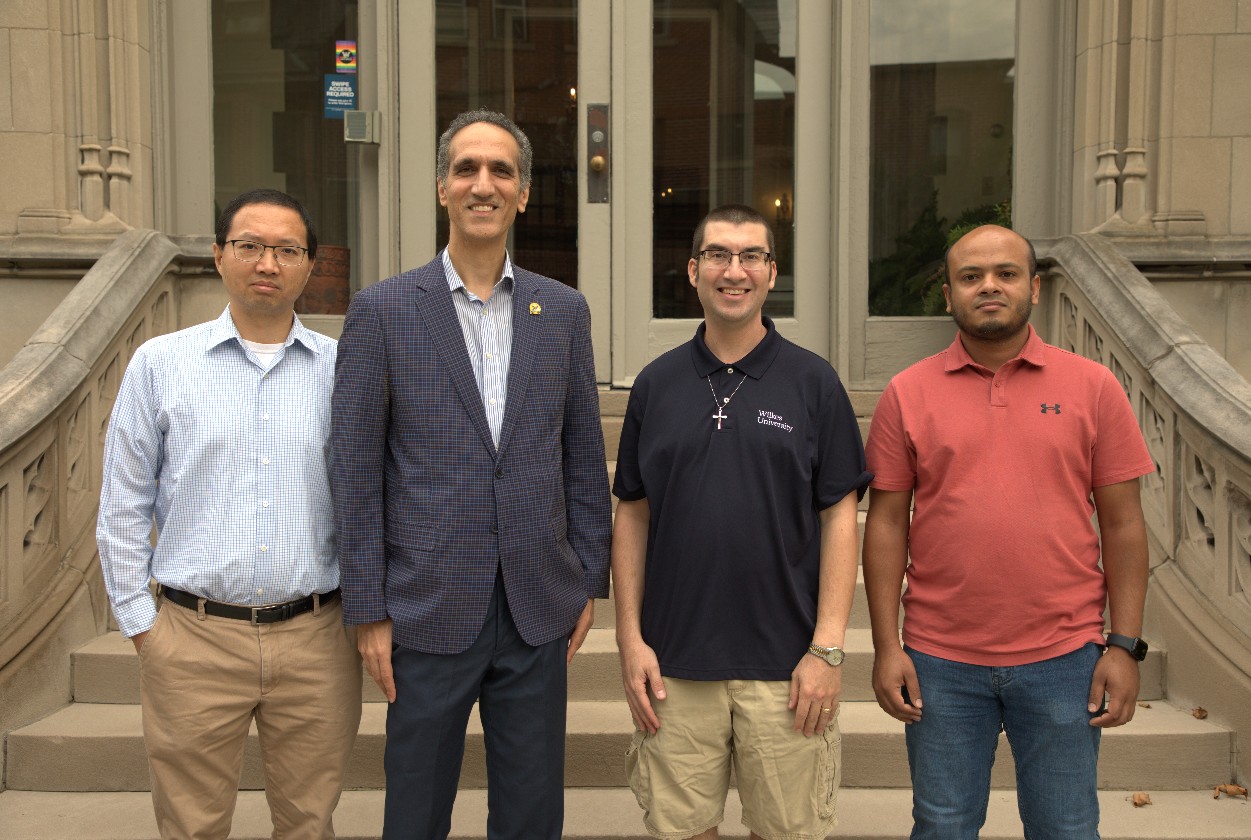
Wilkes University has been awarded over $1.2 million in grant funding from the National Science Foundation (NSF) to enhance innovation and workforce development in Northeast Pennsylvania. This funding supports two key projects aimed at addressing the region’s critical technology needs. University President Greg Cant hailed the grants as a significant achievement for both the faculty and the wider community.
The projects, titled “Experiential Learning for Artificial Intelligence-Driven Robotics in Northeast Pennsylvania (EXPLOR-NEPA)” and “Building Relationships in Innovation and Development for Growth in Emerging Technologies (BRIDGE-TECH),” focus on providing technology education and fostering collaboration between academia and industry. Both initiatives aim to connect subject matter experts and stimulate innovation across the region.
Abas Sabouni, a professor of mechanical engineering and chair of the mechanical and electrical engineering department, serves as a principal investigator for both projects. He described the proposal process as “intensive but rewarding,” emphasizing the collaborative effort that resulted in comprehensive proposals designed to create lasting impact. “The long-term impact will be a sustainable model for connecting education, innovation, and industry in the northeastern Pennsylvania region and beyond,” Sabouni noted.
EXPLOR-NEPA and BRIDGE-TECH Initiatives
The EXPLOR-NEPA initiative is a three-year experiential learning program funded by the NSF’s Experiential Learning for Emerging and Novel Technologies (ExLENT) program. This initiative was developed by Sabouni in partnership with fellow professors Edward Bednarz III, Asif Khan, and Yong Zhu. Their ongoing collaboration with local school districts and industry partners highlighted a growing demand for hands-on technology experience.
“We identified an urgent need to introduce artificial intelligence and robotics concepts earlier in the educational pipeline and to expand access for students from underrepresented and underserved backgrounds,” Sabouni explained. This commitment to inclusivity and education aligns with the broader goals of both projects.
The BRIDGE-TECH project, led by Wilkes in conjunction with Production Systems Automation and local high schools, will provide high school students with early exposure to AI-driven robotics and automation. This will be accomplished through structured hands-on learning experiences, mentorship, and dual enrollment opportunities that allow students to earn college credit.
Sabouni expressed hope for the program’s expansion, stating, “We hope to expand the program to additional school districts, integrate new technologies such as autonomous drones and smart manufacturing systems, and continue refining our experiential learning framework to meet the demands of a rapidly changing world.”
With these initiatives, Wilkes University is taking significant steps to enhance technology education and foster innovation in the region, ensuring that students are well-prepared for the future workforce.