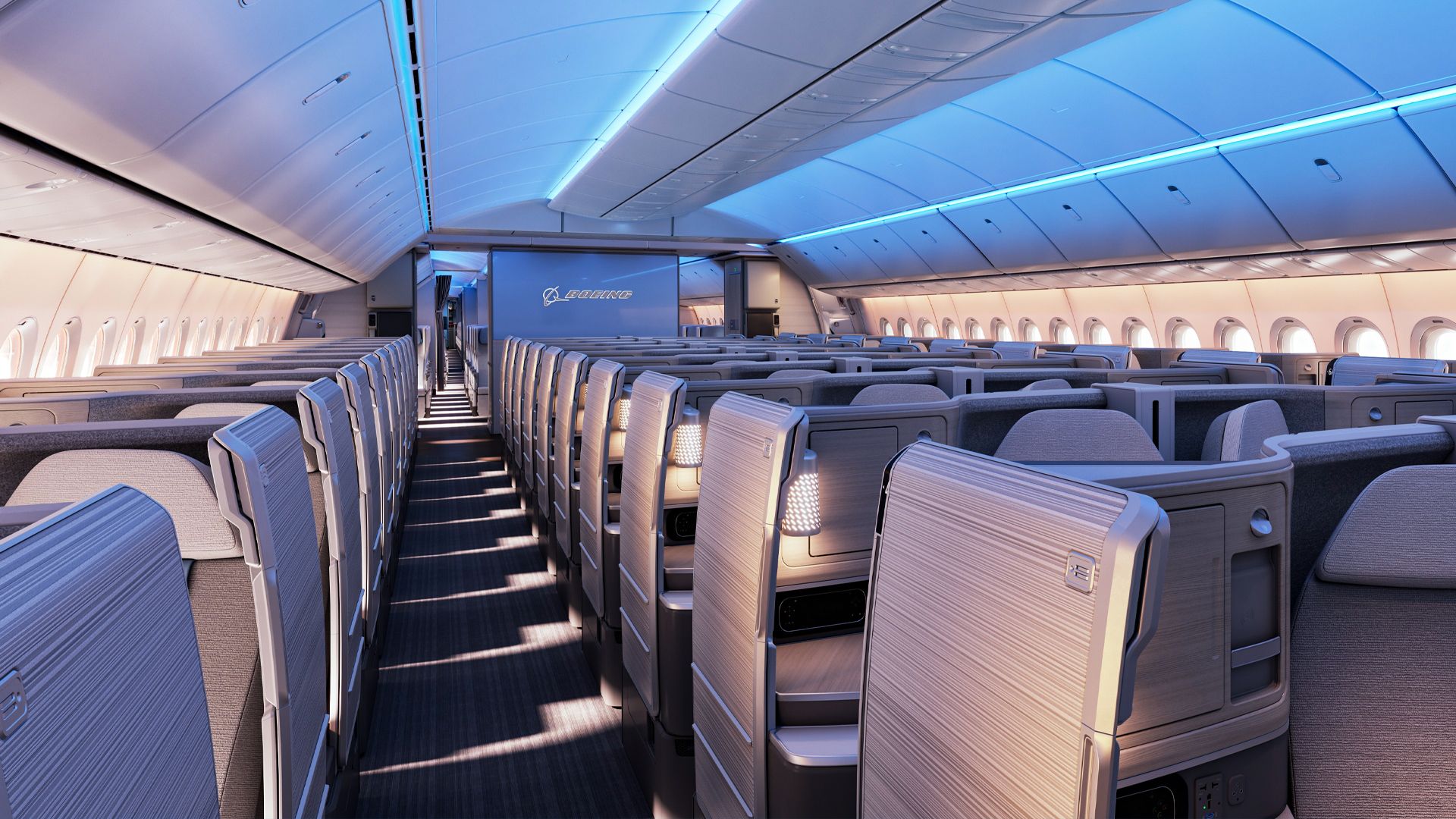
The highly anticipated **Boeing 777X** is on track to redefine long-haul air travel, with its commercial launch now scheduled for **2027**. This next-generation aircraft incorporates groundbreaking features, including the largest commercial aircraft engine ever produced and distinctive folding wingtips. Enhancements extend into the cabin, promising passengers a significantly upgraded flying experience. This article explores the innovative design elements of the **Boeing 777X** cabin and its implications for the global aviation landscape.
Revolutionary Cabin Features
Boeing’s collaboration with the design agency **Teague** has resulted in the modern **Sky Interior**, which aims to elevate passenger comfort and overall experience. Building on the success of previous models like the **Boeing 787**, the Sky Interior introduces an advanced LED lighting system, allowing airlines to customize ambiance throughout the flight. For instance, warm lighting can be used during meal services, while soft dawn-like hues can help passengers adjust before landing. This flexibility is intended to enhance the atmosphere and potentially mitigate the effects of jet lag.
The cabin boasts sculpted sidewalls and larger pivoting overhead lockers, designed to accommodate more carry-on luggage while providing a greater sense of headroom. When closed, the lockers seamlessly blend into the ceiling, contributing to a spacious and uncluttered cabin environment. The **777X** features redesigned windows that appear larger, allowing more natural light into the cabin. Combined with quieter air systems and improved materials, the **Sky Interior** delivers a smoother and more enjoyable travel experience.
Another notable aspect of the **777X** is its wider fuselage, measuring **19 feet and seven inches** (5.97 meters), which is **four inches** (10 cm) broader than previous models, such as the **Boeing 777-300ER**. This increased width enhances the sense of space and enables a **3-4-3 seating configuration** with **18-inch** seats, surpassing current industry standards. The aircraft’s modular framework allows airlines to customize cabin layouts more easily, accommodating evolving market demands and preferences.
Innovative Design and Performance
The **Boeing 777X** combines advanced technology with proven performance, featuring **General Electric GE9X** engines, the most powerful commercial aircraft engines ever constructed. These engines, paired with new composite wings, which include the innovative folding wingtips, contribute to impressive fuel savings of up to **10%** compared to earlier models.
When fully extended, the wingspan of the **777X** reaches **235 feet** (71.63 meters), maximizing aerodynamic efficiency and reducing fuel consumption. Upon landing, the outer **11 feet** (3.35 meters) of each wing fold upward, reducing the wingspan to **212 feet** (64.62 meters) for compatibility with standard airport gates. This design not only enhances performance but also ensures that the aircraft can operate at existing airports without necessitating significant infrastructure changes.
The folding wingtips represent a commitment to efficiency, ensuring lower fuel consumption and reduced emissions while maintaining operational flexibility for airlines. The safety of this mechanism is paramount; the wingtips cannot fold or unfold while in flight, and sensors continuously monitor their position during ground operations.
Despite its promising features, the **Boeing 777X** program has faced delays, pushing its entry into service back by more than **seven years**. Initially slated for delivery in **2020**, the aircraft has encountered challenges related to certification, design modifications, and, notably, the impacts of the **COVID-19 pandemic**. Following two tragic crashes of the **Boeing 737 MAX**, the **U.S. Federal Aviation Administration** mandated more rigorous testing and documentation for the **777X**, resulting in a slower development process.
Test flights began in early **2020**, revealing necessary adjustments to flight control software and structural components, further extending timelines. The pandemic exacerbated these delays through production slowdowns and workforce challenges. Many airlines have also postponed their deliveries due to changing travel patterns and financial pressures.
Looking ahead, the first **Boeing 777X** is expected to be delivered to its launch customer, **Lufthansa**, in **2027**.
Global Demand for the Boeing 777X
The **Boeing 777X** has garnered over **500 orders** from airlines worldwide. **Emirates** is poised to become the largest operator, with a total of **205** aircraft on order, including **35** of the **777-8** variant and **170** of the **777-9**. This order reflects Emirates’ position as the largest operator of the previous model, the **777-300ER**, based at **Dubai International Airport** (DXB).
The following table outlines the largest orders for the **Boeing 777X**:
| Rank | Airline | Boeing 777-8 | Boeing 777-9 | Total |
|——|———————|————–|————–|——-|
| 1 | Emirates | 35 | 170 | 205 |
| 2 | Qatar Airways | – | 90 | 90 |
| 3 | Korean Air | – | 40 | 40 |
| 4 | Cathay Pacific | – | 35 | 35 |
| 5 | Singapore Airlines | – | 31 | 31 |
| 6 | Etihad Airways | 8 | 17 | 25 |
| 7 | British Airways | – | 24 | 24 |
| 8 | Lufthansa | – | 20 | 20 |
| 9 | All Nippon Airways | – | 18 | 18 |
| 10 | Air India | – | 10 | 10 |
**Qatar Airways** is set to be the second largest operator of the **777X**, followed by **Korean Air**. The global interest in the **Boeing 777X** underscores its potential to become a flagship aircraft for many airlines, continuing Boeing’s legacy of innovation in long-haul air travel.