Former President Donald Trump has voiced strong support for the resumption of nuclear weapons tests, citing growing threats, particularly from China. His remarks, made at the end of January 2024, indicate a shift in the United States’ stance on nuclear deterrence amid escalating global tensions.
Trump’s argument rests on the belief that the U.S. must no longer overlook what he describes as “obvious dangers” presented by adversarial nations. He specifically mentioned China’s increasing military capabilities as a significant concern that warrants a reevaluation of the U.S. nuclear policy.
Renewed Focus on National Defense
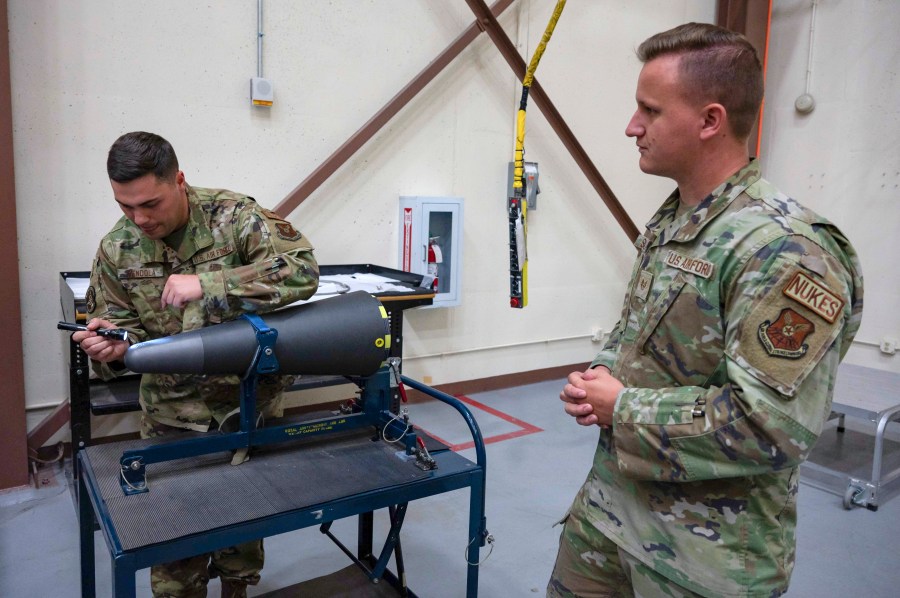
In his statement, Trump emphasized the necessity for a robust national defense strategy that includes nuclear readiness. He referred to the principles outlined in the National Defense Strategy, which advocates for modernization of the U.S. military arsenal. According to Trump, the only way to maintain peace is through strength, suggesting that the threat of nuclear testing could serve as a deterrent to potential aggressors.
This stance aligns with recent military assessments indicating that nations like North Korea and China are advancing their nuclear programs. Experts have noted that North Korea has continued to test its capabilities, further complicating the geopolitical landscape.
Trump’s call for nuclear weapons tests is not without controversy. Critics argue that such actions could provoke an arms race and undermine global non-proliferation efforts. Prominent arms control advocates warn that resuming tests may send a message that the U.S. is abandoning its commitments to international treaties aimed at reducing nuclear arsenals.
Implications for International Relations
The implications of Trump’s proposal extend beyond military readiness. Analysts suggest that this approach could strain diplomatic relations with key allies who support non-proliferation. Countries like Germany and Japan have historically advocated for disarmament and may view renewed testing as a regression of U.S. foreign policy.
Furthermore, Trump’s comments have sparked discussions within the Biden administration regarding the future of U.S. nuclear policy. Officials are weighing the potential impacts of resuming nuclear tests on international stability and the U.S.’s standing in global diplomacy.
While Trump’s administration previously conducted a review of nuclear policy, the current geopolitical climate presents challenges that require careful navigation. The prospect of nuclear tests raises critical questions about the balance between national security and international obligations.
As the situation evolves, the U.S. and its allies will need to consider how best to respond to the shifting landscape of nuclear threats while promoting peace and stability. Trump’s calls for testing may resonate with certain factions within the U.S., but the broader implications for international relations warrant cautious deliberation.