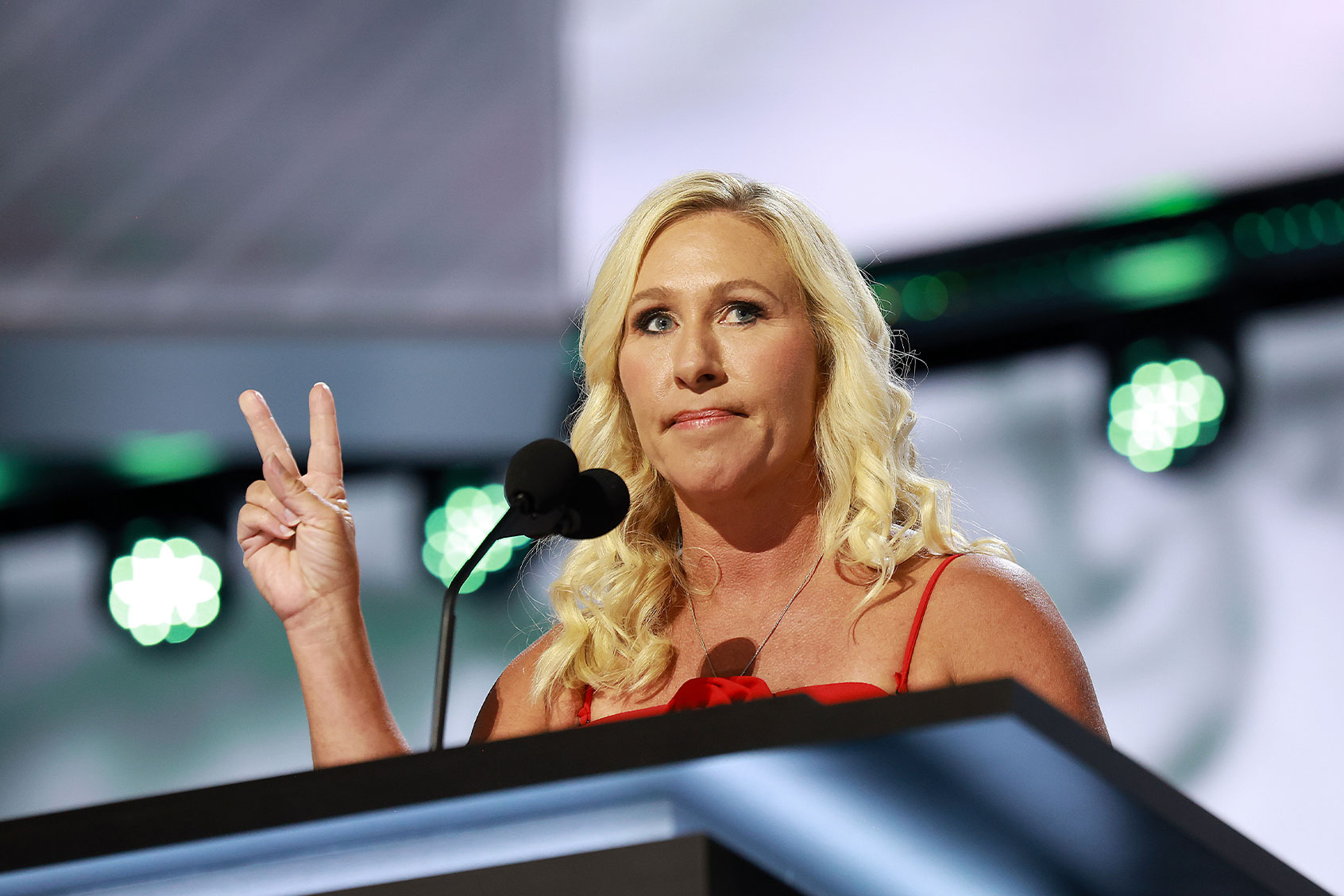
Recent developments have highlighted a surprising shift in the political landscape of the Republican Party, particularly involving Representative Marjorie Taylor Greene. Once regarded as a staunch ally of former President Donald Trump, Greene has begun to publicly distance herself from his influence, raising questions about her future ambitions and the direction of the GOP.
For years, Trump has maintained a firm grip on the Republican Party, often using intimidation to silence dissent. His influence has led to a significant decline in the legislative power of Congress, with many Republicans either supporting his agenda or facing severe repercussions. Those who have strayed from his path have experienced career-ending endorsements against them or have been subjected to intense public scrutiny. This atmosphere of fear and loyalty has kept many party members in line, as shown by the chaotic events of January 6, 2021, when Trump supporters stormed the Capitol.
As Trump’s popularity wanes and his erratic behavior grows more pronounced, fault lines within the party have begun to emerge. The rise of Greene is emblematic of this shift. Since her entry into Congress in 2021, she has attracted attention for her controversial remarks and confrontational style. Greene’s early political career was marked by aggressive tactics, such as confronting Parkland shooting survivor David Hogg and harassing Alexandria Ocasio-Cortez, which solidified her status as a divisive figure.
Greene’s Divergence from Trump
Unexpectedly, Greene has begun to break with Trump on several key issues. Her initial act of defiance came when she supported the release of files related to Jeffrey Epstein, a topic that had garnered significant attention among Trump’s supporters. Following this, she has criticized Trump’s stance on various matters, including his support for Israel and military aid to Ukraine.
Perhaps most strikingly, Greene has advocated for extending subsidies for Obamacare and the Supplemental Nutrition Assistance Program (SNAP), both of which are traditionally opposed by the GOP establishment. Her shift in tone is notable as she has recently appeared on mainstream television, expressing remorse for her previous controversial statements and claiming to have been misled about conspiracy theories.
In a dramatic turn, Trump has reacted negatively to Greene’s newfound stance, labeling her “Marjorie Traitor Greene” and suggesting she has lost her mind. In response, Greene defended her position, stating, “A traitor is an American that serves foreign countries and themselves,” indicating that she still believes in the core tenets of what she perceives to be MAGA ideology.
The Future of Greene and the GOP
Speculation abounds regarding Greene’s motivations. Some analysts suggest she may be positioning herself for a presidential run, particularly after Trump reportedly told her she couldn’t succeed in a Senate race. Greene’s political ambitions are palpable; she embodies a brand of populism that emphasizes an “America First” stance, advocating for isolationism and a withdrawal from international obligations.
Despite her recent departures from Trump’s policies, Greene remains committed to the populist economic principles that have resonated with many voters. Her ability to navigate the complexities of the current GOP landscape will be crucial as she attempts to establish her own identity within the party.
As the Republican Party grapples with internal divisions and shifting loyalties, Greene’s actions may signal a broader transformation. Her ambitions and the potential for a new ideological direction could influence the future of the GOP, particularly as Trump’s influence appears to be waning. The coming months will be pivotal in determining whether Greene can consolidate her vision of MAGA and capture the support of the party’s base, or if she will ultimately fall victim to the very dynamics she is attempting to navigate.