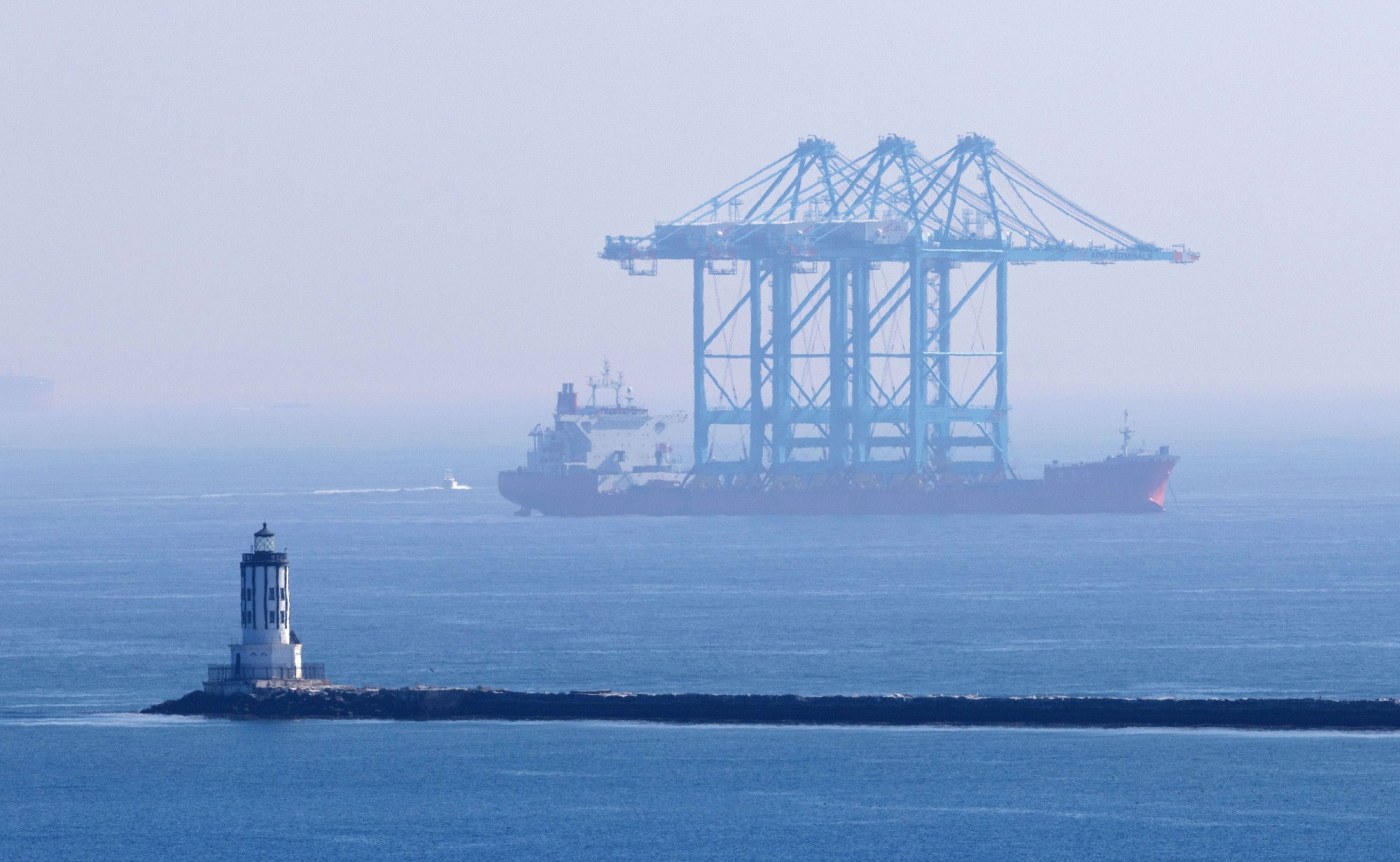
UPDATE: The Port of Los Angeles has just finalized a crucial partnership to combat pollution by signing a landmark zero-emissions agreement with the South Coast Air Quality Management District. This decisive action was taken by the harbor commission on Thursday, November 21, 2023, marking a pivotal moment in the fight against port-related pollution.
This agreement, which also includes the neighboring Port of Long Beach that approved its involvement earlier this month, aims to develop and implement a comprehensive zero-emissions infrastructure. Both ports unanimously endorsed this cooperative initiative, providing a strong alternative to the controversial Indirect Source Rule that was under scrutiny.
Port of L.A. Executive Director Gene Seroka hailed the agreement as a “landmark” framework, emphasizing that it moves the ports from “aspirational goals” to “mandatory, verifiable action.” This commitment signals a significant step forward in environmental responsibility, with specific deadlines and goals set to guide the ports over the next five years.
According to David Libatique, Deputy Executive Director of Stakeholder Engagement for the Port of Los Angeles, the agreement will target all five major sources of port pollution: cargo handling equipment, drayage trucks, locomotives, harbor craft, and ocean-going vessels. “A plan will be made for each category,” he confirmed, ensuring a structured approach to emissions reduction.
The timeline for action is clear: the ports will begin drafting plans by May 2027, with a goal of having approved strategies in place for all categories by the end of 2029. The urgency of this initiative cannot be overstated, as it addresses critical air quality issues affecting surrounding communities.
Heather Tomley, Managing Director of Planning and Environmental Affairs for the Port of Long Beach, expressed strong support during the meeting, stating, “This was a roll-up-your-sleeves, all-in effort to bring this forward.” She added that this agreement represents a significant step on the path to zero emissions, highlighting the collaborative commitment from all parties involved.
However, the agreement faces criticism. Some advocates argue that it is a closed-door deal that diminishes the regulatory authority of the South Coast AQMD. Dori Chandler, a policy advocate for the Coalition for Clean Air, stressed the need for robust community involvement, insisting that public trust has been compromised throughout the process. “The public process needs to be transparent and participatory,” she warned.
In addition to the zero-emissions agreement, the Port of Los Angeles also approved a revised Environmental Impact Report for the China Shipping Terminal at Berths 97-109, following extensive discussions and community concerns. The terminal is responsible for handling over 10% of the port’s cargo. Critics, including Dr. John Miller, an emergency room physician involved in the original court challenge nearly 30 years ago, urged the port to enforce mitigation measures effectively.
As the Port of L.A. embarks on this ambitious journey towards a sustainable future, stakeholders and community members will be closely monitoring the implementation of these plans. The commitment to zero emissions is not just a regulatory measure; it is a necessary response to the pressing health concerns faced by residents and workers in the area.
The next steps will focus on the detailed planning and execution of these zero-emission strategies, with the eyes of the community and environmental advocates watching closely. This agreement not only sets a new standard for port operations but also carries significant implications for air quality and public health in the region.
Stay tuned for further updates as this critical initiative unfolds, impacting the future of port operations and environmental stewardship.