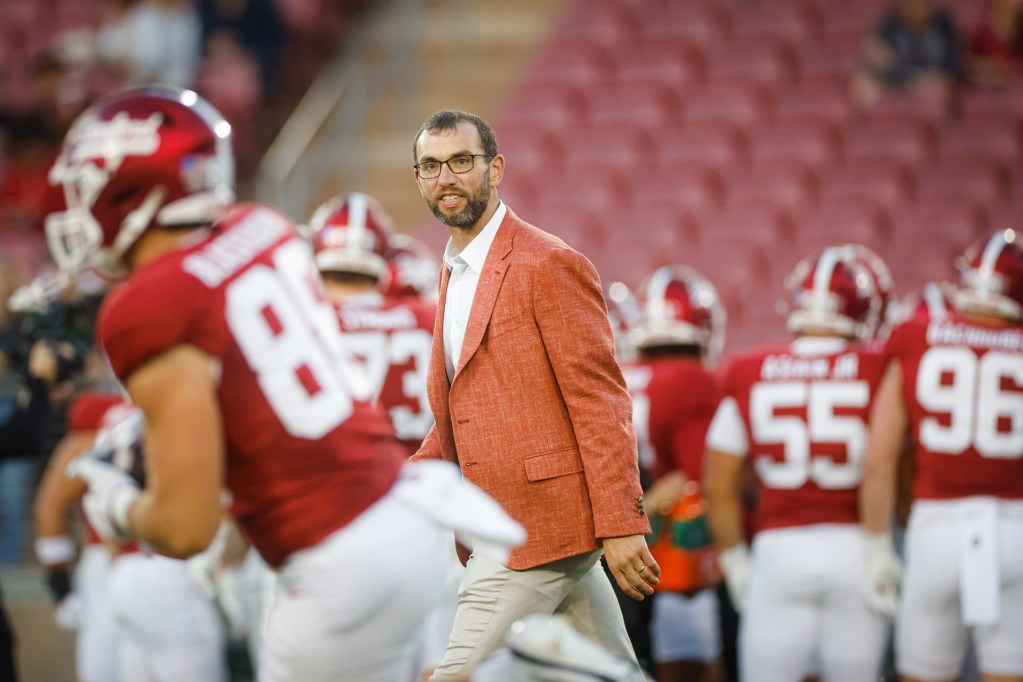
BREAKING: Stanford University’s football program is poised for a major transformation as General Manager Andrew Luck prepares to hire a new coach, backed by a monumental $50 million donation from alumnus Bradford Freeman. This urgent investment could revitalize a program that has struggled, posting four consecutive 3-9 seasons.
The Cardinal finds itself in one of the most competitive coaching markets in college football history. With rivals like Lane Kiffin of Mississippi drawing interest from multiple teams, the urgency to secure a top-tier coach has never been greater. Stanford’s current performance has raised alarms, especially with the looming threat of a fifth consecutive losing season.
“Brad’s gift is a vote of confidence in the program, and in me,” Luck stated, emphasizing the significant impact of Freeman’s contribution. This financial windfall is not just about hiring a coach; it aims to attract and retain players, enhancing the entire football program’s competitiveness.
Stanford’s athletic director, John Donahoe, confirmed that Freeman’s donation will support various facets of the program, including crucial revenue sharing for athletes. Under the recent House v. NCAA antitrust lawsuit settlement, Stanford can now distribute up to $20.5 million among its athletes, a necessary step to stay competitive in the ACC and beyond.
“We are raising the funds for revenue sharing,” Donahoe said. “The intent is to start competing for championships next year, right out of the gate.” This ambition is critical as Stanford seeks to reverse its fortunes after falling behind in the post-COVID college football landscape.
Despite the financial boost, the challenges are considerable. Stanford must also cover the escalating costs of hiring a head coach, assistants, and investing in facilities, nutrition, and strength training. With the College Football Playoff expanding to 12 teams, the pressure is on to perform.
President Jonathan Levin is committed to reviving Stanford football’s stature, a stark contrast to previous administrations that showed indifference. Levin, who has a personal connection to the program, is determined to leverage the excitement surrounding Luck’s leadership to foster a culture of success.
Recent moves, including firing former head coach Troy Taylor and appointing Frank Reich as interim coach, signify a renewed focus on Stanford football. Luck is deeply involved, from sideline coaching to selling season tickets, demonstrating a hands-on approach to revitalizing the program.
“If you aren’t revenue sharing, you are an unserious program,” Luck declared. “And we are serious.” His vision includes building a sustainable business model that positions Stanford as a premier destination for top-tier talent.
As Stanford gears up for a critical offseason, the upcoming decisions on coaching will be pivotal. With Freeman’s generous donation paving the way for strategic improvements, the Cardinal is finally positioned to make a significant comeback in college football.
Expect more updates as Stanford continues to navigate this crucial period in its sports program, with fan engagement and financial investments set to reshape the future of Stanford football.