UPDATE: A new report highlights the stark divide in New York as the cashless economy expands, leaving vulnerable populations behind. Recent data shows that the surge in tap-to-pay technology is creating significant challenges for those who rely on cash, such as street performers and the homeless.
In a city where convenience is paramount, the reliance on digital payment methods is growing. A 2022 Pew survey reveals that 60 percent of adults with household incomes exceeding $100,000 conduct all their weekly transactions without cash. In stark contrast, only 24 percent of those earning below $30,000 can say the same.
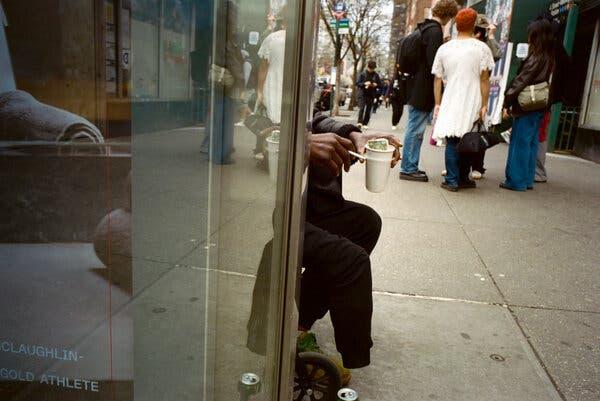
The implications of this shift are profound. For individuals like Rob Brender, a 55-year-old man who has been panhandling for nearly a decade, the move toward a cashless society is particularly devastating. Brender, who lives at the Creedmoor Psychiatric Center, shares his experience of seeing fewer coins in his cup as the number of shoppers around him increases. “I can’t deal with rejection,” he explains, opting to sit quietly with a cup for change while listening to his favorite radio station.
Despite attempts to adapt, such as a sign featuring a Venmo username made by a friend, Brender remains disconnected from the digital payment system. “No one has stopped to use it,” he admits, expressing his frustration at not knowing how to access the account. This sentiment reflects a growing concern that an entire demographic is being left behind as the city embraces a cashless future.
As New Yorkers increasingly opt for the convenience of digital transactions, many street vendors, performers, and others who rely on cash are feeling the impacts. The rise of cashless payments, while beneficial for some, poses a significant challenge for those who lack access to technology or banking services.
WHAT’S NEXT: Advocacy groups are calling for more inclusive policies that acknowledge the needs of cash-dependent individuals. As this issue gains traction, communities are urged to consider the implications of a cashless economy on their most vulnerable members.
Stay tuned for further updates on this developing story as New Yorkers navigate the challenges of a rapidly evolving payment landscape.