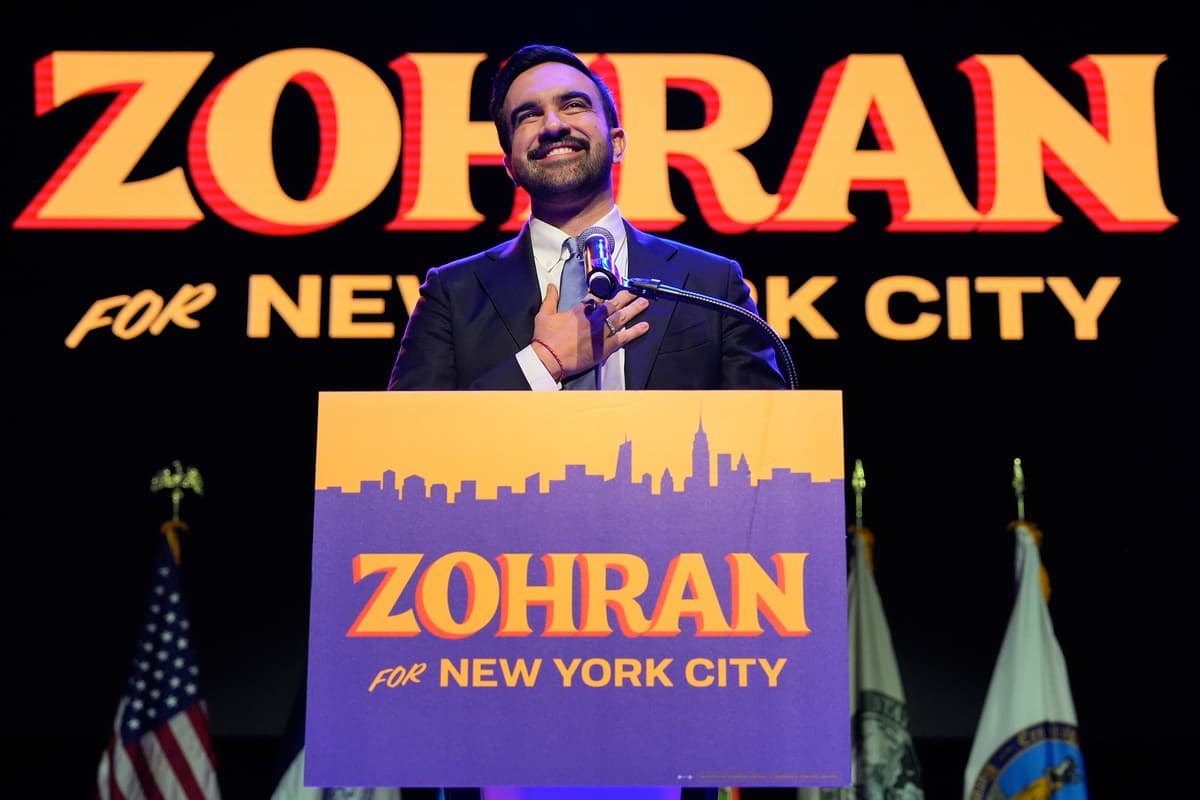
UPDATE: New York City Mayor-elect Zohran Mamdani faces backlash after a controversial response to an anti-Israel protest at Park East Synagogue earlier this week. Amid chants of “Death to the IDF,” Mamdani’s statement, released through press secretary Dora Pekec, claims he has “discouraged the language used” and will continue to do so. Critics are calling this reaction profoundly inadequate.
Mamdani emphasized that “every New Yorker should be free to enter a house of worship without intimidation,” but his remarks quickly escalated as he condemned the event organized by Nefesh B’Nefesh, which assists North Americans in relocating to Israel. His assertion that “these sacred spaces should not be used to promote activities in violation of international law” has raised eyebrows, particularly as it signals an alarming stance toward Israel.
This controversy deepens as Mamdani prepares to take an oath in support of the Constitution of the United States and local laws, raising questions about his commitment to American sovereignty. His recent comments suggest an obsession with “international law,” including plans to direct the NYPD to arrest Israeli Prime Minister Benjamin Netanyahu should he visit New York City. This statement aligns with warrants issued by the International Criminal Court, which Mamdani cites as justification for his stance.
Mamdani’s remarks have been interpreted as a clear indictment against Israel, particularly as he stated, “Being a city of international law means looking to uphold international law.” His comments echo a growing trend where international legal frameworks are invoked selectively, often targeting Israel while ignoring broader issues of aggression and human rights violations worldwide.
The protest at Park East was organized by the Palestinian Assembly for Liberation, which labels El Al Airlines as “Genocide Settler Airlines” and considers all individuals moving to Israel as “settlers.” This rhetoric underscores a pervasive narrative that is increasingly being challenged by Jewish communities and allies worldwide.
Critics argue that Mamdani’s focus on international law appears to serve an anti-Israel agenda rather than a genuine commitment to global norms. His past associations, including an appearance with Siraj Wahhaj, a controversial figure linked to the 1993 World Trade Center bombing, further complicate his public image and raise serious concerns about his leadership.
As the situation continues to unfold, many are left questioning the implications of Mamdani’s statements on the safety and security of Jewish communities in New York City. His invocation of international law, especially in the context of U.S. treaties and the lack of American signatory status to the Rome Statute that established the ICC, presents a convoluted legal stance that many find troubling.
Looking ahead, observers will be closely monitoring Mamdani’s actions as he assumes office and how his administration addresses the rising tensions surrounding issues of international law and communal safety. The responses from both Jewish and pro-Israel advocacy groups are expected to be swift and vocal as they navigate the implications of Mamdani’s stance.
With significant developments expected in the coming days, this situation remains fluid, and the fallout from Mamdani’s remarks will be pivotal in shaping the discourse around Israel and its supporters in the United States.