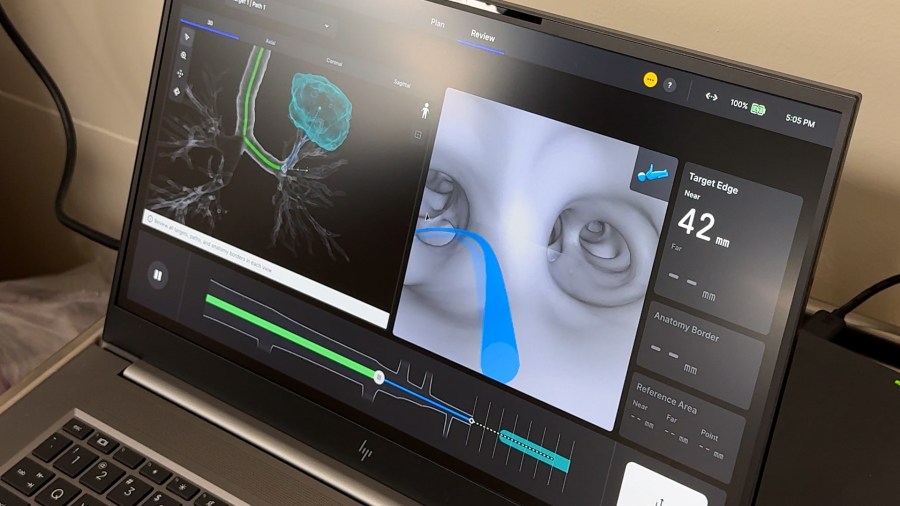
A new era in lung cancer detection and treatment is emerging at Ascension Sacred Heart Bay in Panama City, Florida. The hospital recently introduced advanced technologies, including the Ion Robotic-assisted Bronchoscopy system and Endo-Bronchial Ultrasound Technology. These innovations promise to enhance the accuracy and efficiency of diagnosing and treating lung cancer.
The Ion Robotic-assisted Bronchoscopy system is designed to facilitate a minimally invasive approach for patients with lung nodules requiring biopsy. Unlike traditional methods, which can be more invasive and carry higher risks, this robotic system provides physicians with enhanced visualization and precision. According to hospital representatives, this technology allows doctors to access hard-to-reach areas of the lungs more effectively, improving patient outcomes.
The implementation of these technologies is part of a broader commitment to advancing cancer care at Ascension Sacred Heart Bay. The hospital aims to provide its patients with the latest medical advancements to enhance their treatment experiences. The combination of robotic assistance and ultrasound capabilities empowers medical professionals to deliver targeted interventions with greater confidence.
In addition to improving diagnostic capabilities, the Ion system significantly reduces the time required for procedures, allowing for quicker recovery and less discomfort for patients. This can be particularly beneficial for individuals who may have delayed seeking treatment due to concerns about traditional biopsy methods.
Healthcare experts emphasize the importance of early detection in lung cancer treatment. With these new technologies, Ascension Sacred Heart Bay is positioning itself at the forefront of lung cancer care, offering patients access to state-of-the-art solutions that could lead to earlier diagnoses and better treatment options.
As the field of oncology continues to evolve, innovations like the Ion Robotic-assisted Bronchoscopy system and Endo-Bronchial Ultrasound Technology represent a significant step forward. Hospitals around the world are increasingly adopting similar technologies, recognizing the potential for improved patient care and outcomes.
In conclusion, Ascension Sacred Heart Bay’s introduction of robotic-assisted technologies is a noteworthy development in the fight against lung cancer. By prioritizing minimally invasive procedures and enhanced diagnostic tools, the hospital is poised to make a lasting impact on the lives of patients battling this challenging disease.