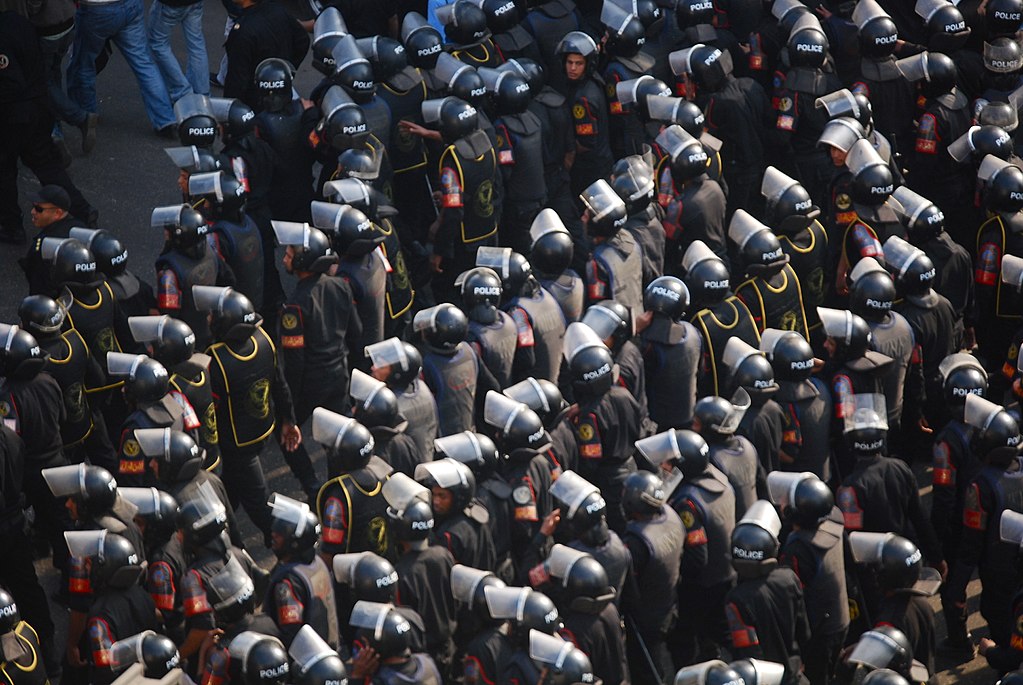
Twenty-two human rights organizations have called on the African Commission on Human and Peoples’ Rights to take urgent action to address Egypt’s ongoing human rights crisis. This appeal follows the commission’s 85th session, during which both the Egyptian government and the commission’s country rapporteur presented reports that have drawn criticism for allegedly misrepresenting the situation in Egypt.
The Egyptian government’s report, covering the years from 2019 to 2024, denied the existence of detained journalists and prisoners of conscience. It framed restrictions on civil society as efforts to enhance “transparency.” The country rapporteur’s report echoed these claims, failing to mention widespread human rights violations and describing the 2023 presidential election as “peaceful” and “competitive.” This characterization stands in stark contrast to extensive documentation of repression, the prosecution of potential candidates, and the effective criminalization of assembly, expression, and association.
Critics have pointed out that a 2024 “familiarization visit” by the rapporteur did not include meetings with independent Egyptian human rights groups, further limiting the scope of the findings. Reports from outside sources offer a vastly different perspective. Over the past decade, the Egyptian government has detained thousands of peaceful critics, journalists, political figures, and human rights defenders under broad terrorism and “false news” charges.
Human rights groups and various UN mechanisms have documented persistent patterns of enforced disappearance, systematic torture, and prolonged pretrial detention. In many cases, detainees are subjected to a practice known as “rotation,” where they are transferred into new cases with similar accusations. The government has systematically targeted hundreds of news and civil society websites, disrupted small demonstrations, and conducted preemptive mass arrests in anticipation of protests related to economic conditions, electricity outages, and regional conflicts.
Prominent figures such as blogger Alaa Abdel Fattah, lawyer Hoda Abdel Moneim, and political challenger Ahmed Tantawy remain imprisoned or face renewed charges despite having already served previous sentences. The structural changes introduced since 2019 have further solidified state security powers. Constitutional amendments expanded military authority, while counterterrorism and cybercrime laws remain broad and ambiguous. Additionally, a draft Criminal Procedure Code has faced international criticism for undermining fair-trial protections and facilitating prolonged detention without meaningful judicial oversight.
There is also a troubling lack of accountability for deaths in custody, torture allegations, and past events such as the mass killings of protesters. The African Commission has previously issued several resolutions indicating that Egypt is in violation of the African Charter, citing concerns over mass death sentences, restrictions on journalists, and violations of fair trial rights. Yet, it has not adopted a new resolution on Egypt since 2015, despite the deteriorating situation.
Rights organizations assert that Cairo has failed to implement the commission’s previous recommendations or comply with decisions regarding individual complaints. The coalition is urging the commission to adopt a new resolution and ensure that its concluding observations are based on a thorough and evidence-based assessment of current conditions in Egypt. They are calling for stronger public engagement, urgent appeals to the Egyptian government, and the establishment of a dedicated follow-up mechanism under Rule 112 to monitor the implementation of recommendations.
Furthermore, the organizations have warned that ongoing patterns of arbitrary detention, abuse in custody, and counterterrorism operations may necessitate the use of the commission’s early-warning powers to alert the African Union Peace and Security Council. They emphasized that any proposal to hold a future session of the African Commission in Egypt must be contingent upon verifiable guarantees that all participants, including local critics, can safely enter, participate, and leave the country without fear of intimidation or reprisals.
The situation in Egypt continues to evolve, and the international community is urged to remain vigilant and involved in advocating for human rights and accountability.