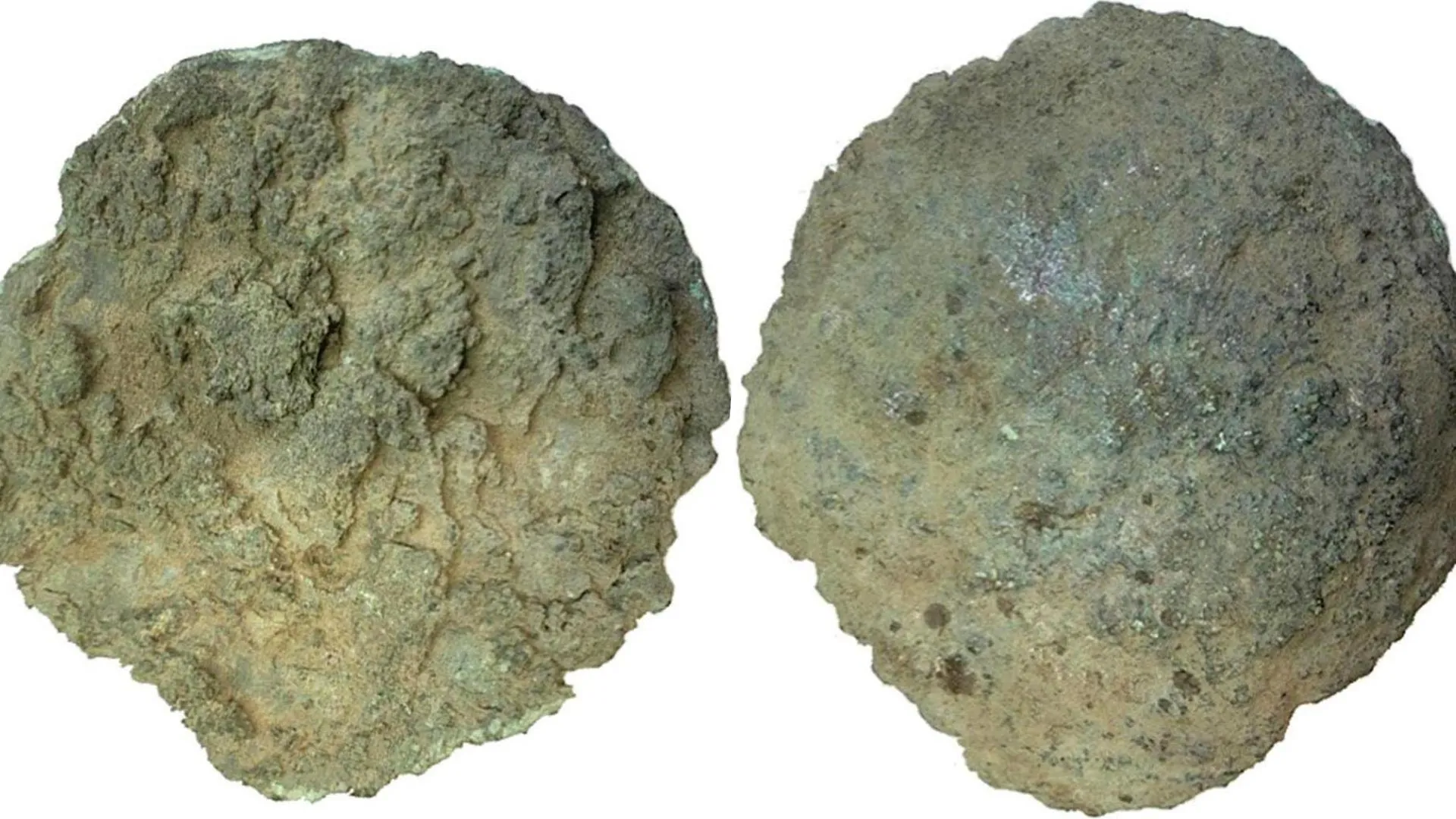
BREAKING: A groundbreaking discovery in Sweden has just overturned long-held beliefs about the Iron Age. Researchers from the University of Gothenburg revealed that a mysterious metal ingot, initially thought to date back to the Bronze Age, is in fact a product of the Iron Age, marking a significant shift in our understanding of ancient trade networks.
The plano-convex ingot, uncovered at the Särdal Find, was subjected to rigorous chemical and isotopic testing. The results shocked experts: the ingot is composed of a copper-zinc-tin-lead alloy, a signature material of the Iron Age, rather than the expected Bronze Age composition. This finding is particularly significant as it aligns closely with Iron Age artifacts found in Poland, suggesting new evidence of long-distance connections across the Baltic Sea.
This transformative discovery was made through collaboration among researchers, emphasizing the power of teamwork in archaeology. “Thanks to the collaborative climate of the archaeometallurgy research world, we teamed up with Polish scholars,” said Serena Sabatini, a key researcher. “This work clearly shows the importance of teamwork and data sharing. Without our Polish colleagues, we would have never achieved such remarkable results!”
The Särdal ingot, recovered without any accompanying materials that could help date it, was initially assumed to be a Bronze Age artifact due to its size and shape. The study, published in the Journal of Archaeological Science, highlights how modern scientific methods, including lead isotope and trace element analyses, can unravel the complex history of isolated artifacts.
“This case demonstrates that even isolated artifacts can gain meaningful historical context through careful study,” Sabatini explained. The research not only redefines the Särdal ingot but also reinforces existing hypotheses regarding trade and networking in the Nordic region during the pre-Roman Iron Age.
The implications of this discovery are profound. By reevaluating the Särdal Find, researchers are unlocking a broader understanding of ancient economies and interactions that spanned vast distances. This finding underscores the need for ongoing collaboration in academia, revealing patterns and trade networks that might otherwise remain obscured.
As this story develops, experts urge further investigation into similar artifacts across Europe to deepen our understanding of Iron Age connectivity. The findings are expected to spark renewed interest in ancient trade routes and their significance in shaping historical narratives.
Stay tuned for more updates on this revolutionary discovery that may reshape our view of the Iron Age and its extensive networks.