Marvel Comics has faced criticism for its tendency to recycle plot points, particularly evident in a recent storyline featuring Mister Fantastic. In this arc, Reed Richards attempts to become the Scientist Supreme, a title that presents a fascinating opportunity for character development. However, the execution has been called into question, as it overlooks the significant potential of blending science and magic within the Marvel Universe.
Recycling Old Tropes
Comic books often rely on familiar tropes, and it is a common practice among major publishers like Marvel and DC. Superheroes are designed for stories that can extend indefinitely, making it simpler for writers to draw upon established themes rather than constantly innovate. In a literary landscape where originality is increasingly challenging, it is vital for publishers to nurture fresh ideas when they arise. Marvel’s recent storyline was poised to do just that, particularly with Doctor Doom declaring himself emperor of the world after deceiving Doctor Strange into making him Sorcerer Supreme.
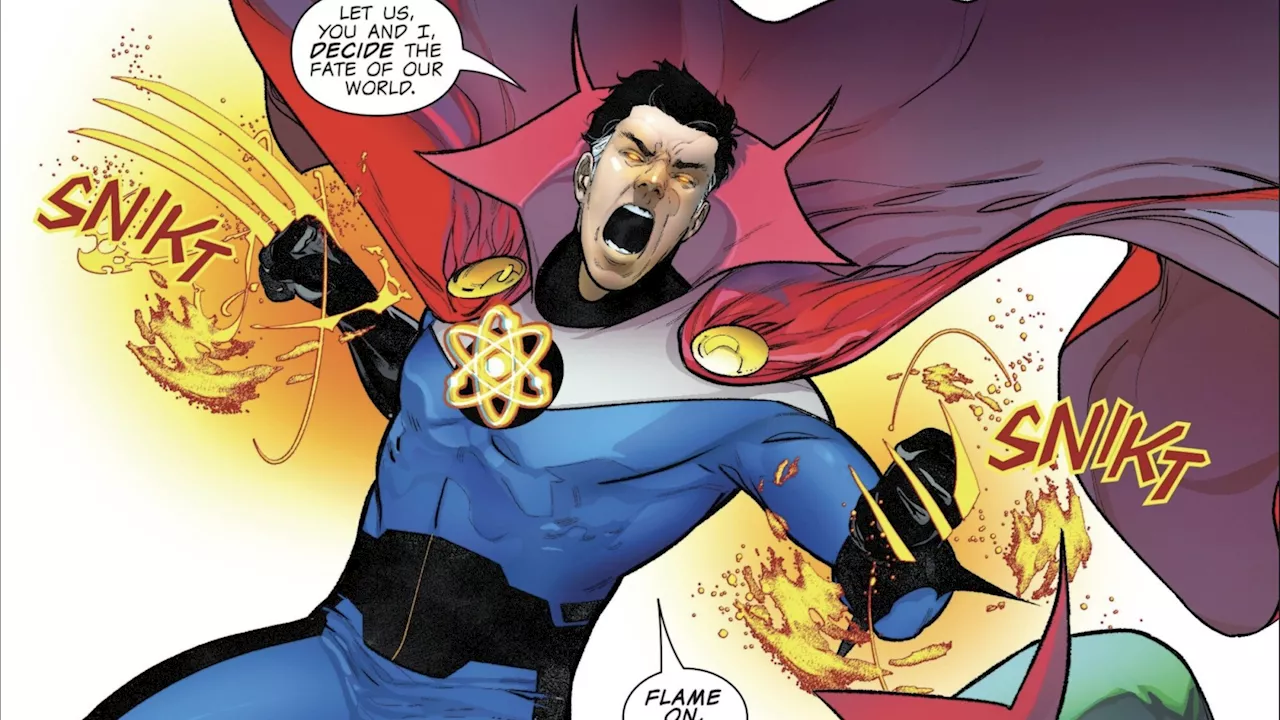
Despite the excitement surrounding Doom’s power surge, the real innovation appeared in issue #7 of the series, where Mister Fantastic attempted to harness magic through scientific means. This was a significant departure for a character who has traditionally dismissed magic as a mere unquantifiable science. Reed’s foray into magic, however, felt abrupt and inadequately explored, which detracted from the potential impact of the narrative.
The Clash Between Science and Magic
Mister Fantastic has long been skeptical of magic, viewing it as an antithesis to science. The Marvel Universe consistently illustrates the incompatibility of these two forces, as seen through characters like Scarlet Witch and Doctor Strange. Magic operates under its own rules, often defying the established laws of physics and biology. By having Reed mimic magic without fully understanding it, the narrative risks trivializing the complexity of magic, making it seem accessible to anyone willing to follow a formula.
“Reed mastering magic through scientific means goes against the established rules for magic.”
The potential for a character like Mister Fantastic to master both science and magic could have been groundbreaking. This duality could serve as a compelling narrative device, allowing for new challenges and growth. Yet, the storyline failed to build up to Reed’s sudden acquisition of magical abilities. There was little foreshadowing or exploration of Reed’s thought process, depriving readers of a deeper understanding and appreciation for this development.
Instead of a gradual evolution, Reed’s new abilities were introduced and dismissed almost immediately. The comic explicitly states that Doom destroys Reed’s astral self, barring him from the Astral Plane indefinitely. By the story’s conclusion, Reed’s brief foray into magic lacked lasting significance. Although he managed to momentarily distract Doom and combine the heroes’ attacks, the impact was negligible.
The idea of a scientifically minded character mastering magic is rich with narrative possibilities. It could inspire readers by demonstrating that with effort and curiosity, significant obstacles can be overcome. Unfortunately, this opportunity was squandered, as Reed’s magic was merely a passing phase rather than a substantial aspect of his character.
As the storyline unfolds, it remains uncertain if Mister Fantastic will revisit this magical mastery or if it will fade into obscurity. The concept of a magical Scientist Supreme holds great promise, yet it currently feels underutilized, leaving readers wanting more from this intriguing narrative thread. The challenge for Marvel Comics will be to strike a balance between familiar themes and the cultivation of innovative ideas that truly expand their universe.