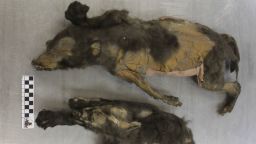
A recent study reveals that urban raccoons may be exhibiting signs of early domestication, with researchers noting a significant reduction in snout length among those living in cities. The research, led by Raffaela Lesch, an assistant professor at the University of Arkansas at Little Rock, suggests these changes could parallel the domestication processes observed in dogs thousands of years ago.
The inquiry began when Lesch encountered a raccoon rummaging in a waste bin on campus. This prompted her to reflect on the adaptability of raccoons in urban environments and whether their comfort around humans might indicate a shift towards domestication. “Could we be witnessing the early stages of domestication?” Lesch pondered, noting how raccoons thrive in cities, even during daylight hours.
Historically, domestication began with wolves scavenging human waste, a relationship that evolved over approximately 30,000 years. Raccoons, often referred to as “trash pandas,” might be following a similar path, as they learn to benefit from human refuse. “Trash is really the kickstarter,” Lesch explained. “Wherever humans go, there is trash. Animals love our trash.”
Research Methodology and Findings
To explore the idea further, Lesch and her team analyzed whether urban raccoons were developing shorter snouts, a hallmark of domestication known as “domestication syndrome.” This term describes a collection of traits observed in domesticated animals, including shorter noses, smaller teeth, and changes in fur coloration. A pivotal 2014 study outlined how less aggressive and more docile individuals are more likely to thrive alongside humans, leading to natural selection for tameness. This process can affect embryonic development, particularly impacting neural crest cells that influence physical features.
Lesch’s team, consisting of 11 undergraduate and five graduate students, examined over 19,000 photos of raccoons available on iNaturalist, a platform for wildlife observations. They identified 249 images that provided clear profile views of the animals, allowing for precise measurements. The analysis revealed that urban raccoons had snouts that were 3.6% shorter than those of their rural counterparts. While this difference might seem minor, it is significant for species potentially at the early stages of domestication. “That is still a fairly clear signal,” Lesch stated.
Expert Perspectives and Future Research
Despite these findings, some experts remain cautious about labeling this change as domestication. Kathryn Grossman, a zooarchaeologist at North Carolina State University, noted that raccoons differ from traditional domesticated animals, which often exhibit specific social structures. “Animals that have been domesticated have a very specific social structure, and raccoons are not one of those animals,” she explained.
While raccoons do not form packs like wolves or sheep, they are social creatures. Lesch aims to further investigate these findings by examining raccoon skulls collected over decades at her university and comparing the behaviors of urban and rural populations.
The implications of this research are intriguing. If raccoons are indeed moving towards domestication, future generations may develop traits similar to those of other domesticated species, such as floppy ears or curly tails. “While we might not see what it will evolve into, we can create a record of how it all started,” Lesch concluded, expressing excitement about exploring this evolving narrative.
This study, published on October 2 in the journal Frontiers in Zoology, opens the door to further understanding the relationship between urban wildlife and human environments, potentially reshaping our views on domestication processes in the natural world.