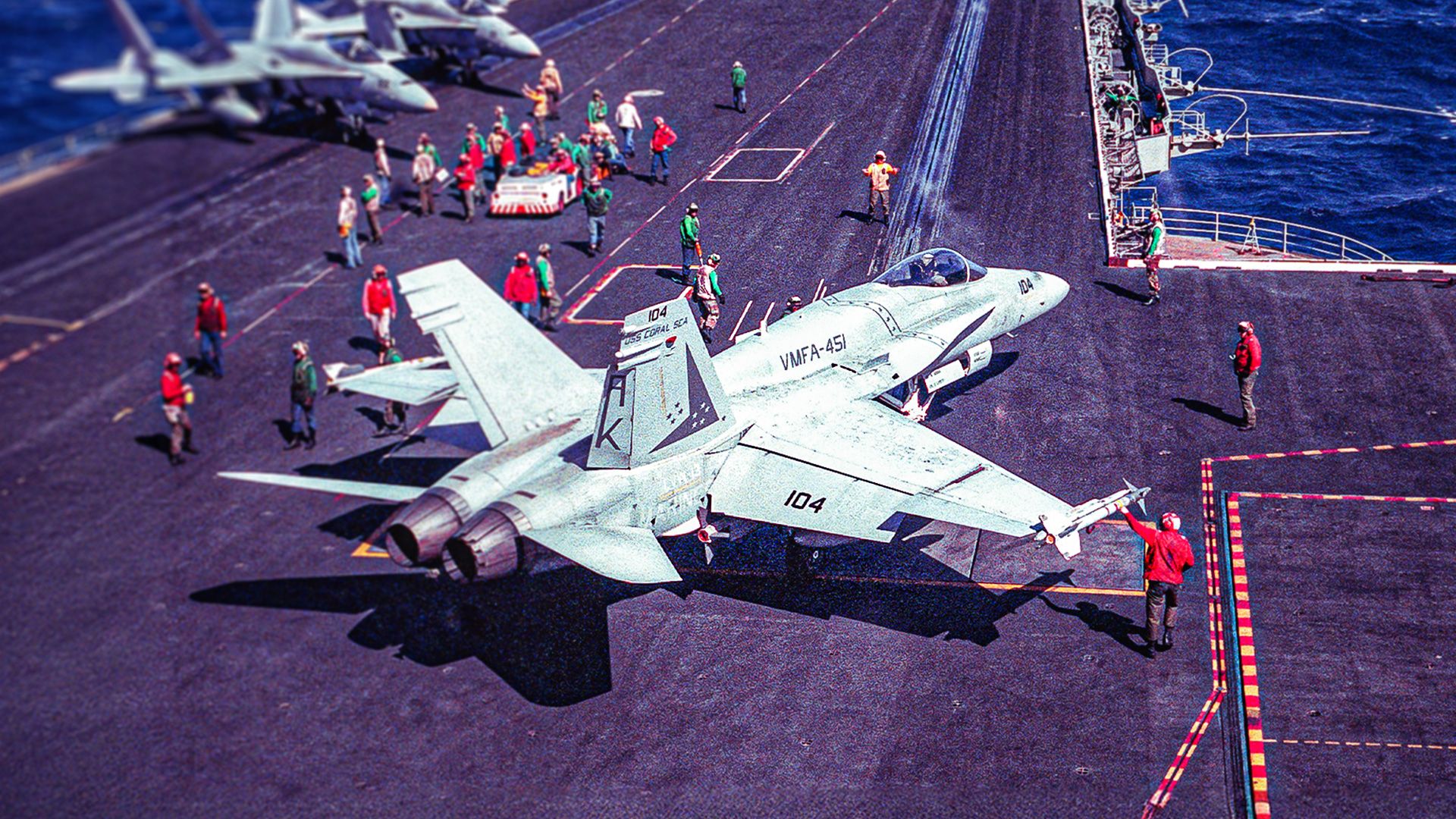
The United States Navy and Marine Corps maintain extensive aircraft fleets that support various military missions, often collaborating from the same aircraft carriers. While both branches share many common aircraft, distinct differences exist in their respective missions and operational needs. The Navy’s focus is largely on maritime warfare, while the Marines prioritize support for ground troops through specialized aviation capabilities.
Fleet Composition and Mission Focus
The Department of the Navy operates approximately 4,000 aircraft, with a diverse mix designed to ensure sea control, power projection, and maritime awareness. The backbone of the Navy’s carrier aviation is the F/A-18E/F Super Hornet, with nearly 600 units currently active. The Navy is also integrating the fifth-generation F-35C Lightning II, with around 50 in active service and more than 200 units on order.
Future plans include the development of the F/A-XX, which aims to replace the Super Hornet by the 2040s. This new platform is designed with advanced stealth capabilities and artificial intelligence integration, significantly enhancing operational range and effectiveness. The Navy envisions deploying over 270 F-35C aircraft alongside the new fighter, forming a highly capable carrier air wing.
In contrast, the Marine Corps aviation fleet focuses on supporting the ground forces, known as the “tip of the spear.” As of 2022, the Marine Corps operates around 1,262 crewed aircraft. The F-35B Lightning II, a short takeoff and vertical landing variant, is vital for operations from amphibious ships and austere forward bases. Currently, about 145 F-35Bs are active, with plans to acquire an additional 13 in fiscal year 2025.
The Marine Corps also maintains a fleet of approximately 186 F/A-18 Hornets, which will eventually be phased out in favor of the F-35C. The legacy AV-8B Harrier II is being replaced by the F-35B, although 87 units remain in service. A commitment to a total fleet of 420 F-35 aircraft (comprised of 280 F-35Bs and 140 F-35Cs) demonstrates the Corps’ dedication to future air dominance.
Helicopter Operations and Interoperability
The Navy and Marine Corps operate distinct helicopter fleets optimized for their respective missions. The Marine Corps relies heavily on helicopter support as part of the Marine Air-Ground Task Force (MAGTF), providing close air support, assault transport, and logistics. The MV-22 Osprey, a tiltrotor aircraft, plays a key role in medium-lift assault transport missions.
The Navy’s helicopter fleet features the MH-60 Seahawk, which is adapted from the Army’s Black Hawk for naval operations. The MH-60R variant specializes in anti-submarine warfare (ASW) and anti-surface warfare (ASuW), while the MH-60S variant supports utility and logistics missions. As older platforms like the MH-53E Sea Dragon are phased out, the Navy is focusing on more advanced capabilities.
The Marine Corps operates a diverse fleet of helicopters, including the AH-1Z Viper, which provides armed escort and close air support, and the CH-53K King Stallion, a heavy-lift helicopter capable of transporting up to 36,000 pounds.
Both branches emphasize interoperability, allowing Marine squadrons to augment Navy carrier air wings and enabling Navy aviation to support Marine ground operations. This collaboration is facilitated by integrated training, shared communication systems, and a common cultural background.
The Navy’s specialized assets provide critical capabilities that enhance overall naval operations, while the Marine Corps maintains a focus on close air support and troop transport to address immediate ground command needs.
In conclusion, while the United States Navy and Marine Corps operate with distinct missions and aircraft inventories, their collaborative efforts create a cohesive and powerful maritime force. As both branches continue to evolve technologically and operationally, their commitment to interoperability will remain vital to their effectiveness in future conflicts.