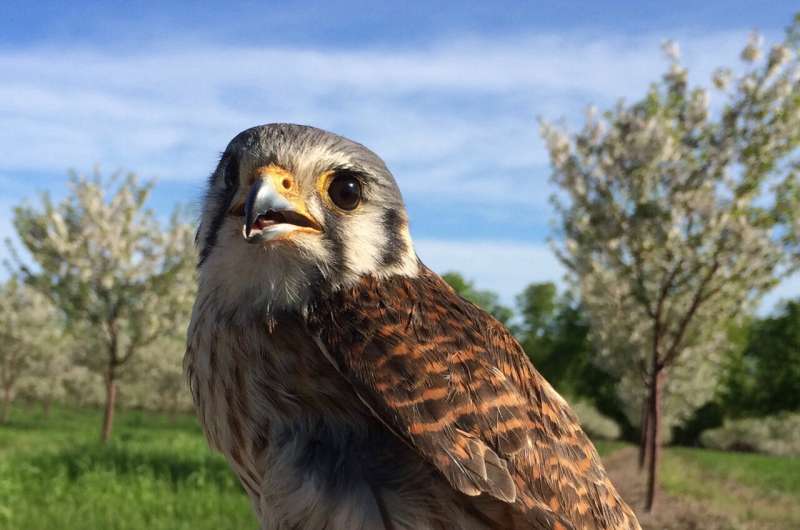
Cherry farmers in northern Michigan are turning to an unexpected ally in their fight against crop damage and food safety risks: the American kestrel. This small falcon, known for its hunting prowess, is helping farmers protect their cherry orchards by deterring smaller birds that feast on fruit and potentially contaminate crops with their droppings. A recent study from Michigan State University, published on November 27, 2025, in the Journal of Applied Ecology, highlights the dual benefits these birds of prey offer.
Kestrels as Effective Deterrents
The research reveals that kestrels not only prevent damage from birds such as robins, grackles, and starlings but also significantly reduce the risk of foodborne illness associated with bird droppings. According to lead author Olivia Smith, an assistant professor of horticulture at MSU, the presence of kestrels can lead to over a tenfold decrease in cherry damage caused by these smaller birds.
Farmers have struggled with various bird control methods, including nets and noisemakers, which can be expensive and often ineffective. The study indicates that kestrels could serve as a low-cost, low-maintenance solution to help mitigate these issues. Smith noted, “It’s hard to keep birds out of crops,” emphasizing the ongoing challenges growers face.
Impact on Food Safety
The findings suggest that kestrels contribute not only to crop protection but also to improved food safety. The research team observed a threefold reduction in bird droppings on cherry trees in orchards where kestrels nested. This is crucial, as some droppings contain Campylobacter, a bacteria linked to foodborne illnesses that cause symptoms like diarrhea and stomach cramps.
Although the study found that 10% of droppings included this bacteria, the researchers caution that there has been no direct link between cherries and Campylobacter outbreaks. In fact, the only documented case of bird-related food contamination occurred in 2008 due to migratory cranes in Alaska. Nonetheless, the research underscores the potential of kestrels to minimize contamination risks in crops, particularly leafy greens, which have faced scrutiny in food safety discussions.
Smith remarked, “They’re really good at keeping the amount of poop down. That means fewer opportunities for transmission.” This perspective highlights the broader implications of integrating natural predators into agricultural practices.
While the kestrels present a promising option for cherry growers, challenges remain in their adoption. Their nesting habits may vary by region, limiting their effectiveness as a universal solution. Nevertheless, senior author Catherine Lindell, an associate professor emerita of Integrative Biology at MSU, described kestrels as a valuable addition to farmers’ bird management strategies. “But it’s a low-cost, low-maintenance tool for growers to use in their bird management toolbox,” she said.
As cherry farmers look to the future, the collaboration with kestrels represents a novel method to enhance crop safety and potentially increase profits, illustrating how nature can play a crucial role in sustainable agriculture.