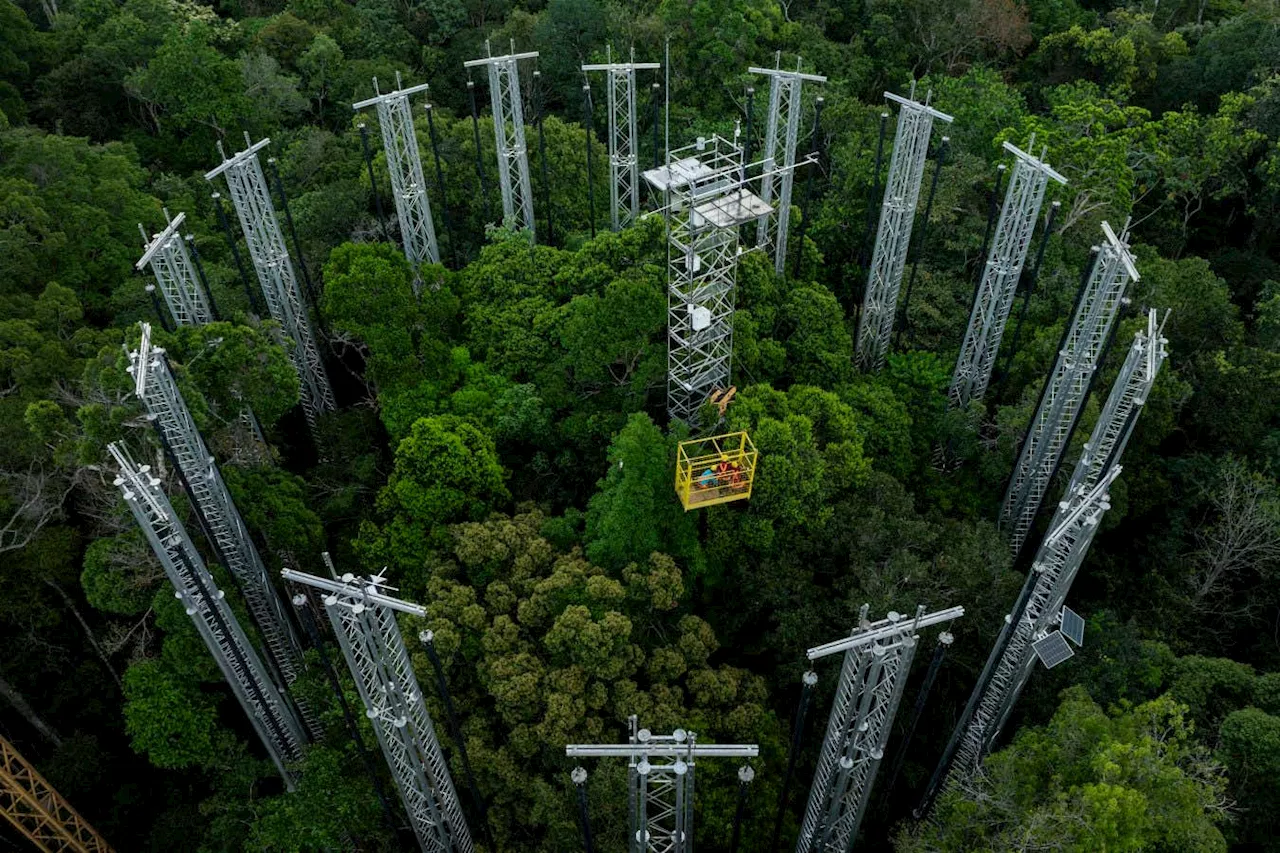
An innovative experiment in the Amazon rainforest is exploring how the ecosystem responds to rising carbon dioxide (CO2) levels. Conducted by the National Institute of Amazonian Research, this research aims to simulate future emissions scenarios by deliberately releasing greenhouse gases into the environment.
Located approximately 80 kilometres north of Manaus, Brazil, the experiment consists of six circular plots, each featuring 35-meter-tall metal towers. These towers, equipped with sensors, form circles that are 30 meters in diameter. Half of the circles emit CO2, while the others serve as control groups. This setup allows researchers to observe the effects of a 50 percent increase in local CO2 concentration, reflecting anticipated emissions levels in the coming decades.
Photographer Lalo de Almeida documented the experiment, likening the facility to “a hidden spying facility out of a Bond movie.” His striking images reveal the scale and complexity of the project, highlighting the critical nature of this research in understanding the Amazon’s role in climate regulation.
The findings from this experiment could provide valuable insights into the thresholds of CO2 emissions before the ecosystem begins to suffer irreparable damage. As scientists collect data on plant responses, they aim to determine how much carbon the Amazon can absorb before facing severe ecological consequences.
The Amazon rainforest is often referred to as the “lungs of the planet” due to its capacity to absorb significant amounts of carbon dioxide. Understanding how this vital ecosystem reacts to increased emissions is essential for global climate efforts. Researchers hope that the results will inform future conservation strategies and climate policies, ultimately contributing to a more sustainable relationship with our planet’s resources.
As the experiment progresses, it stands as a critical endeavor in the fight against climate change, representing the intersection of scientific inquiry and environmental stewardship in one of the world’s most important ecosystems.