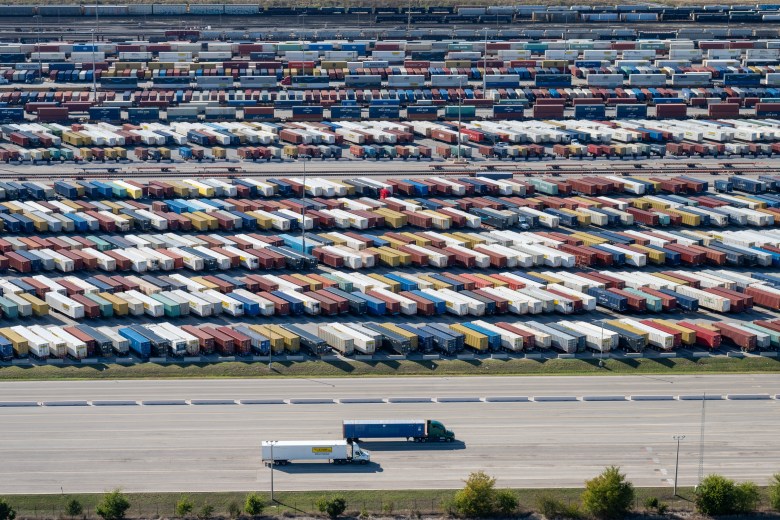
BNSF Railway has announced a significant investment of $3.6 billion aimed at enhancing its infrastructure as part of its 2026 capital investment plan. The Fort Worth-based company has allocated the majority of this funding—approximately $2.8 billion—to maintenance initiatives designed to ensure operational safety and capacity, minimizing unscheduled service disruptions.
In a statement, Katie Farmer, president and CEO of BNSF, emphasized the company’s commitment to modernizing its network. “We prioritize investing with the future in mind, improving efficiency, adding capacity and ensuring our railroad is always ready to support growth while delivering dependable, resilient service our customers count on,” she said.
Strategic Investments for Growth
The investment plan includes $358 million directed towards expansion and efficiency upgrades, contributing to the $2.6 billion already invested by BNSF in the past five years. These expansion efforts are intended to accommodate customer growth through facility and line projects that enhance network capacity and efficiency.
Maintenance efforts will involve upgrading 13,000 miles of rail infrastructure, replacing 2.5 million rail ties, and renewing over 400 miles of rail. These initiatives are critical to BNSF’s operational reliability, vital for maintaining service levels amidst increasing demand.
In partnership with Hillwood and the city of Fort Worth, BNSF recently unveiled the creation of the Alliance Logistics District, a mobility hub integrated within the Smart Port at the AllianceTexas development. This project is expected to enhance logistics capabilities in the region.
Expanding Network and Future Projects
BNSF is also progressing on other significant projects across Texas. A new logistics center is under construction in Gunter, located in Grayson County, while another facility in Cleveland serves the north Houston area with a substantial 1,200-acre site. According to BNSF spokesperson Kendall Kirkham Sloan, the company has moved to phase two of construction, focusing on track work and civil engineering to support customer operations.
Further, BNSF is involved in the Barstow International Gateway project in California, a 4,500-acre facility designed to improve supply chain efficiency by transitioning freight from international to domestic containers. This initiative is projected to create thousands of jobs and position Barstow as a key transportation hub.
Planning is also underway for a $3.2 billion, 4,320-acre facility at Logistics Park Phoenix, which will include a rail-served freight terminal. Additionally, track expansion projects in Galesburg, Illinois, and Winslow, Arizona, aim to boost switching capacity and enhance overall network performance.
BNSF’s recent earnings report indicates a 2% increase in total revenue, surpassing $6 million in the third quarter of 2025. For the first nine months of the year, revenue grew by 1% compared to the same period in 2024. While the average revenue per car increased by 1% in the third quarter, it declined by 1% for the first nine months due to lower fuel surcharge revenue and an unfavorable business mix.
This extensive investment strategy reflects BNSF’s commitment to enhancing its infrastructure and operational efficiency, ensuring the company is well-positioned to meet future demands in the transportation sector.