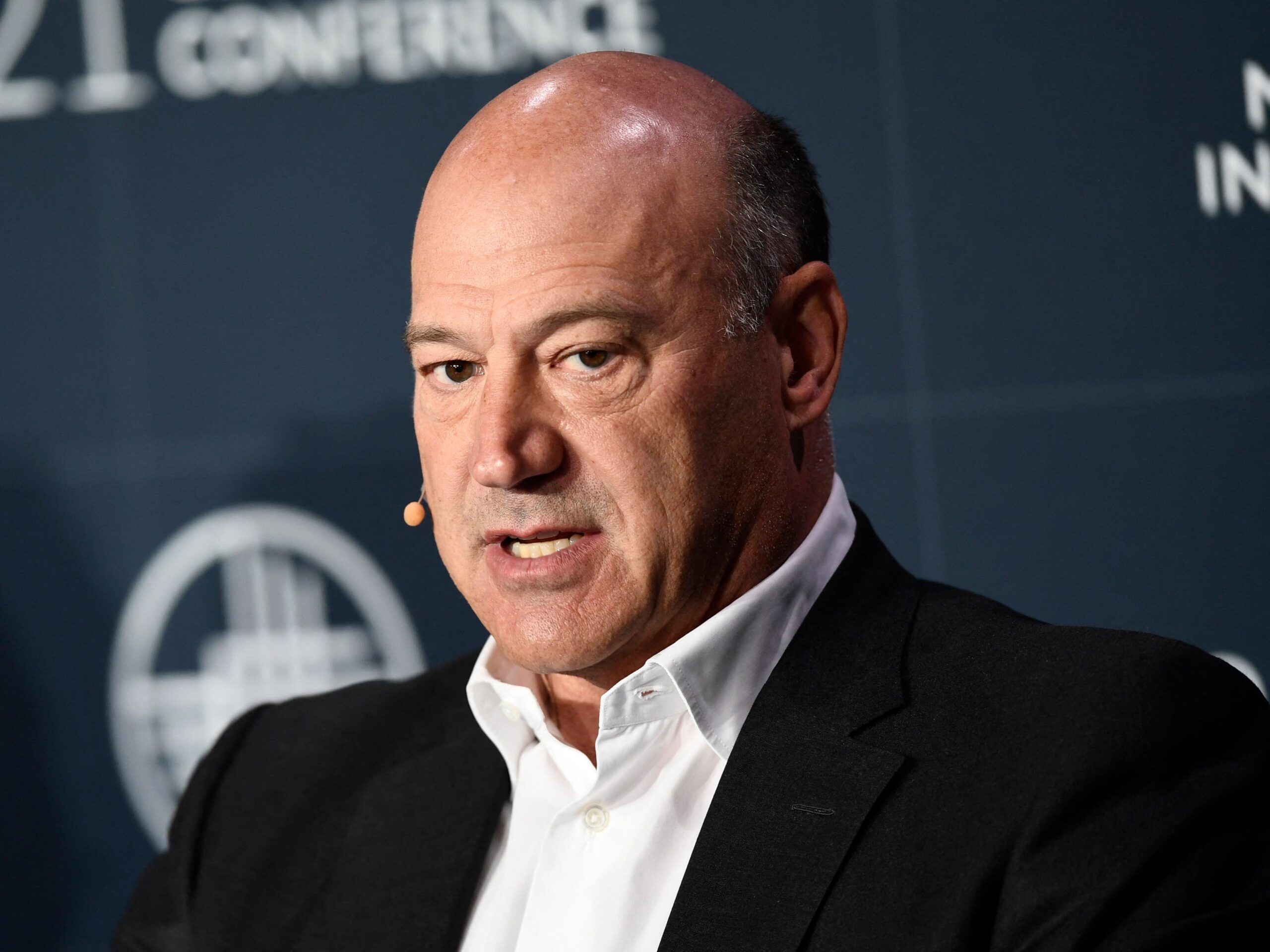
Gary Cohn, former chief economic advisor to Donald Trump, has drawn attention to the striking disparities in the United States economy, describing it as a “K-shaped economy.” This term characterizes a situation where the wealthy are prospering while many working Americans are experiencing financial hardship. Cohn’s remarks come as the upcoming midterm elections are set to focus heavily on economic affordability.
During an appearance on CBS’s “Face the Nation,” Cohn stated, “If you look at gross domestic product, which is the overall output of the US economy, we’re trending about 5% right now, which is a very high growth rate in the United States.” He also pointed to encouraging trends in inflation and unemployment rates, suggesting that the economy is performing well in certain respects. Yet, he emphasized that these figures do not capture the complete reality for many Americans.
Cohn elaborated on this disparity, saying, “We have a massive wealth effect at the top end, and we have got hardworking Americans having a very difficult time paying their bills, and they are suffering in this economy.” This observation underscores the growing divide, as those at the upper end of the economic spectrum continue to benefit significantly from the current economic conditions.
The Trump administration, as Cohn noted, is taking steps to address these affordability issues. “The White House is going on the offensive. The president is going to spend time out on the road talking about affordability,” Cohn said. “Affordability will be the issue between now and the mid-term elections.” This proactive approach aims to resonate with voters who are feeling the pinch of rising costs for essential goods and services.
The concept of a K-shaped economy highlights the contrasting experiences of different income groups. While the wealthy are accumulating assets, lower-income individuals are grappling with increased financial strain. Gregory Daco, chief economist at EY, recently commented on this trend, stating, “A silent majority of consumers is increasingly strained by a two-year affordability crisis and elevated borrowing costs.” He noted that slower income growth is forcing many families to deplete their savings and rely more on credit to maintain their standard of living.
Joe Brusuelas, chief economist at RSM, added that significant policy changes will be necessary to address these economic disparities, but such changes are unlikely before 2026. “When I take a look at the policy landscape, it’s all tilted toward the upper spur of the K,” he observed. Brusuelas predicts that without intervention, the fundamental inequality will continue to widen in the coming years.
As the midterm elections approach, the challenges facing American workers are becoming increasingly prominent. With economic affordability at the forefront of political discourse, the contrasting narratives of economic strength and personal financial hardship are set to shape the political landscape. The ongoing dialogue around these issues reflects a broader concern about the sustainability of economic growth that benefits only a segment of the population.
In light of Cohn’s insights, it is clear that addressing the affordability crisis will be crucial for policymakers and political leaders as they seek to unify an increasingly divided electorate. The implications of these economic realities extend beyond political campaigns, impacting the daily lives of millions of Americans who are navigating their financial struggles amidst a backdrop of purported economic success.