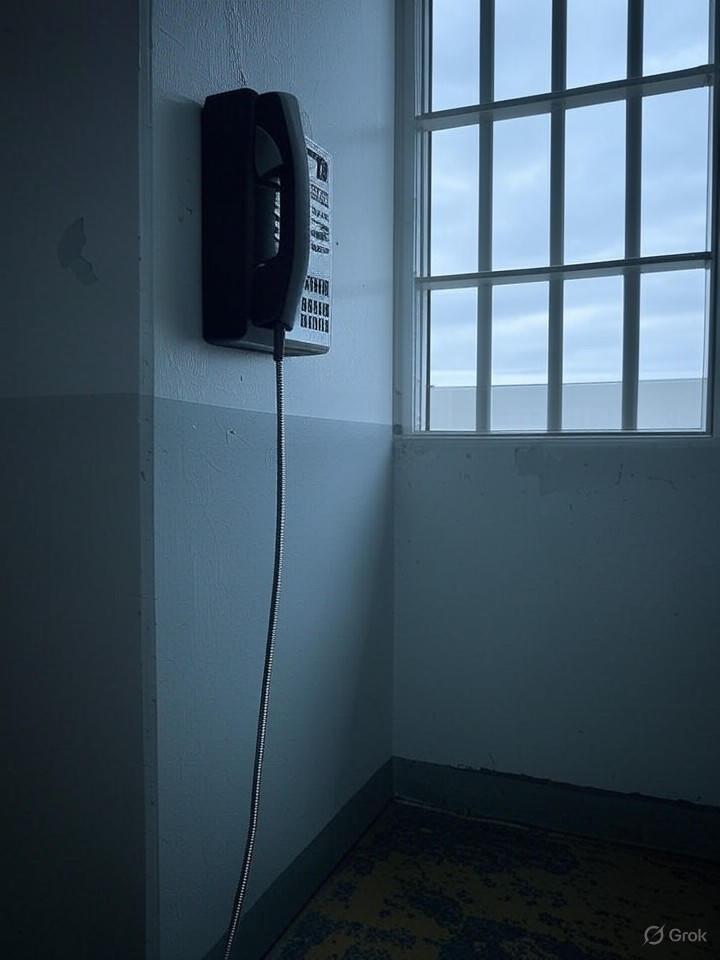
On October 28, 2025, the Federal Communications Commission (FCC) voted to raise the caps on phone call rates for incarcerated individuals, a decision that has ignited significant backlash among advocates, telecom regulators, and industry stakeholders. The ruling nearly doubles the cost of prison phone calls, increasing the per-minute rate from 6 cents to 11 cents. This move effectively rolls back much of the progress made in 2024 aimed at making communication more affordable for prisoners and their families.
This decision comes following intense lobbying efforts from telecommunications companies, which argued that lower rates would compromise both security measures and their financial viability. FCC Chairman Brendan Carr, appointed by former President Trump, cited security concerns as a primary rationale for the reversal, stating that the previous rate caps were unsustainable.
Reversal of Recent Reforms
In 2024, the FCC had unanimously approved transformative rules under the Martha Wright-Reed Just and Fair Communications Act, which dramatically reduced calling rates. According to a blog post by the Prison Policy Initiative, those reforms aimed to cut the cost of a 15-minute call from over $11 to under $1 in many facilities, potentially saving families around $500 million annually. Furthermore, the 2024 rules prohibited corporate kickbacks to correctional facilities, a practice that had significantly inflated costs.
Despite this progress, the reforms never fully took effect due to pushback from major telecom companies like ViaPath and Aventiv. The recent FCC vote has been perceived as a victory for these companies, allowing them to maintain higher revenue streams.
Security Concerns vs. Family Connections
Chairman Carr emphasized the need to balance affordability with security during calls. He noted that advanced monitoring technologies require substantial funding to prevent illicit activities. “We must balance affordability with the need to ensure safe and secure communications,” Carr was quoted as saying in an article by CNET. This aligns with arguments from telecom companies that lower rates could necessitate cuts in essential security features.
Critics, including several Senate Democrats, have denounced the decision. They urged Carr to restore the 2024 caps, asserting that the increase contradicts the bipartisan law mandating “just and reasonable rates.” Udi Ofer, a criminal justice advocate, raised concerns on X (formerly Twitter) about the potential for increased recidivism rates due to severed family ties.
The financial implications are stark. Verite News New Orleans estimates that families will now pay an additional $215 million annually compared to what was anticipated under the original reforms. For many low-income households, this means facing decisions between basic necessities and maintaining communication with loved ones in prison.
Advocacy groups like Worth Rises have expressed disappointment. Executive director Bianca Tylek stated, “Today was a hard day. Regulations that we passed unanimously last year, after seven years of advocacy, were largely gutted.” These concerns reflect broader apprehensions expressed by organizations like the Prison Policy Initiative, which noted that the decision permits telecom companies to continue exploiting vulnerable populations for at least another two years.
Industry Lobbying and Political Dynamics
The influence of the telecom industry on this decision cannot be understated. Reports from Law360 indicate that companies heavily lobbied against the 2024 rules, disputing the FCC’s calculations regarding security fees. Advocates argue that the agency failed to adequately justify the new fees, leading to accusations of capitulating to corporate interests.
The FCC vote split along party lines, with Republicans supporting the increase and Democrats opposing it. This division reflects a broader shift in FCC priorities under the current administration. Philanthropist John Arnold praised the 2024 reductions on X, emphasizing how they addressed exploitative kickback practices that charged inmates “astronomical” rates.
The issue of prison phone rates has a long and contentious history. As far back as 2017, Jonathan Zittrain highlighted the FCC’s earlier decisions that removed rate limits, leading to calls costing nearly $1 per minute. The Washington Post documented the 2024 victory, which followed decades of advocacy aimed at relieving the burdens of predatory pricing for the 2 million inmates and their families.
Advocacy Responses and Future Challenges
Organizations like Inquest and Worth Rises are mobilizing against the decision. Inquest quoted Tylek, stressing the additional financial burden of $215 million and the potential for reduced family connections. Legal challenges may arise as the Prison Policy Initiative suggests continued lobbying efforts, while a recent letter from Senate Democrats to the FCC calls for immediate action to align with the 2022 law.
This situation underscores the ongoing tension between security, profitability, and human rights within America’s correctional system. The FCC’s recent actions signal potential shifts in its approach to consumer protections. Critics fear that this could extend beyond prison communications to other areas, such as broadband affordability for low-income users.
Ultimately, the increase in prison call rates reveals systemic issues in how the United States treats its incarcerated population. As Bianca Tylek lamented on X, the FCC’s concession to industry pressure after years of advocacy marks a significant setback. Nonetheless, advocates remain resolute in their commitment to pushing for equitable communication access for all.