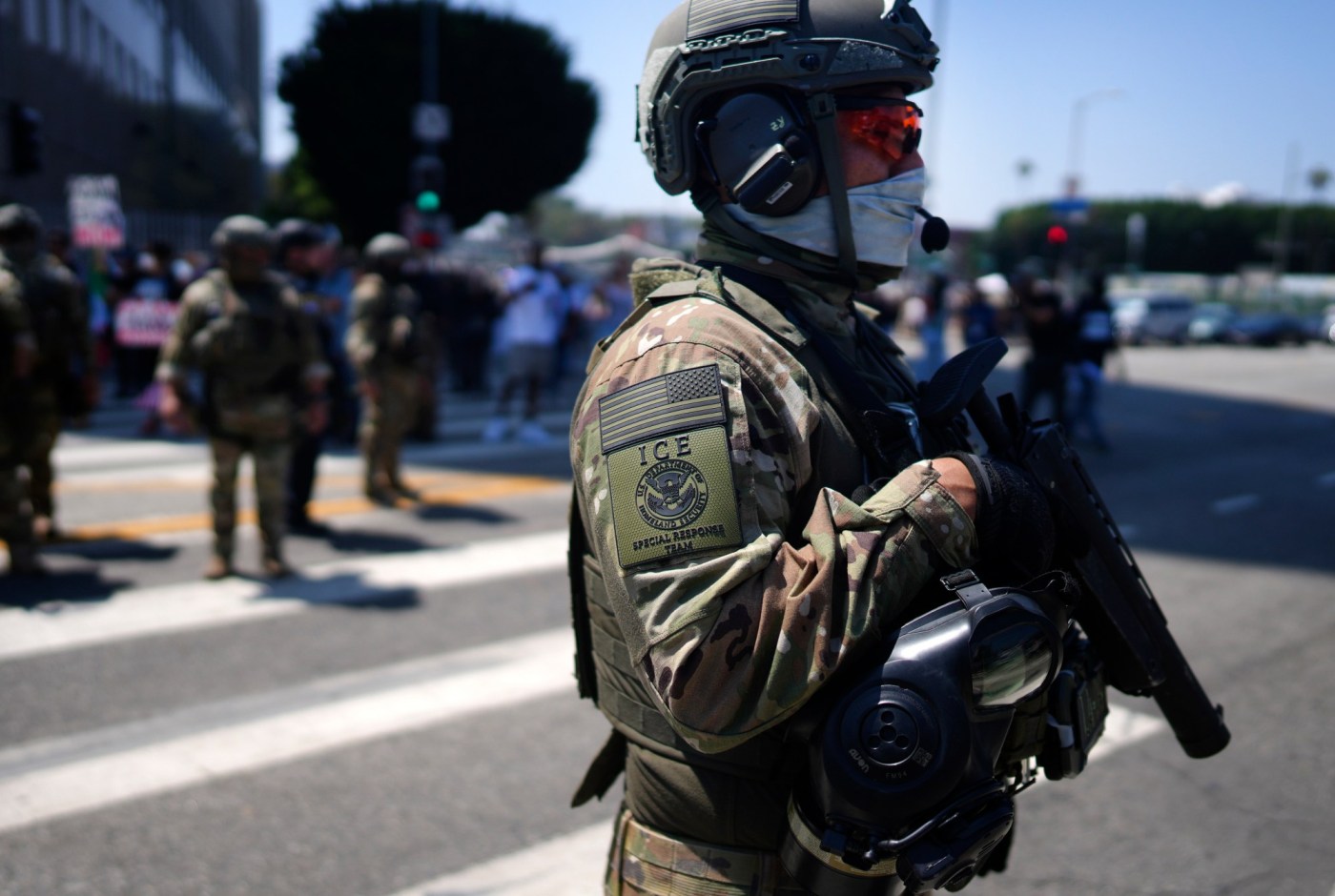
The Los Angeles County Board of Supervisors voted unanimously on January 13, 2024, to prohibit federal agents from using county properties, including parking lots and parks, for staging and processing raids and arrests. This decision comes in response to heightened concerns about the activities of Immigration and Customs Enforcement (ICE) agents, who have been conducting operations across the county.
The board’s intention is to create “ICE-Free Zones” by making it more challenging for ICE to carry out raids. Under the new ordinance, the county will post signs indicating that properties “may not be used for unauthorized civil law enforcement, including civil immigration enforcement.” Furthermore, physical barriers, such as padlocked gates, will be established at certain locations to prevent unauthorized use.
According to the motion brought forth by Supervisors Lindsey Horvath and Hilda Solis, the ordinance will return to the board for a vote in 30 days. “L.A. County will not allow its property to be used as a staging ground for violence caused by the Trump Administration,” stated Horvath. She emphasized the importance of maintaining public spaces as safe environments rather than sites of fear.
Since June 2023, ICE raids have resulted in the detention of hundreds of individuals throughout Los Angeles County. Reports indicate that agents have apprehended people at bus stops, parks, and even shopping areas such as Home Depot and car washes. These operations are part of a broader mass deportation strategy initiated by the Trump administration, which has elicited widespread protests and legal challenges.
The operations have intensified following a tragic incident involving ICE agent Jonathan Ross, who shot and killed Renee Nicole Good, a U.S. citizen, during a raid in Minneapolis on January 7, 2024. The shooting has ignited national protests, including in Los Angeles and Pasadena, and has led local officials, such as Minneapolis Mayor Jacob Frey, to demand that federal agents cease operations in their communities.
The Department of Homeland Security has defended the actions of ICE, describing them as necessary for public safety. Secretary Kristi Noem claimed that Good’s death occurred after she “attempted to run them over,” characterizing it as an act of “domestic terrorism.” However, local law enforcement, including Minneapolis Police Chief Brian O’Hara, has refrained from labeling the incident as justified.
The proposed ordinance also includes requirements for any law enforcement agency to obtain a permit from the county for using specific properties for staging or processing raids. County officials will compile a list of properties likely to be targeted for such operations in the future.
This initiative mirrors similar measures enacted elsewhere, such as an executive order by Chicago Mayor Brandon Johnson on October 6, 2023, which sought to prevent the use of public school facilities for ICE operations. In Los Angeles, the ordinance was partly motivated by an incident at Deanne Dana Friendship Park, where federal agents arrested three individuals and threatened park staff.
As the Board of Supervisors anticipates more federal immigration operations in the coming months, they assert the need to protect public spaces for their intended use. “We cannot allow our county properties to be a tool for the work they are doing,” stated Supervisor Janice Hahn, criticizing the training and conduct of ICE agents. She highlighted concerns that newly recruited agents lack adequate training compared to local law enforcement.
Solis expressed hope that Los Angeles County’s decision would inspire other municipalities to adopt similar protections for their residents. Public comments at the meeting underscored local sentiments against ICE operations, with speakers sharing personal experiences of confrontations with federal agents.
The board concluded the meeting with a moment of silence for victims of violence connected to federal immigration enforcement, underscoring the urgency and emotional weight of the issue. As the proposed ordinance moves forward, it signals a significant step in the ongoing debate about immigration enforcement and community safety in Los Angeles County.