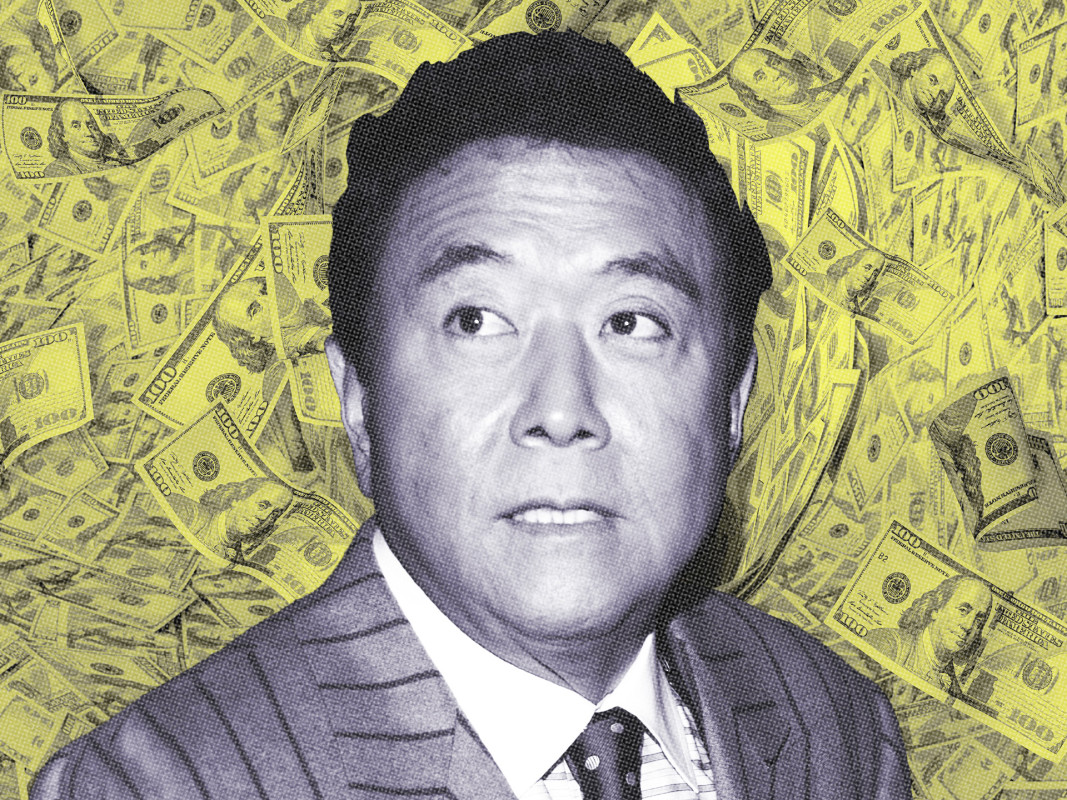
Robert Kiyosaki, the author of *Rich Dad, Poor Dad*, has made headlines with a bold prediction that gold could hit an astonishing $27,000 per ounce in the coming years. This statement was made shortly after gold futures surpassed $5,000 for the first time, reaching around $5,013 on January 26, 2024. His prediction has sparked significant interest among traders and investors, prompting a deeper examination of the current gold market dynamics and future potential.
Kiyosaki’s assertion comes at a time when gold is experiencing a notable rally. The price of gold has risen approximately 0.7% since the previous Friday, driven by increasing demand for safe-haven assets amid economic uncertainty. Spot prices have also surged, peaking at about $5,090 as investors seek refuge from market volatility and inflation concerns.
In his post on X, Kiyosaki expressed enthusiasm for gold’s recent breakout, stating, “GOLD soars over $5000. Yay!!!! Future for gold $27,000.” This comment not only celebrated the immediate rise in gold prices but also introduced a long-term target that diverges sharply from mainstream forecasts.
Kiyosaki’s Perspective on Economic Trends
Kiyosaki has been vocal about his expectations for an “everything crash,” advocating for investment in hard assets rather than paper currencies. He has consistently promoted his belief in the value of gold, silver, and cryptocurrencies as protective measures against a deteriorating economic landscape. According to FinanceFeeds, he has set ambitious targets for gold, silver, and Bitcoin, predicting prices of $100 for silver and $250,000 for Bitcoin by 2026.
Kiyosaki attributes his forecasts to insights from economist and author Jim Rickards, who has long argued that if currencies were re-backed by gold, prices could reach five figures per ounce. This perspective underscores a fundamental belief that fiat currencies are losing value, necessitating a shift towards tangible assets.
While Kiyosaki’s predictions may seem extreme, they resonate with a growing sentiment among retail investors who are increasingly wary of inflation and economic instability. His recent comments suggest that he views the continuing strength of gold as indicative of a broader shift in economic paradigms.
Comparative Analysis with Mainstream Forecasts
To contextualize Kiyosaki’s forecast, it is essential to compare it with projections from established financial institutions. For example, Goldman Sachs recently adjusted its year-end target for gold to $5,400 per ounce, citing sustained demand for hedging against macroeconomic risks. This adjustment reflects a more conservative view of the gold market, which has experienced significant gains, with front-month futures rising over 80% in the past year.
This contrast highlights the divergence between Kiyosaki’s predictions and those of mainstream analysts. While Goldman Sachs anticipates a moderate increase in gold prices, Kiyosaki’s target suggests a drastic revaluation of the metal that is not echoed by major financial institutions. Analysts argue that Kiyosaki’s outlook is predicated on a hypothetical scenario involving a significant crisis of confidence in fiat currencies, rather than a gradual adjustment in market conditions.
The recent rally in gold prices has been attributed to a combination of strong central-bank buying, increased exchange-traded fund (ETF) inflows, and ongoing geopolitical tensions. This multifaceted backdrop provides a grounded rationale for the current market dynamics, contrasting sharply with Kiyosaki’s more speculative predictions.
In light of Kiyosaki’s statements, investors are encouraged to reassess their portfolios and consider the implications of potential economic downturns. The ongoing debate around the future of currencies, inflation, and asset values continues to shape investor sentiment and market strategies.
Kiyosaki’s predictions may serve as a catalyst for discussions on asset allocation and risk management in an uncertain economic landscape. As market conditions evolve, the question remains whether gold will indeed reach Kiyosaki’s ambitious targets or settle into a more moderate trajectory as suggested by mainstream forecasts.