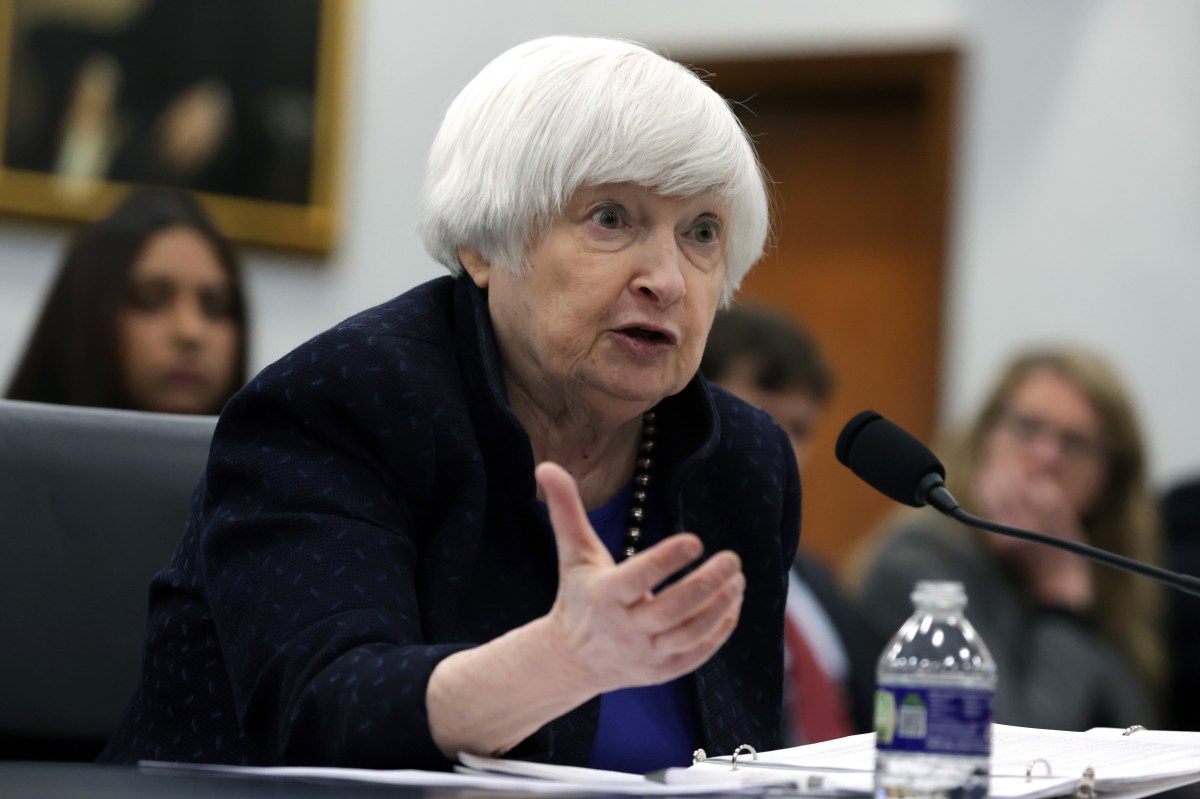
Former Treasury Secretary Janet Yellen has expressed concerns that the Trump administration‘s decision to exempt U.S. corporations from new global tax regulations may hinder efforts to reduce the country’s fiscal deficit. This warning follows an announcement from the Organisation for Economic Cooperation and Development (OECD) regarding a finalized plan on global minimum tax arrangements involving 147 nations.
The OECD’s agreement, which proposes a 15 percent global minimum tax, notably excludes U.S. multinational corporations from its provisions. Scott Bessent, the current Treasury Secretary, welcomed this exemption as a “historic victory” for U.S. sovereignty, framing it as a response to what he described as “extraterritorial overreach.”
Yellen, who led earlier attempts to implement the global minimum tax during the Biden administration, criticized the exemption for sacrificing substantial tax revenue for the U.S. government. She stated that this decision would hinder the nation’s ability to address its “large fiscal deficit.”
Implications of the OECD Agreement
The OECD’s two-pillar agreement aimed to combat tax avoidance among large corporations and prevent a “race to the bottom” in global corporate taxation. OECD officials heralded the agreement as a “foundation for stability and certainty in the international tax system.” However, the U.S. exemption has drawn significant backlash from tax transparency advocates and even from proponents of the original plan, who argue that it undermines the agreement’s effectiveness.
Critics assert that allowing U.S. firms to operate under more favorable tax conditions while doing business abroad will distort competition. Yellen remarked, “U.S. headquartered multinational enterprises represent almost half of all global multinational profit. So exempting these firms from the global regime undermines its consistency.”
The OECD’s announcement builds upon a prior agreement reached in 2021, which included over 130 nations and aimed to ensure that large multinational corporations pay taxes in the countries where they operate. Yellen described this earlier initiative as a “once-in-a-generation accomplishment for economic diplomacy,” which sought to diminish the competitive edge derived from lower tax rates in certain jurisdictions.
Despite this, the agreement faced strong opposition from Republicans. In January, Trump publicly renounced the previous commitments, arguing that they compromised U.S. tax sovereignty. The Trump administration later renegotiated the terms, resulting in the current exemption for U.S.-based multinationals.
Reactions and Future Considerations
Economists and tax experts have expressed alarm over the potential long-term consequences of the exemption. Attiya Waris, a United Nations independent expert on foreign debt, stated, “A global minimum tax is weaker without the world’s largest economy.” Waris emphasized that effective multilateral tax systems rely on the genuine participation of major economic players, a condition she feels the U.S. has failed to meet.
Alex Cobham from the Tax Justice Network criticized the OECD’s “side-by-side” arrangement, claiming that it diminishes the rights of countries to tax businesses operating within their jurisdictions. He noted that countries like France, Germany, and the United Kingdom are already losing billions due to tax avoidance by U.S. companies, and the current arrangement could exacerbate these losses.
Zorka Millin, policy director at the Financial Accountability and Corporate Transparency Coalition, criticized the approach taken by the U.S., claiming it represents a form of coercion in international tax negotiations. Millin pointed out that while U.S. companies may not be subjected to the same tax rules as foreign competitors, they remain liable for U.S. taxes on foreign profits.
The OECD plans to provide further details on the implementation of the agreement in the forthcoming weeks. Bessent affirmed that the Treasury Department will continue engaging with foreign nations to ensure effective implementation and promote stability in international tax frameworks.
As this situation develops, the implications of the U.S. exemption will be closely monitored, especially regarding its impact on global tax compliance and the fiscal health of both the United States and its international partners.